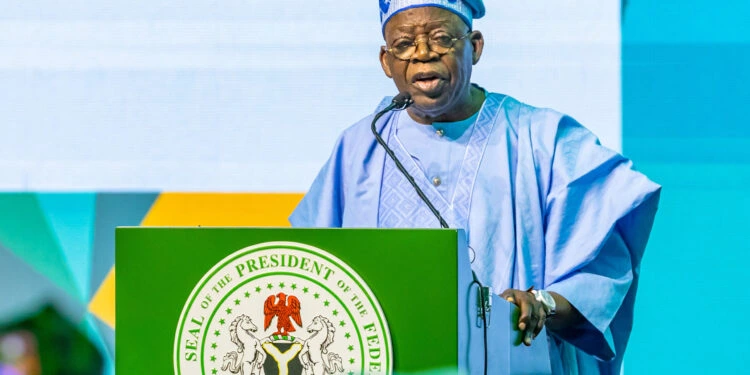
The Economist’s “Nigerians Dislike Their President, But May Re-elect Him Anyway” is a confident piece, and a narrow one. It grants the dislike, then treats it as electorally irrelevant. Incumbency, a split opposition, a Muslim-Muslim ticket, and a public that expects little will, on this reading, carry President Bola Tinubu to a second term in January 2027.
The magazine has described the machine. It has not described the country, and it has promoted a forecast to the status of a verdict. A forecast is not a verdict. The map of 2023 will not reprint itself. Between now and polling day a week is a long time in politics, and it is not yet Uhuru for anyone who thinks the result has already been written.
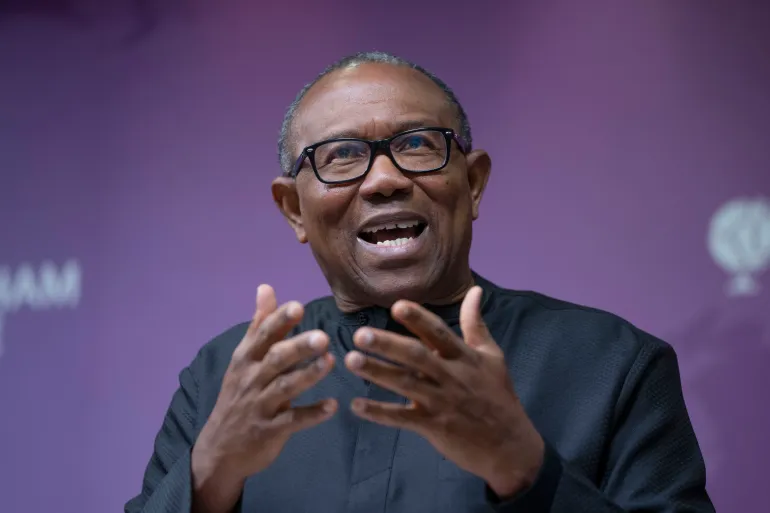
What follows is a reply to the claims on which the piece actually rests. The opposition is divided. That is not a law. The Economist builds its path to re-election on the failure of Atiku Abubakar and Peter Obi to form a single ticket, and on the African Democratic Congress and the Nigeria Democratic Congress still negotiating with themselves. That split was decisive in 2023. It is not an immutable rule for 2027.
The Race to 2027 Still ‘Far’
The magazine records a present fact and files it as a future constant. What has changed is the cost of vanity. A failure to unite may again hand the incumbent a plurality. That remains the opposition’s choice, and its risk. It should not be written up in London as a structural guarantee. The Economist’s error is to treat the absence of a coalition today as proof that none can be punished into existence by January. Coalitions in Nigeria have been made, and unmade, in less time than remains. It is not yet Uhuru for a divided opposition either.
A week is a long time in politics, and several months is longer. Religion will not hold the North, and it will not hold the Middle Belt. The piece argues that a Muslim-Muslim ticket still insulates the President where his party has traditionally done well, and that northern voters may overlook the record because they already expect little from government. Its own reporting contradicts the insulation. SBM Intelligence, which the magazine cites, finds him behind both Peter Obi and Atiku Abubakar in Borno, a state he carried with about 54 per cent in 2023. Residents of Maiduguri told the same reporters they are prepared to answer at the ballot. Low expectations are not consent. The Economist notes the crack and then steps over it.
The larger miss is the Middle Belt, which the religious thesis cannot reach. Plateau, Benue, and the wider belt are not the core North. In 2023 Benue was a knife-edge: 310,468 votes to Peter Obi’s 308,372. Plateau and much of the belt broke the other way. Since then, the raids have not stopped. Farming communities in Barkin Ladi, Bokkos and Mangu have buried miners, women, pastors, and villagers through 2026. In Benue, police officers have been killed in Logo, and in early October the abduction of mourners brought protesters onto the highway.
Official claims of rescues and fewer incidents in some places do not survive the burial. A magazine that explains this electorate by religion, or by cynicism, has not been there. Where those voters can reach a polling unit, the likely reaction is punitive. Where they have fled, the vote is suppressed. Both outcomes follow from the security failure The Economist folds into “low expectations.” Party promises of 620,000 votes in Benue, or a million, are machine targets. They are not evidence that the villages have consented. Those pledges can still be overtaken by events.
A week is a long time in politics. Cynicism is not the shield the magazine thinks it is. The central assertion is that disappointment will depress turnout and favour the status quo: that few will use the ballot to express it. That misreads anger as apathy. Across cities, and in rural clusters that have lost planting seasons, the mood is closer to self-defence than to resignation. SBM Intelligence counted 7,825 abductions and 1,142 deaths in captivity between July 2025 and June 2026. Around Independence, gunmen took passengers on the Owerri–Onitsha Road, including members of the National Youth Service Corps, while the President’s address dwelt on reform.
Failed Electoral Promises
A public living with that record is not a public that has priced disappointment in and moved on. The same error covers power. The President asked for time on a promise that electricity would improve. Households and workshops are still on generators, or in the dark. The official residence has been given another arrangement. The Aso Rock solar mini-grid was funded with ₦10 billion in the 2025 budget and ₦7 billion in the 2026 budget, about ₦17 billion, so that the Villa can leave the national grid. Officials have called the Villa’s annual power bill, put at about ₦47 billion, unsustainable. Seventeen billion naira has been found to buy the Presidency out of the failure. The country has been left to fend for itself.
The Economist’s cynicism thesis has no room for this. A voter who can see the Villa lit, and the street dark, is not a voter who expects nothing. He is a voter who has been shown the order of priority. I have said that if the President wants another term, he does not need to beg for it. Let the work speak. If he does not provide power, he should not be voted for. That is the test the magazine never sets. Where The Economist is less wrong The magazine is on firmer ground when it says incumbents win with machinery and cash, and that unpopularity alone has not been enough to remove them. Vote buying has moved off the polling unit. The INEC chairman, Joash Amupitan, has named insecurity and vote buying as the Commission’s two leading worries for 2027.
A household without power, or without a harvest, is a cheaper vote. The ruling party can put money where the opposition can put a statement. Allegations around service-wide votes and gubernatorial deductions should remain allegations until proved. The asymmetry does not depend on them. It didn’t depend on them in the recent Osun State elections. That, is an argument about the field, not about affection. The Economist slides from one to the other. Influence over logistics and security agencies is a real risk. It is not proof that INEC will write a result, and the piece should not be read as if capture were already the finding. (At least, we can presume that INEC’s computers and servers will not suffer a ‘technical glitch’ on this occasion).
An election held where armed groups control the road, and where one party can fund the vote, is simply not the free test that “let the work speak” assumes. Even that advantage is not Uhuru. Money and machinery have been overtaken before, when the week before polling rearranged the ground. The verdict the piece withholds The Economist is wrong to treat cynicism, fragmentation, and a religious ticket as insulation. It is less wrong about the machine. Incumbency is an advantage. It is not a London consultancy’s to award, and it is not a substitute for consent.
A forecast that the disliked incumbent may survive is a statement about cash, split votes, and unsafe roads. It is not a statement that the record has been accepted. Seventeen billion naira to take the Villa off the grid, a Middle Belt still burying its dead, and a federal highway that endangers Corp members and the general populace are already answers. If the opposition stays split, incumbency does not need public affection. The verdict still belongs to the people only to the extent that they can reach a polling unit and refuse the price of the vote. Or accept the gratification and vote the other way. Neither camp should read this as arrival.

A week is a long time in politics. It is not yet Uhuru. The magazine has written the ending before the interval. That is the distinction it collapses. A forecast is not a verdict.
*Kola Alapinni is an international human rights lawyer and US Secretary of State Awardee on International Religious Freedom.*