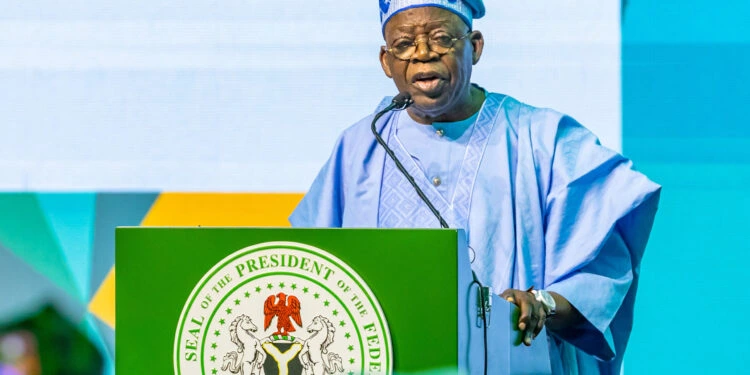
President Bola Ahmed Tinubu has likened Nigeria’s pre-2023 economic condition to a cancer patient being given morphine to suppress pain instead of receiving the difficult treatment needed to confront the disease.
Tinubu made this allusion in his 2026 Independence Day address to Nigerians on Thursday, October 1, as he defended the economic reforms introduced by his administration since taking office in 2023.
According to the President, successive governments had for years avoided difficult economic decisions, allowing structural problems to deepen while using measures that only addressed their immediate symptoms.
“For too long, Nigeria’s leaders chose morphine while praying for a miracle that never came,” Tinubu said.
He said Nigeria had reached a point by 2023 where poverty was rising and hope was “nearly gone”, leaving his administration with what he described as no choice but to act.
Tinubu explained the analogy by saying a cancer patient could either undergo painful treatment with the prospect of recovery or take morphine to dull the pain while allowing the disease to spread.
“They focused on symptoms while allowing the disease to take hold deep within the fabric of our society,” he said, adding that the country had spent “enormous sums sustaining inefficient arrangements that were never intended to last.”
Post 2023 Reforms Were Necessary
Tinubu said his administration decided to confront what he described as the underlying weaknesses in the economy rather than continue with policies that provided temporary relief.
“When this Administration assumed office, we resolved to do things differently. We chose to excise the cancer,” he said.
He acknowledged that the reforms had imposed significant hardship on Nigerians, saying “the side effects were real”, but argued that the difficulties should not be confused with the underlying problems the policies were designed to address.
“Our reforms did not create the weaknesses in our economy. They confronted them,” Tinubu said.
The President also criticised calls for a return to what he described as “addictive subsidies”, urging Nigerians to resist attempts to reverse the reforms.
“Now, as certain influential but regressive voices would have us abandon the treatment and return ourselves to the abuse of addictive subsidies, we must resist their siren song,” he said.
Three and a half years into his administration, Tinubu said Nigeria had moved beyond the emergency phase of its economic reforms and was now positioned to pursue broad-based prosperity.
He said the economy had grown by more than 4% cent in 2026, with both the oil and non-oil sectors contributing to the growth.

Tinubu said the next phase of his administration would focus on jobs, enterprise and industrial expansion, including using gas to power industries, reviving factories, expanding digital connectivity and improving access to skills, infrastructure and finance.
“The age of reform has done its work. Now begins the age of prosperity,” he declared.