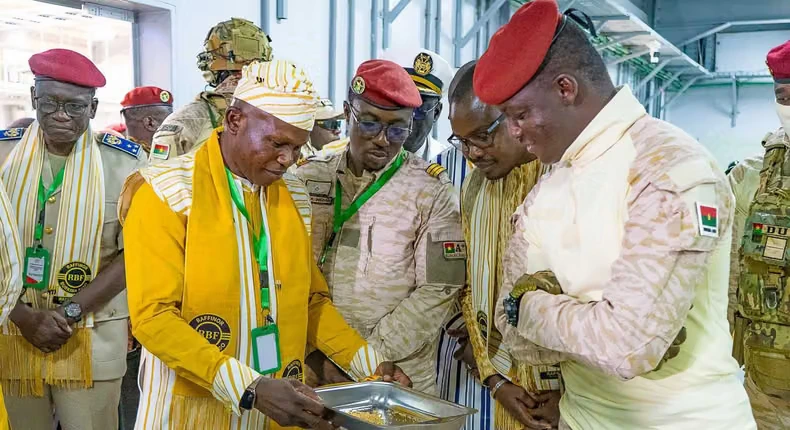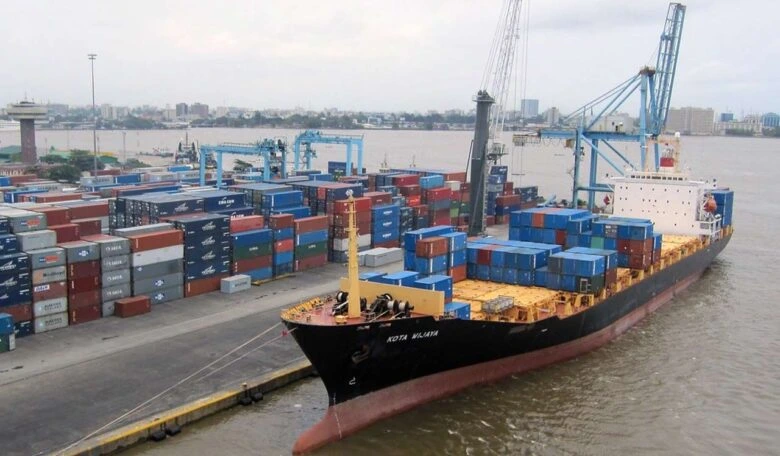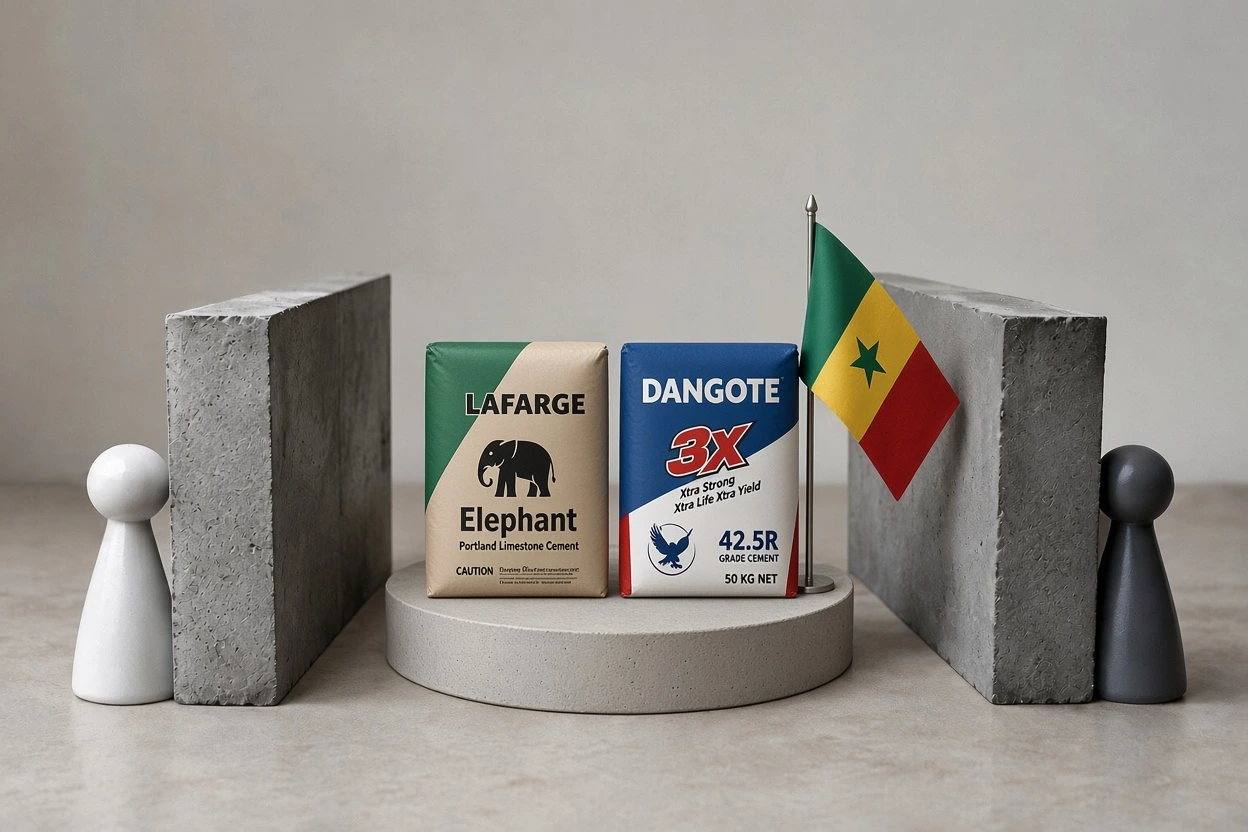
Former President Olusegun Obasanjo during a recent event to mark the commencement of Alijo Dangote’s Kenyan refinery noted how Lafarge cement wanted to block Dangote Cement from entering Senegal.
Narrating the experience, Obasanjo said “Just a few days before I left government, we commissioned the first five million tonnes cement project in Nigeria. Then Aliko didn’t stop there, he went on and did another five million tonnes project and another five million tonnes project and as you heard, I had to take him out. We went to Tanzania, we went to Ethiopia, we went to Senegal.
Senegal Experience
Speaking on the Senegal Experience, the president noted “The people who really didn’t want Aliko to succeed in cement production is a French company called Lafarge which put every obstacle on Aliko’s way, just as they are still doing to us today. And the experience of Senegal was the one that was really traumatic.
“Aliko completed, I went, I took Aliko to the President and Aliko completed the five million ton in Senegal.
“For two years, he could not do anything because Lafarge instigated some local people and said the land on which he built the cement factory is their land. They went to court.
“Aliko won and had to pay $12 million to operate his cement factory. Two years after it had been completed, Lafarge wanted to get Aliko not to produce cement, they wanted to monopolize.
“Lafarge is out of Africa today, Aliko dominates cement production. About 50 million tonnes in Nigeria, from where he exports to other parts of Africa and about 50 million tonness elsewhere in Africa.”
Factcheck: Case Details
The dispute between French cement group Vicat and Dangote Cement in Senegal was, legally, a dispute between Vicat and the Senegalese government not a direct lawsuit against Dangote.
Vicat, which owns Senegalese cement producer Sococim Industries, alleged that the Senegalese authorities had given preferential treatment to Dangote when the Nigerian group established its integrated cement plant at Pout, about 50 kilometres from Dakar.
Dangote’s entry turned it into the third major cement producer in Senegal, competing with established players including Sococim. By 2013, Vicat was challenging what it considered an uneven regulatory environment surrounding Dangote’s project.
At the centre of Vicat’s complaint was the allegation that Senegal had failed to enforce environmental, land-use, mining and other regulatory requirements against Dangote to the same extent that they applied to Sococim.
UNCTAD later summarised Vicat’s case as an allegation of “more favourable treatment by the Government to a Nigerian-based company”, including the alleged non-enforcement of environmental and other regulations to Vicat’s detriment.
Vicat initially pursued the dispute through regional arbitration proceedings in November 2013, with contemporary reports describing the confrontation as a Franco-Nigerian “cement war”. However, the legal target of the claim was the Senegalese government rather than Dangote Cement.
The dispute subsequently moved to the international investment-arbitration system. Vicat brought a claim against Senegal under the 2007 France–Senegal bilateral investment treaty, and the case was registered by the International Centre for Settlement of Investment Disputes (ICSID) on August 5, 2014, as Vicat S.A. v. Republic of Senegal (ICSID Case No. ARB/14/19).
The tribunal was chaired by Klaus Sachs, with Peter Polak appointed by Vicat and Barton Legum appointed by Senegal. Vicat submitted its memorial on the merits in July 2015, while Senegal filed its counter-memorial in December of the same year.
But the arbitration never produced a ruling on whether Senegal had actually favoured Dangote or breached the France–Senegal investment treaty.
The proceedings were discontinued on June 6, 2016, under ICSID Arbitration Rule 44 after the parties agreed to suspend the case. As a result, there was no published tribunal award establishing that Senegal had unlawfully favoured Dangote, and no finding of treaty breach against Senegal.
Separate Land Case
The arbitration also unfolded against the backdrop of a separate and highly contentious land dispute involving Dangote’s Senegal plant and the heirs of Serigne Saliou Mbacké, a former Khalifa General of the Mourides.
The heirs claimed that Dangote had encroached on more than 124 hectares of land previously allocated to Serigne Saliou Mbacké and sought the company’s eviction and damages. Although the Dakar Court of Appeal ordered Dangote’s eviction, Senegal’s Supreme Court overturned that decision on August 21, 2013.
The Supreme Court held, in substance, that an allocation of national-domain land was personal to the original beneficiary and expired upon his death unless the land was formally reallocated to his heirs.
The land case was separate from the Vicat arbitration, but it formed part of the broader controversy surrounding the regulatory and governmental decisions that accompanied Dangote’s entry into Senegal’s cement industry.
In short, Vicat’s complaint was that the Senegalese government had created an uneven playing field for Dangote not that Dangote itself was the respondent in the international arbitration. The case ended without a merits ruling, leaving the allegations of preferential treatment legally unresolved.

Was Lafarge Involved?
Lafarge only had a relationship with Ciments du Sahel, another major cement producer in Senegal. As such, Lafarge was part of the wider competitive landscape in Senegal’s cement industry, but the international arbitration over Dangote’s entry was brought by Vicat, owner of Sococim, against the Senegalese government and Lafarge was not a party to the ICSID case.
The allegations by former President Olusegun Obasanjo that Lafarge Cement tried to stop Dangote from entering into the Senegalese cement market therefore falls flat on its face.