There is a temptation, whenever xenophobic violence erupts in South Africa, to treat it as another cycle of unrest—a familiar story of burned shops, displaced migrants, political condemnations and, eventually, public amnesia. The headlines fade, the structural conditions remain.
When Adama Dieng warned that “the greatest tragedies did not start with guns, but with hate speech,” many heard another appeal for tolerance. They should have heard something more unsettling. Dieng was not primarily speaking about violence, he was speaking about how societies gradually become comfortable with violence.
That distinction matters.
As one of the architects of the United Nations’ modern genocide-prevention framework, Dieng has spent decades studying societies before they collapsed—not after. His professional life has not been devoted to explaining massacres once they occur, but to identifying the conditions that make them politically conceivable.
His warning therefore deserves to be examined less as rhetoric and more as diagnosis.
The Slow Construction of an Enemy
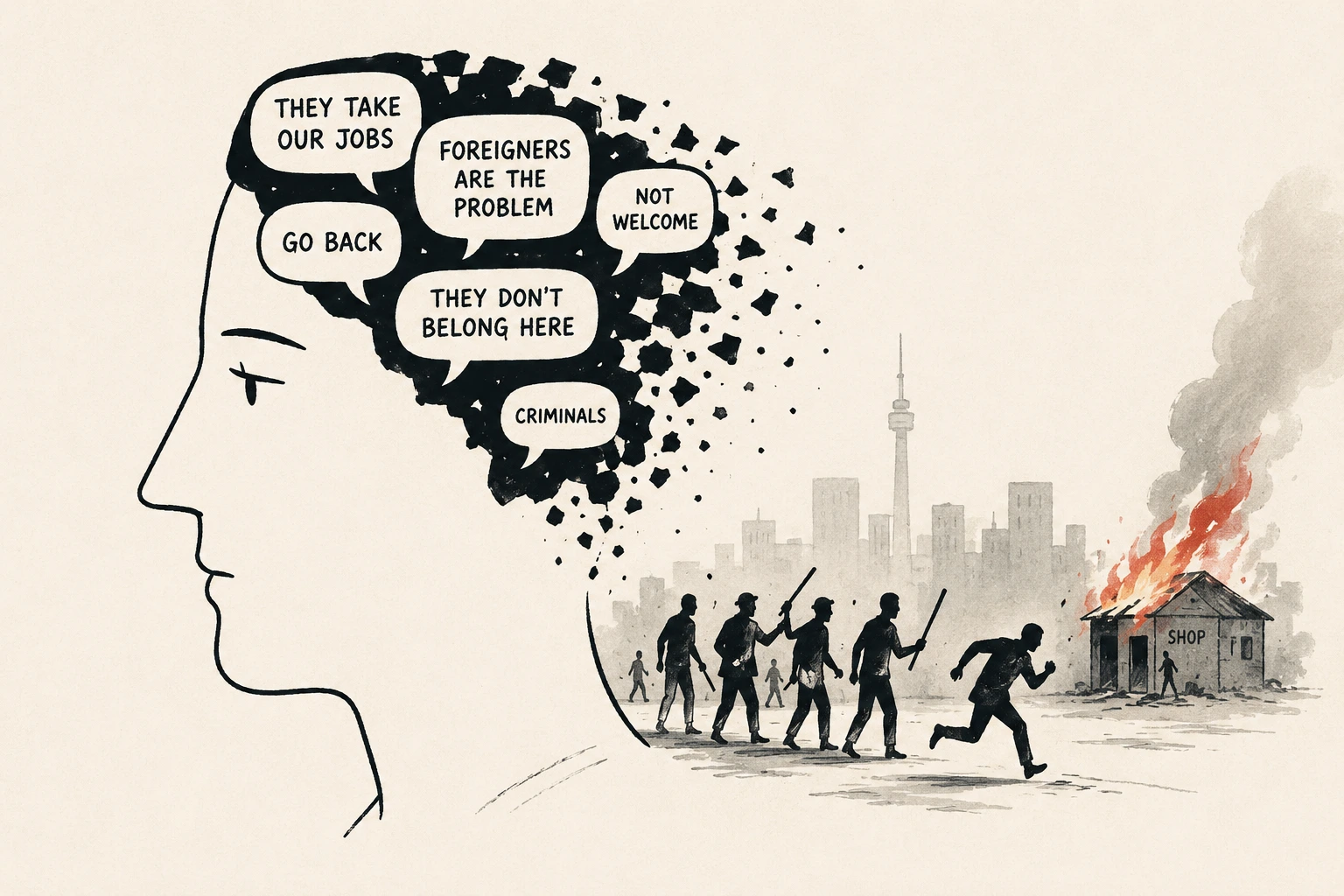
History rarely records the first insult, it remembers the last massacre. Between those two moments lies a long political process in which language changes before behaviour does. Communities stop being neighbours and become “them,” migrants become “invaders,” minorities become “the problem.”
Economic hardship acquires a human face.
This transformation is neither accidental nor unique to one country. Before the Holocaust, Jews were systematically portrayed as enemies of the nation. Before the Rwandan genocide, extremist broadcasts repeatedly dehumanized Tutsis. Before ethnic cleansing in the Balkans, nationalist propaganda redefined coexistence as betrayal.
No serious scholar argues that hate speech alone caused these atrocities, nor does Dieng.
Mass violence requires institutions that fail, leaders willing to exploit fear, economic stress, organized actors prepared to commit violence and a public increasingly desensitized to cruelty. Language is not sufficient but, history suggests it is often necessary. That is the difference between alarmism and prevention.
South Africa’s Contradiction
South Africa presents a paradox that few democracies share.
It is a nation whose democratic identity was built on rejecting racial exclusion, yet whose post-apartheid history has repeatedly witnessed violence directed against fellow Africans. That contradiction is not merely political.
It is historical.
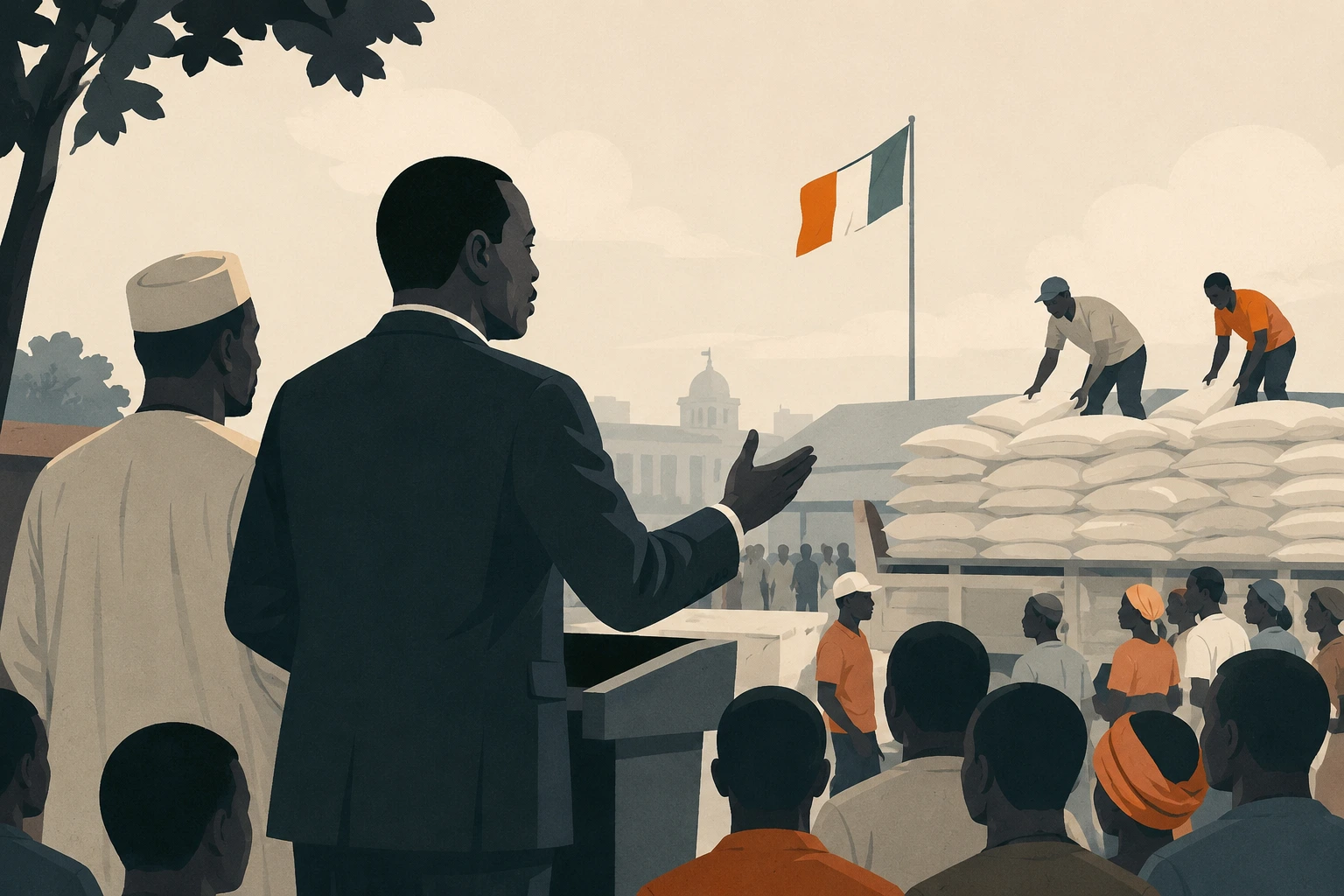
During apartheid, liberation movements depended heavily upon neighbouring African states for diplomatic recognition, military assistance, education and sanctuary. Countries with far fewer resources than South Africa opened their borders to exiles fleeing political persecution.
Today, migrants from many of those same countries often find themselves accused of threatening the prosperity of the democracy they once helped sustain. History possesses an uncomfortable sense of irony.
To acknowledge the dangers of xenophobia is not to deny South Africa’s genuine challenges.
The country confronts some of the world’s highest unemployment rates, deep inequality, persistent violent crime, electricity shortages and slow economic growth. These are real grievances.
The analytical mistake is to assume that because grievances are real, the targets chosen to embody them are necessarily responsible.
Throughout history, societies under economic pressure have searched for visible explanations before structural ones. Migrants are visible, labour market distortions are not. Foreign-owned shops are visible, institutional failure is not. UN envoy Adama Dieng warns that hate speech fuels xenophobic violence in South Africa, urging leaders to prevent further attacks and protect democracy, scapegoating offers psychological simplicity where economics offers uncomfortable complexity.
That is why it remains politically attractive.
Democracy Is More Fragile Than Elections
Dieng’s most consequential observation may not have been about hate speech at all.
“When violence becomes a driving force for political expression, democracy itself is in peril.”
Political scientists increasingly distinguish between electoral democracy and democratic culture. A country may continue holding elections while simultaneously experiencing declining trust in institutions, normalization of intimidation, polarization and acceptance of political violence.
Democracy survives not because elections occur, but because citizens continue believing that disagreements should be resolved through institutions rather than force. When violence becomes persuasive, ballots gradually lose their authority.
History demonstrates this repeatedly.
The Rainbow Nation Was Never a Destination
Perhaps the greatest misconception about South Africa is that the end of apartheid completed the work of reconciliation, it did not. Political liberation ended institutional segregation. It could not erase inequality, historical trauma or competition over opportunity.
The phrase “Rainbow Nation,” popularized by Desmond Tutu, was always aspirational, it described a project, not an achievement. Projects require maintenance, neglect them long enough, and their foundations weaken.
It is easy to dismiss genocide-prevention experts as pessimists, until history proves them right. Dieng’s intervention should not be interpreted as predicting catastrophe. It should be understood as asking a question that every democracy eventually confronts:
At what point does a society stop treating dehumanization as unacceptable and begin treating it as ordinary political language?
That threshold is rarely crossed in a single speech, it is crossed through repetition. Through silence, through familiarity, through the gradual erosion of moral discomfort. By the time violence dominates the headlines, the cultural work that made it possible has often been underway for years.
South Africa’s future will not be determined solely by immigration policy, economic growth or policing. It will also depend on something less visible but no less consequential: the stories South Africans choose to tell about one another.
History suggests that nations are rarely destroyed by a single event, they are reshaped by the narratives they decide to believe, and that, more than anything else, is what Adama Dieng is warning against.