A diplomatic dispute triggered by racist remarks directed at France captain Kylian Mbappé has evolved into a rare moment of unity between the French and Paraguayan governments, with both countries publicly condemning the comments and reaffirming their opposition to racism.
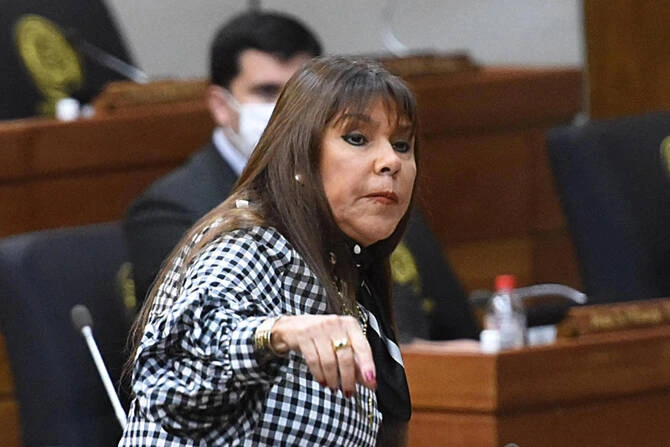
The controversy followed France’s 1-0 victory over Paraguay in the FIFA World Cup Round of 16, where Mbappé converted the match-winning penalty to send Les Bleus into the quarter-finals. While the result was expected to dominate headlines, attention quickly shifted away from football after Paraguayan Senator Celeste Amarilla launched a series of inflammatory social media posts targeting the French star’s race, heritage and identity.
Two governments, one message
Within hours of the controversy gaining international attention, Paraguay’s government moved to distance itself from Amarilla’s statements.
In an official declaration, Paraguay’s Ministry of Foreign Affairs rejected the senator’s comments, describing them as incompatible with the country’s commitment to human dignity, peaceful coexistence and non-discrimination. The ministry emphasized that Amarilla’s views were entirely personal and did not reflect the position of either the Paraguayan government or its people.
French President Emmanuel Macron also weighed in, expressing full support for Mbappé and praising the striker’s response to the abuse. According to the French presidency, Paraguayan President Santiago Peña personally communicated his condemnation of the senator’s remarks to France, reinforcing the message that Paraguay’s executive government rejected any form of racism.
French Sports Minister Marina Ferrari described the comments as disgraceful and said attacks on Mbappé were attacks on the values of the French Republic itself.
Mbappé refuses to stay silent
Rather than limiting his response to defending himself, Mbappé praised Paraguay’s national team while criticizing the senator for overshadowing the country’s remarkable World Cup campaign.
The France captain said Amarilla was “unworthy” of public office and argued that her actions had diverted global attention away from Paraguay’s achievements during the tournament.
He further accused the senator of spreading hatred and racism, insisting such behaviour should never be normalized in international sport.
The French Football Federation (FFF) has announced it will refer the matter to French prosecutors, calling Amarilla’s statements “criminal,” “utterly abhorrent,” and “unacceptable.”
The federation believes the remarks constitute racist abuse directed not only at Mbappé but also at the French national team, which it says represents the Republic of France itself.
Although legal experts note that prosecuting a foreign elected official presents jurisdictional challenges, France’s complaint is expected to test whether its anti-racism laws can be applied to online speech targeting French citizens from abroad.
No formal criminal charges have yet been filed against Amarilla, and prosecutors will first determine whether French courts have jurisdiction over the case.
Will the senator face consequences in Paraguay?
Despite widespread condemnation, there has been no announcement that Amarilla faces disciplinary proceedings or criminal prosecution in Paraguay.
As a sitting senator, she does not automatically lose her office because of controversial public statements. Any parliamentary sanctions—such as censure, suspension from committees or ethics investigations—would require action by Paraguay’s Senate under its internal rules.
For now, Paraguay’s government has limited its response to publicly rejecting the remarks and reaffirming its commitment to equality and respect.
Following the international criticism, Amarilla published an open letter addressed to Mbappé in both French and Spanish.
She claimed her criticism was directed at the player rather than France as a nation and said she regretted using some of the language contained in her original posts, which she subsequently deleted.
However, the senator also demanded a public apology from Mbappé, accused him of engaging in gender-based verbal violence, and indicated she could pursue legal action against the France captain if he did not retract his remarks.
Football’s fight against racism continues
The latest controversy comes only days after former Paraguay goalkeeper José Luis Chilavert also faced criticism for referring to France as “a team from Africa” before the World Cup encounter.
The repeated incidents have reignited debate over racism in football and the responsibilities of public officials in shaping public discourse.

For many observers, the swift condemnation from both Paris and Asunción represents an important message that governments can stand together against discriminatory rhetoric, even when political differences exist.
As France prepares for its World Cup quarter-final against Morocco, attention remains fixed not only on Mbappé’s performances on the pitch but also on the broader conversation his response has sparked about racism, accountability and the role of political leaders in promoting respect across international sport.