For nearly two months, Cameroon has been governed by a president who has not been seen on home soil.
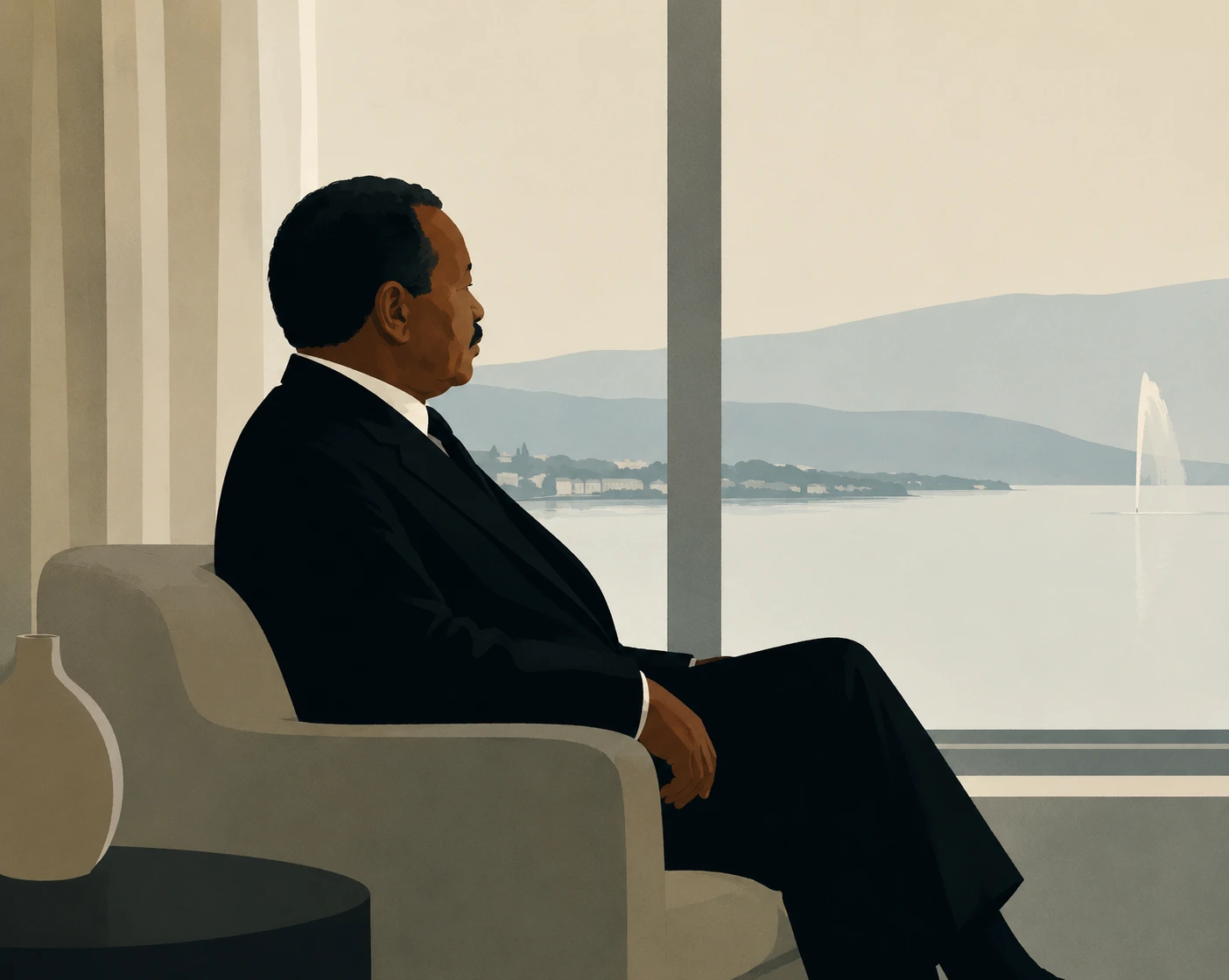
President Paul Biya has now spent 50 consecutive days abroad—the longest uninterrupted foreign stay of his 43-year presidency—with no indication from the government of when he intends to return. The unusual absence has revived persistent speculation over the health of the 93-year-old leader while drawing renewed attention to the secrecy that has long surrounded the Cameroonian presidency.
Regional media have reported that Biya is in Geneva and alleged that he was admitted to a private clinic following what was described as a health episode in May.
The presidency has firmly denied those reports. Samuel Mvondo Ayolo, director of the Civil Cabinet, said the president had not been hospitalized and remained “in very good health.”
Officials say government business continues between Geneva and Yaoundé, with Secretary-General of the Presidency Ferdinand Ngoh Ngoh overseeing routine state affairs from the capital. No return date has been announced.
The presidency’s assurances have done little to end public discussion. In Cameroon, official information about the president’s movements or medical condition is rarely disclosed in detail, creating an environment in which every prolonged absence generates speculation. Similar rumours have surfaced during previous private stays in Switzerland, only to be followed by carefully staged public appearances after his return.
Governing from a Distance
Biya has led Cameroon since November 1982, when he succeeded the country’s first president, Ahmadou Ahidjo. During more than four decades in office, he has developed a governing style that relies heavily on a close circle of advisers and senior presidential officials, allowing the administration to function even during extended periods when he is outside the country.
The arrangement reflects the concentration of executive authority within Cameroon’s presidency. Major policy decisions, senior appointments and military commands ultimately rest with the head of state, making questions about presidential availability more consequential than they might be in political systems where executive power is more widely distributed.
Government officials maintain that constitutional institutions continue to operate normally. Yet the absence has inevitably shifted attention toward the small group of officials responsible for managing the day-to-day machinery of government while the president remains abroad.
Health and Secrecy
The health of African heads of state has often become a matter of political controversy because governments frequently disclose little information about medical treatment.
Cameroon has followed that pattern for years. Biya’s private visits to Switzerland have long attracted public attention, but the presidency has consistently resisted providing detailed explanations about their purpose or duration. The lack of official information has allowed rumours to circulate repeatedly, often outpacing verified facts.
In the current case, the only official position remains that the president is healthy, has not been hospitalized and continues to exercise his constitutional responsibilities from abroad.
Succession Questions Return
Biya’s prolonged absence has also revived discussion about political succession, an issue that remains unusually opaque despite his age.
There is no publicly identified successor within the ruling Cameroon People’s Democratic Movement (CPDM), and Biya has never indicated plans to retire. His continued dominance of the party has left much of Cameroon’s political establishment oriented around a single figure, with little public debate over what a post-Biya transition might look like.
The Constitution outlines procedures in the event that the presidency becomes vacant, assigning interim responsibilities to the President of the Senate pending a new election.
Those provisions, however, have never been tested during Biya’s presidency, making any discussion of succession largely hypothetical but politically sensitive.
A Regional Outlier
Biya is among the world’s longest-serving non-monarchical leaders and one of only a handful of African presidents to have remained in office for more than four decades.
His longevity has coincided with profound changes across Central Africa, where several neighbouring countries have experienced coups, constitutional crises or leadership transitions.
Cameroon, by contrast, has maintained institutional continuity under a single president, even as it has faced an armed separatist conflict in its English-speaking regions, security threats from Boko Haram in the Far North and persistent economic pressures.
Supporters argue that Biya’s long tenure has provided stability in a volatile region. Critics contend that it has concentrated power within the presidency while weakening political renewal and public accountability.
Silence Becomes Part of the Story
The longer Biya remains outside Cameroon without a scheduled return, the more the absence itself becomes a political issue.

Governments routinely insist that modern communications allow leaders to govern from anywhere. Yet in presidential systems where decision-making is highly centralized, visibility carries political weight. Public appearances reassure citizens, signal continuity to investors and diplomatic partners, and demonstrate that authority remains firmly exercised.
For now, Cameroon’s government insists there is no interruption to the functioning of the state. But with each passing day, attention is shifting from where Paul Biya is to what his prolonged absence says about the nature of power in a country that has been shaped by one leader for more than four decades.