When the Federal Ministry of Education announced in September that King’s College, Lagos, had been concessioned to the King’s College Old Boys Association (KCOBA), the reaction was swift and furious.
Staff unions shut more than a hundred unity colleges and the ministry’s headquarters in Abuja. Parents complained that they learnt about the future of their children’s school from a letter, not a conversation. The Trade Union Congress has since suspended its action after government agreed to a seven-member committee to review the terms, but the argument is far from settled.
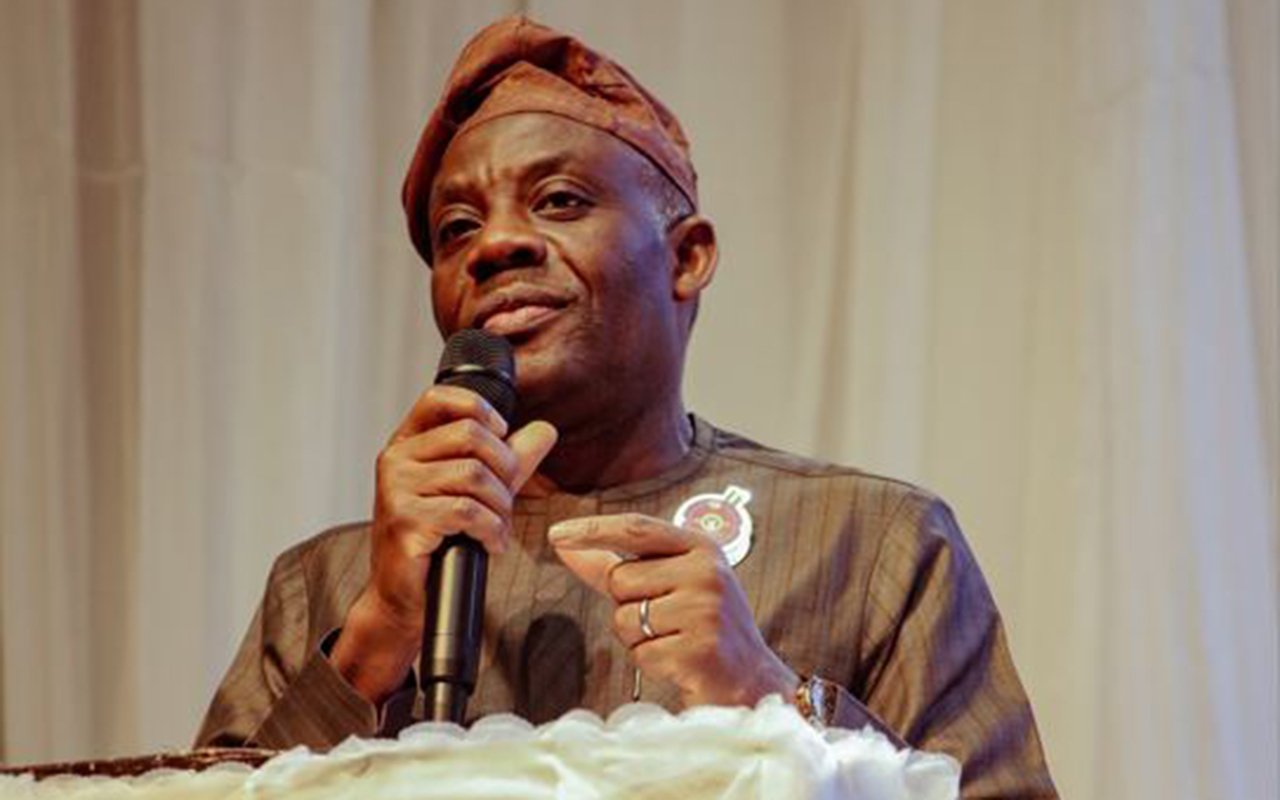
On 26 September, I spoke to Dr Leke Oshunniyi, a former president of KCOBA who has sat on its executive committee since 1993. I also spoke, on background, with a former chairman of the school’s Parent-Teacher Association. Having listened to both sides and engaged with conversations on the issue, I believe the concession deserves a chance, but only with firmer safeguards, and unlikely to be a template for other unity schools.
A School That Needs Rescuing
Nobody seriously disputes that King’s College has declined. Oshunniyi described periods when the school had no electricity and its buildings were crumbling, and pointed to the Minister of Education’s own visit, which left him shocked at how far a once-grand institution had fallen. “We always see (the concession) as a rescue mission,” he told me, “just to bring back the glory days.”
The decline of King’s College can be explained with simple maths. When Oshunniyi entered the school in the 1970s, about 60 boys were admitted each year. In later years more than 600 were admitted, and enrolment at one point passed 3,800. It is now about 2,500. “It’s like a car carrying an excessive number of passengers,” he says. “It won’t last as long as one that doesn’t.” If you want to carry more passengers, you would need a bigger car, and the owner of KC hasn’t been able to match its ambition for more students in the college with improved funding. Decline was therefore destined to result.
The Case Against The Concessioning
Those against the proposal, including the former PTA chairman I spoke to, do not deny that the school needs help. His objection is that the old boys are asking for the keys without having earned them. In his telling, KCOBA cannot point to a single building it has put up for the school apart from its own offices, and it is now rushing a reform through without bringing parents and teachers along.
Oshunniyi rejected this flatly. He says that ahead of the 2009 centenary, old boys and their class sets spent more than ₦500 million renovating the campus, around ₦5 billion in today’s money, and that just last year four class sets renovated the dining hall on the Victoria Island campus. These are specific claims that can be checked, and KCOBA would do itself a favour by publishing a full account of what it has spent on the school over the past two decades.
On engagement, however, the critics have a point. By the PTA’s own account, parents received notice of a decision already made, with a six-month transition to follow. Oshunniyi himself concedes that the association’s assurances are “probably not getting through”. We tend to bungle reforms in Nigeria by failing to engage early and clearly, and leaving wide room for rumour to fill the lacuna. One such rumour is that KCOBA planned to buy the college and rename it after itself. That is absurd, but absurd rumours thrive where information is scarce, and it is not acceptable that the management agreement between government and KCOBA has not been published.
More engagement would not guarantee acceptance, but it would at least eliminate one of the arguments being wielded against the proposal.
Why the Concessioning Should be Given a Chance
In a paper my team at EduIntel published earlier this year, we propose the Public Accountability School System (PASS) to help arrest the deterioration of Nigeria’s public school system. Our paper argues that Nigeria’s public school crisis is, at its root, a failure of school governance rather than of resources alone. When government took over independent schools in the 1970s, it replaced institutions whose reputations were at stake with a system in which those running the schools have little skin in the game. PASS proposes handing the day-to-day management of public schools to vetted non-profits, alumni associations among them, under performance contracts, while the schools remain public property and free to attend.
Money matters too. As I wrote in earlier analysis, the 2026 recurrent budget for unity schools works out at roughly ₦721,000 per pupil, too little for boarding schools that must feed, house and protect their students (I excluded capital budget because this is an allocation that often goes unreleased). But money without accountability has not rescued our public schools, and there is little reason to believe it will.
Few bodies have more skin in the game than KCOBA, and Lagos already has evidence of what that can do. St Gregory’s College was returned to its mission owners after years under state control, and the school seems to be in a better shape under their management. Oshunniyi told me that a recent visit to St Gregory’s, within walking distance of King’s College, left him “so ashamed” at the contrast with his old school. Who manages a school matters.
Total Lack of Government Funding is Concerning
In our PASS paper, we propose that government would keep paying for every pupil in schools transferred to independent operators, while the operators would compete on how well they run the school, not on how much money they can raise. Under the King’s College arrangement, the federal government is to stop funding the college once handover is complete. KCOBA will instead rely on a ₦100 billion endowment it is in the process of raising which, it hopes, will generate more than ₦10 billion a year once complete. That is about ₦4 million per pupil, several times what government currently provides per unity school pupil. With some of the wealthiest people in the country among its old boys, King’s College may manage this. Few other schools could.
Government may prefer a clean break because public money in Nigeria rarely comes without bureaucratic control. If it kept paying, there would likely be arguments about keeping salaries within the federal payroll system and staff remaining under Public Service Rules, as every budget line would answer to the ministry. The proposed zero government funding may therefore suit King’s College and its alumni better. But for schools that lack generous backing and cannot be expected to fund themselves, the KC concessioning cannot be a model.
So, my worry is what government takes from this. If the lesson is “hand the school to the alumni and walk away”, it will run into trouble with schools whose old students cannot raise ₦100 billion. Federal Government Academy, Suleja, has reportedly been identified as next. Capping fees at unity school rates offers little comfort on its own, since those levies rarely cover more than 10 per cent of what a school needs. At King’s College, the endowment will find the other 90 per cent. Elsewhere, it will be parents. Once a public school starts charging commercial fees to keep the lights on, it is no longer serving the purpose for which it exists. King’s College should be treated as an experiment, not a policy for the rest of our public school system.
Safeguards are Necessary
If the concession is to succeed, four things need to be written down, not promised.
First, fees and access. The old boys’ promises on fees and scholarships belong in the agreement: a fee cap tied to unity college rates, and a fixed and substantial share of places on full scholarship, not a discretionary handful.
Second, teachers. Teachers are to choose whether to move across or be redeployed within the public service. The agreement should require that pay for those who move across is benchmarked to at least the unity college scale until the last government-employed teacher leaves or retires voluntarily. I expect KCOBA can easily pay better than the federal government does, but this safeguard is for future concessions too. Teachers’ already meagre salaries must not deteriorate further as a result of any concessioning.
Third, government must remain owner and regulator in practice, not just on paper. Oshunniyi says the agreement contains performance indicators and step-in rights. Those indicators, and the school’s results and spending against them, should be published every year.
Fourth, the arrangement needs the protection of law. A 35-year concession will outlive several governments, and Nigeria has a long history of policies abandoned the moment their sponsors leave office. The terms should be backed by legislation, so that a future minister cannot scrap the experiment on a whim before it has had time to bear fruit.
Engage More, but do not Retreat
The committee set up after the strike gives government a chance to do what it should have done robustly at the start: sit parents, teachers and old boys at the same table, publish the agreement and answer the hard questions in public.

What it should not do is retreat. The status quo is clearly not working and even parents are already abandoning unity schools as a result. In 2016, nearly 91,000 children sat the national entrance examination for unity school places; by 2025, fewer than 65,000 did. The current system is failing most of the children it serves, and defending it as it is has become a way of defending that failure. King’s College’s old boys have offered to put their money and their names behind the school that made them. Government should hold them to it, in writing, and let the experiment run.
Sodiq Alabi is a columnist with Arbiterz.