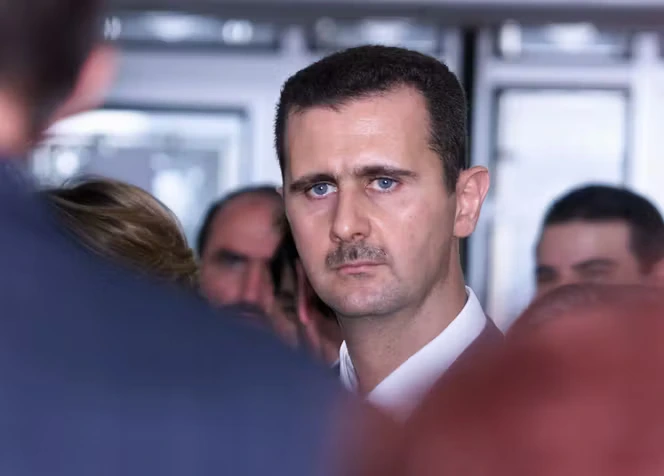
A Syrian court has sentenced former president Bashar al-Assad to death in absentia, turning the prosecution of the man who ruled Syria for nearly a quarter-century into the most consequential judicial test yet for the country’s postwar transition.
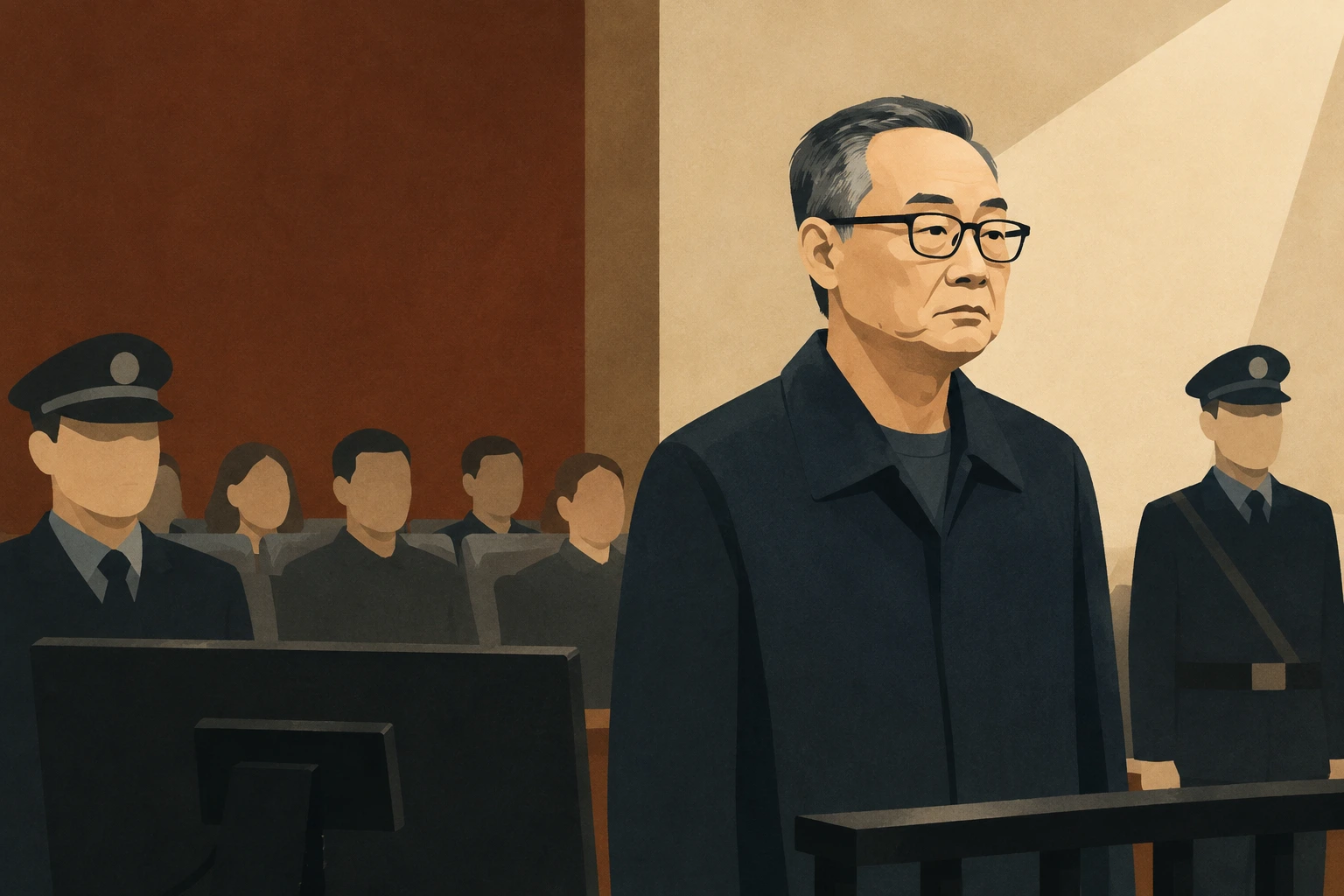
The Fourth Criminal Court in Damascus also sentenced Assad’s younger brother, Maher al-Assad, and their cousin Atef Najib to death. Najib, unlike the Assad brothers, was present in court and has been standing trial since April over his role in the crackdown that began in Daraa in 2011.
The ruling is the first criminal conviction of Bashar al-Assad since his family’s five-decade rule ended with the collapse of his government in December 2024. It gives victims of the former regime a formal domestic judgment after years in which accountability largely depended on courts and prosecutors outside Syria.
But the sentence does not mean Assad is about to face execution.
He fled Damascus during the final days of his government and was granted asylum in Russia. Moscow has so far refused to surrender him, leaving Syria with a judgment it cannot presently enforce against the principal defendant. Syria had already sought his extradition as part of its effort to prosecute senior figures from the former regime.
That gap between legal accountability and physical custody is likely to define the next phase of Syria’s attempt to deal with the legacy of the Assad era.
From Daraa to the courtroom
Najib’s case has particular importance because it links the new judicial process to the opening moments of the Syrian uprising.
As head of political security in Daraa, Najib was accused of overseeing the detention and torture of teenagers who had written anti-government graffiti in March 2011. The arrests became a catalyst for protests that spread across Syria before escalating into a conflict that lasted almost 14 years.
His trial, which began publicly in Damascus in April, was the first major proceeding against a senior Assad-era official conducted by Syria’s new authorities. Victims’ families attended hearings alongside representatives of transitional-justice and international human-rights organisations.
The prosecution therefore carries significance beyond the fate of one former security officer. It is an attempt to establish, in a Syrian courtroom, a chain of responsibility for a system whose security agencies operated for years with little effective judicial oversight.
That is also why Assad’s absence matters.
The former president is accused of responsibility for a wider pattern of premeditated killing, torture and arbitrary detention. His brother Maher commanded the elite Fourth Armoured Division, one of the most powerful formations in the former security apparatus.
Syria is building the justice system while using it
The proceedings are taking place before Syria has fully completed the legal architecture for transitional justice.
The country’s new authorities established a Transitional Justice Commission in 2025, but human-rights organisations have warned that its mandate is focused on abuses committed by the former government and does not comprehensively cover violations by other armed actors. A broader transitional-justice law has also been under development.
There is a further legal complication.
Syria’s existing criminal law does not contain a comprehensive set of provisions specifically criminalising war crimes and crimes against humanity. Earlier proceedings have therefore relied heavily on ordinary offences such as murder and torture, while invoking international humanitarian law and customary international law.
That matters because transitional justice is not simply about producing convictions. It is also about establishing an authoritative record of what happened, identifying chains of command, preserving evidence and giving victims a mechanism for recognition and reparations.
A court that sentences individuals without adequately documenting how an entire state apparatus operated risks producing a series of isolated criminal cases rather than a full historical record.
The death penalty creates another dilemma
The use of capital punishment adds a separate complication.
Syria retains the death penalty under domestic law, but the punishment sits uneasily with the international human-rights framework the new authorities are seeking to use to legitimise their justice process.
Syria is a party to the International Covenant on Civil and Political Rights, whose Article 6 restricts capital punishment to the “most serious crimes”. Human-rights organisations have questioned whether the broader use of the death penalty in Syrian law is compatible with those obligations.
For victims who spent years waiting for accountability, the severity of the sentence may carry obvious symbolic weight. For Syria’s new government, however, the manner in which these trials are conducted will also affect its credibility with foreign governments, international institutions and Syrians who suffered abuses by multiple sides during the war.
Human Rights Watch has already warned that the current judicial process faces questions over legal definitions, command responsibility, evidence preservation and the absence of a completed transitional-justice framework.
Russia remains the decisive obstacle
The practical problem is that Syria cannot enforce its most politically important verdict unless Assad leaves Russia.
The former president’s asylum there was one of the final acts of his old alliance with Moscow. Russia had intervened militarily on Assad’s behalf in 2015, helping his government regain territory after years of war. His survival in Russia after his overthrow therefore left Moscow with both a former ally and a potential bargaining asset.
The new Syrian government has sought his extradition, but a death sentence makes the diplomatic question even harder.
For Damascus, surrendering Assad would provide the possibility of a trial in person and potentially close one of the most painful chapters of the country’s recent history. For Moscow, handing over a former head of state it granted asylum to would carry political and legal consequences beyond Syria.
The result is an unusual situation: Syria has secured a judgment against its former ruler without securing custody of him.
The verdict does not close the Assad chapter
The court’s ruling comes less than two years after Assad’s government collapsed, but the political and social consequences of his rule remain embedded in Syria.
The war killed roughly half a million people and displaced millions. Human-rights investigations have documented arbitrary detention, torture, enforced disappearance, attacks on civilians and the use of chemical weapons during the conflict.
The legacy is also visible in the thousands of families still searching for missing relatives and in communities divided by years of violence.
That makes the Assad prosecution different from an ordinary criminal case. The court is being asked, in effect, to help establish the legal record of a state that no longer exists.
Whether that process becomes a credible system of transitional justice will depend less on the symbolism of a death sentence than on what happens next: whether evidence is preserved, whether victims from across Syria can participate, whether responsibility extends beyond a handful of senior figures, and whether the new authorities apply accountability consistently.

For now, Assad remains in Russia.
The Syrian court has delivered its verdict. The harder question — whether the post-Assad state can turn that verdict into justice that survives beyond the courtroom — is only beginning.