Nigeria’s 2027 presidential campaign is already reopening one of the country’s most consequential economic arguments: whether the removal of petrol subsidies was a necessary fiscal reform or a policy that transferred too much of the adjustment cost to households.
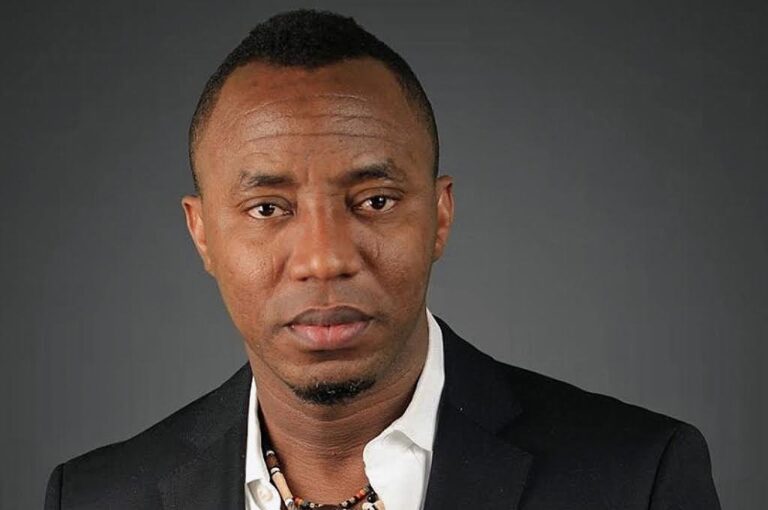
Omoyele Sowore, the African Action Congress presidential candidate, has chosen the latter argument, saying on Tuesday that he would restore fuel subsidies if elected president.
His proposal puts him at odds with the central direction of Nigeria’s economic policy since May 2023, when President Bola Tinubu ended the petrol subsidy regime and moved the country towards market-based fuel pricing. International financial institutions have broadly supported the reform while warning that its benefits would depend on stronger social protection and better management of the resulting fiscal space.
Sowore’s argument is less about defending the old subsidy system than about challenging the premise that subsidies are inherently wasteful. He told ARISE TV that the government was still subsidising parts of the economy, while disguising those interventions under different policies.
He specifically claimed that the naira was being “secretly” subsidised and argued that customs waivers and other government concessions meant wealthy importers could receive greater benefits from public policy than poorer Nigerians.
That distinction matters because a fuel subsidy and foreign-exchange intervention are not the same economic instrument.
The Central Bank of Nigeria operates a foreign-exchange market in which it can intervene to manage liquidity and market conditions. Its own description of the system says Nigeria has historically used controlled, floating and managed-floating regimes, with occasional intervention by the central bank. Since 2023, the CBN has moved towards a unified foreign-exchange market in which demand and supply play a greater role in determining the naira’s value.
Calling such intervention a “subsidy” is therefore a political and economic interpretation rather than an established description of the current FX framework.
The same distinction applies to petrol.
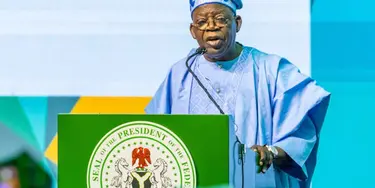
Tinubu announced the end of the subsidy in his May 29, 2023 inauguration speech, arguing that the system increasingly favoured richer Nigerians and consumed resources that could instead be directed towards infrastructure, education, healthcare and employment.
The World Bank subsequently described the removal as one of the major reforms needed to restore Nigeria’s fiscal position. But it also acknowledged the immediate cost: petrol prices rose sharply, while the naira depreciated following the government’s foreign-exchange reforms.
The reform therefore created a political paradox that is likely to remain central to the 2027 election.
Nigeria gained fiscal space and improved some macroeconomic indicators, but many households experienced the reforms first through higher transport, food and energy costs.
The World Bank’s April 2026 assessment says Nigeria has made progress towards macroeconomic stability, with inflation easing, stronger external and fiscal positions and continued economic growth. But it also says household incomes have not fully recovered and poverty remains high.
That gap between macroeconomic indicators and household experience provides the political space for Sowore’s proposal.
The question is not simply whether Nigeria can afford to subsidise petrol again. It is whether a future government could design a subsidy that reaches households without recreating the fiscal leakages and distributional problems associated with the previous system.
That problem has been recognised by international institutions. The World Bank has argued that Nigeria should move towards a competitive retail petrol market while using targeted support for vulnerable households rather than broad subsidies.
The International Monetary Fund has taken a similar position on the broader reform agenda. Its 2025 assessment said Nigeria had abolished implicit fuel subsidies, while noting that the full budgetary savings had yet to accrue. It also called for the removal of costly and untargeted energy subsidies alongside stronger targeted support for vulnerable households.
Sowore’s criticism nonetheless taps into a genuine weakness in the reform story: removing a subsidy does not automatically make an economy more equitable.
The issue is what replaces it.
If the government saves money by ending a universal subsidy but cannot convert those savings into reliable public services, targeted transfers, productive investment or lower costs elsewhere in the economy, households may perceive the reform simply as a higher cost of living.
Nigeria’s food-security situation illustrates the scale of that challenge.
The Food and Agriculture Organization says 34.7 million Nigerians were projected to face high levels of acute food insecurity in 2026. In July, the organisation reported that 6.4 million people in Borno, Adamawa and Yobe alone were facing acute food insecurity, including more than 1.1 million people in emergency conditions.
Those figures give greater weight to Sowore’s broader argument that economic policy must be judged by living standards rather than by headline indicators alone.
But they do not, by themselves, establish that restoring a nationwide petrol subsidy would be the most effective response.
The economic record since 2023 is more complicated. The World Bank says Nigeria’s reforms helped improve fiscal health and the foreign-exchange market. In 2024, economic growth reached 3.4%, while government revenues increased substantially and the fiscal deficit narrowed. At the same time, inflation remained high and the gains had not translated fully into improved living standards.
That tension is likely to define the economic debate heading into 2027.
Sowore is effectively offering voters a different answer to the question that has governed Nigeria’s economic policy since Tinubu took office: should the government prioritise fiscal discipline and market pricing even when the transition is painful, or should it use public money to suppress some consumer prices while accepting the associated fiscal cost?
His answer is clear: restore the subsidy and change the philosophy behind economic management.
Whether that would produce lower prices without recreating the fiscal pressures of the old system will depend on details that Sowore has yet to spell out, including the size of the proposed subsidy, how it would be funded, who would qualify, how imports would be priced and how the government would prevent arbitrage and leakage.
Those questions could become more important than the slogan itself as Nigeria’s 2027 presidential contest moves from criticism of existing reforms to competing economic programmes.
The subsidy debate, once presented largely as a question of whether Nigeria could afford to keep paying for cheap petrol, has therefore evolved into a broader argument about who should absorb the cost of economic adjustment — the government, consumers, businesses or taxpayers.
For Nigeria’s next presidential election, that may prove to be one of the defining economic choices.