China’s campaign against corruption has reached another former minister, but the punishment handed to Tang Renjian is more complicated than the viral claim that Beijing simply “executes corrupt politicians.”
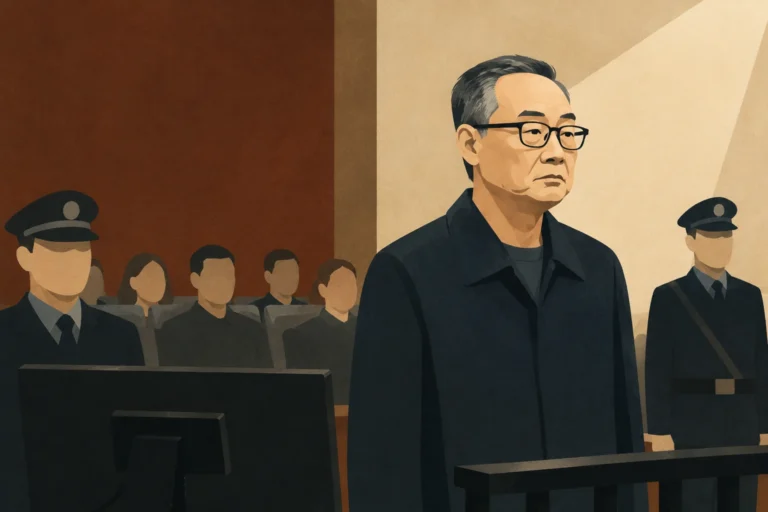
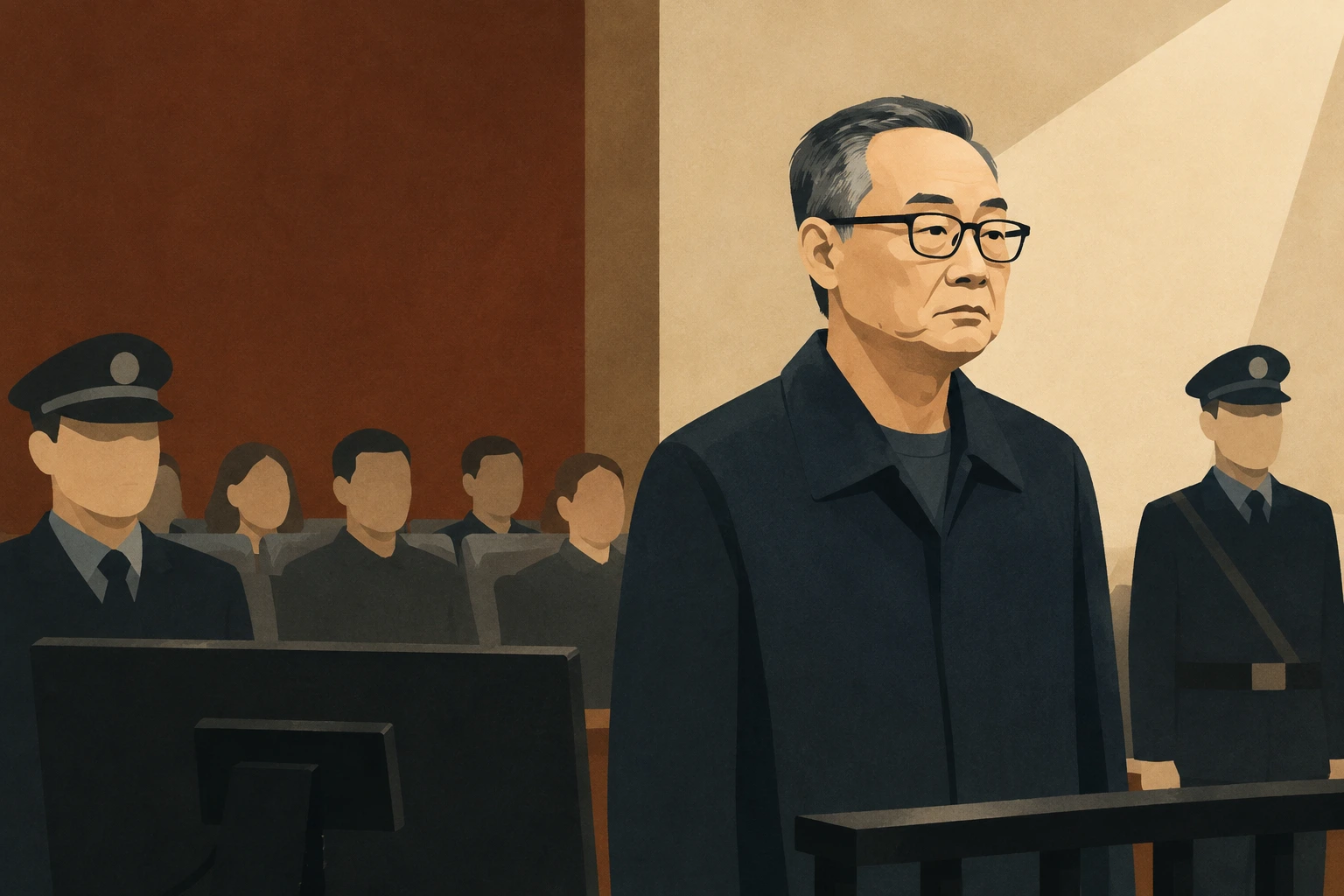
A court in northeastern China sentenced Tang, the former minister of agriculture and rural affairs, to death with a two-year reprieve on Sept. 28, 2025, after finding him guilty of accepting more than 268 million yuan ($38 million) in bribes over nearly two decades. The court also stripped him of political rights for life and ordered the confiscation and recovery of his assets.
The distinction matters. A death sentence with a reprieve is not an immediate execution. Under the Chinese system, if the defendant commits no further serious offence during the two-year period, the death sentence is generally commuted, typically to life imprisonment. Tang’s sentence therefore represents an exceptionally severe punishment without necessarily meaning that he will be put to death.
What makes the case notable is not simply the size of the bribes. It is the range of positions Tang held while accumulating them — and the fact that his alleged corruption continued across changes in job, rank and location.
A career spanning China’s political machinery
According to the Changchun Intermediate People’s Court, Tang used the influence associated with a succession of senior posts between 2007 and 2024.
Those positions included deputy director of the Office of the Central Leading Group for Financial and Economic Affairs, deputy head of the Central Rural Work Leading Group’s office, a senior position in Guangxi, governor of Gansu province and, eventually, China’s agriculture minister.
The court found that he used his authority, as well as relationships created by his positions, to assist companies and individuals with business operations, project contracts and personnel appointments.
The case therefore illustrates a particular feature of elite corruption in China: influence can remain valuable even after an official moves between institutions. Access to senior officials can affect contracts, business opportunities and appointments far beyond the ministry where an official formally works.
Tang’s period of misconduct, according to the court, stretched from 2007 until 2024. His career consequently overlapped with the administrations of Hu Jintao and Xi Jinping, although the investigation and prosecution came under Xi’s much more aggressive anti-graft campaign.
Why Xi has made corruption a political priority
Xi Jinping’s anti-corruption drive began after he became Communist Party leader in 2012 and has since reached officials at almost every level of the Chinese state and Communist Party.
The campaign has never been limited to petty bribery. Ministers, provincial leaders, military commanders, senior judges and executives of state-owned enterprises have all been investigated or punished.
The political logic is broader than recovering stolen money.
For the Communist Party, corruption can weaken the chain of command by allowing money and private relationships to compete with political loyalty. It can also undermine public confidence in a system in which the Party exercises authority over the state, courts and most major institutions.
That helps explain why Xi has repeatedly described corruption as an existential threat to the Party.
Tang’s case fits that pattern. His conviction did not merely concern money changing hands. The court said his conduct caused “particularly serious losses” to the interests of the state and the people.
The punishment was severe — but the court also cited cooperation
There was another important detail in the judgment.
The court said Tang had confessed after his detention, disclosed much of the bribery that investigators had not yet uncovered, expressed remorse and actively returned illicit proceeds. It also said some of the bribery involved unsuccessful attempts rather than completed transactions.
Those factors helped persuade the court that the death penalty should not be carried out immediately.
The result illustrates how China’s harshest corruption penalties operate in practice. A headline announcing a “death sentence” can conceal a legal process in which confession, cooperation and restitution materially affect the final punishment.
Tang’s case is therefore better understood as a demonstration of the maximum pressure available to the Chinese judicial system than as evidence that every senior official convicted of corruption is executed.
The campaign has moved far beyond agriculture
Tang is also part of a much larger sequence.
In July 2025, former Tibet Communist Party chief Wu Yingjie received a death sentence with a two-year reprieve after being convicted of accepting more than 343 million yuan in bribes.
The crackdown continued into 2026. In January, former senior political adviser Zhang Xiaolian was sentenced to 12 years in prison after the court found that he had illegally received more than 30.68 million yuan between 2007 and 2023.
The military has also become a major target. In May 2026, former Chinese defence ministers Wei Fenghe and Li Shangfu were both sentenced to death with two-year reprieves over corruption offences, according to state media reports. Their cases came amid an expanding purge of senior military figures.
That progression is significant because it shows the campaign is not confined to one ministry or one type of official.
It has reached institutions responsible for agriculture, provincial government, political administration and national defence.
But punishment does not answer the institutional question
China’s system has demonstrated an ability to punish officials on a scale that would be difficult for many governments to match.
The harder question is whether repeated punishment can prevent corruption from reproducing itself.
China’s anti-graft institutions operate within a political system in which the Communist Party remains above the state bureaucracy and exercises decisive influence over the courts, prosecutors and disciplinary bodies. The campaign therefore relies heavily on internal Party discipline and state enforcement rather than on an independent anti-corruption institution operating outside the political hierarchy.
That gives Beijing considerable power to investigate and punish officials.
It also means the effectiveness of the campaign cannot be measured simply by counting convictions.
If officials continue to have discretionary control over contracts, promotions, land, licences and public resources, the incentives that create opportunities for bribery can survive even after individual officials are removed.
Tang’s career illustrates that problem unusually clearly. The alleged bribery continued while he moved through some of the most powerful economic and agricultural institutions in China.
What the Tang case says about Xi’s China
The broader message is not that China has eliminated corruption.
It is that under Xi, corruption has become increasingly dangerous for the people who practise it.
An official can rise through the political hierarchy, accumulate influence for years and still face the possibility of investigation, expulsion from the Party, confiscation of assets and an extremely severe criminal sentence.
That is a meaningful change in the political environment.
But it is also a reminder of the limits of a campaign centred on punishment. China’s leadership can make corruption personally ruinous for officials without necessarily removing the institutional conditions that make access to state power financially valuable.
Tang Renjian’s downfall therefore tells two stories at once.
The first is about the reach of Xi Jinping’s anti-corruption apparatus.
The second is about why, despite years of purges and increasingly severe sentences, Beijing continues to describe corruption as one of the most serious threats facing the Communist Party.

The campaign has become harder on corrupt officials.
The persistence of the problem is why the campaign continues.