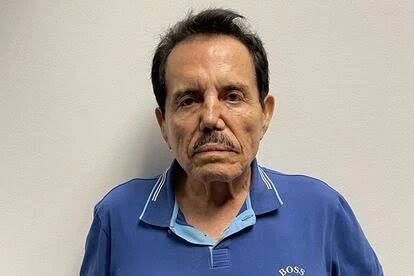
Ismael “El Mayo” Zambada, one of the founding figures behind Mexico’s powerful Sinaloa cartel, is expected to be sentenced to life imprisonment by a federal court in Brooklyn, New York, marking what prosecutors describe as the downfall of one of the last influential leaders of Mexico’s old-generation drug cartels.
The 76-year-old crime boss pleaded guilty earlier this year to multiple charges linked to drug trafficking and organized crime as part of a plea agreement with U.S. authorities. Under that agreement, he faces a mandatory sentence of life without the possibility of parole and has agreed to surrender approximately $15 billion in assets believed to be proceeds of criminal activity.
From Rural Sinaloa to Cartel Leadership
Born in Mexico’s northwestern state of Sinaloa in 1950, Zambada rose from humble beginnings to become one of the world’s most influential drug traffickers. His criminal career began with established trafficking organizations before he joined forces with Joaquín “El Chapo” Guzmán to build what would become the Sinaloa cartel during the 1980s and 1990s.
Authorities say Zambada played a central role in expanding the cartel’s operations by overseeing drug distribution routes into the United States, coordinating financial networks, and maintaining relationships that enabled the organization to flourish for decades.
The Sinaloa cartel eventually grew into one of the world’s largest narcotics trafficking organizations, moving cocaine, heroin, methamphetamine, fentanyl and other illicit drugs across international borders.
The Drug Lord Who Stayed Hidden in Plain Sight
Unlike several cartel leaders who cultivated public profiles, Zambada maintained an unusually secretive lifestyle. He rarely appeared in photographs and managed to avoid arrest for decades despite being one of the world’s most wanted fugitives.
In a rare interview with Mexican magazine Proceso in 2010, he acknowledged that Mexican security forces had nearly captured him on multiple occasions. At the time, he argued that imprisoning or killing him would not significantly disrupt drug trafficking operations in Mexico.
His long run ended in July 2024 when he was taken into U.S. custody after arriving at an American airport.
An Arrest That Still Raises Questions
Zambada has maintained that he did not voluntarily surrender to U.S. authorities.
According to his account, he was deceived by Joaquín Guzmán López—one of El Chapo’s sons—into boarding an aircraft that ultimately landed in the United States, where federal agents arrested him.
Guzmán López later acknowledged kidnapping Zambada as part of his own plea arrangement with U.S. prosecutors.
The circumstances surrounding the operation have remained a source of diplomatic tension between Mexico and the United States, with Mexican officials seeking clarification over allegations that U.S. law enforcement agencies may have played a role in the operation. U.S. authorities have consistently denied participating in the alleged abduction.
Prosecutors Detail Years of Violence and Murder
Federal prosecutors described Zambada as a key architect of a criminal enterprise responsible for widespread violence across Mexico and beyond.
Court filings accuse him of directing murders, orchestrating attacks against rival cartel members, and authorizing violence targeting police officers and military personnel as the Sinaloa cartel expanded its influence.
The cartel remains one of several Mexican criminal organizations designated by the United States as Foreign Terrorist Organizations.
The Cartel War That Followed El Chapo’s Fall
Following the imprisonment of El Chapo, leadership disputes within the Sinaloa cartel intensified. Rival factions aligned with Zambada and members of the Guzmán family have battled for control, contributing to prolonged violence in the Mexican state of Sinaloa.

The internal conflict has reportedly claimed thousands of lives and further destabilized the region.
Monday’s sentencing is expected to close one of the most significant chapters in the U.S. government’s decades-long pursuit of senior Mexican drug cartel leaders, ending the criminal case against a man who spent decades avoiding capture before his dramatic arrest in 2024.