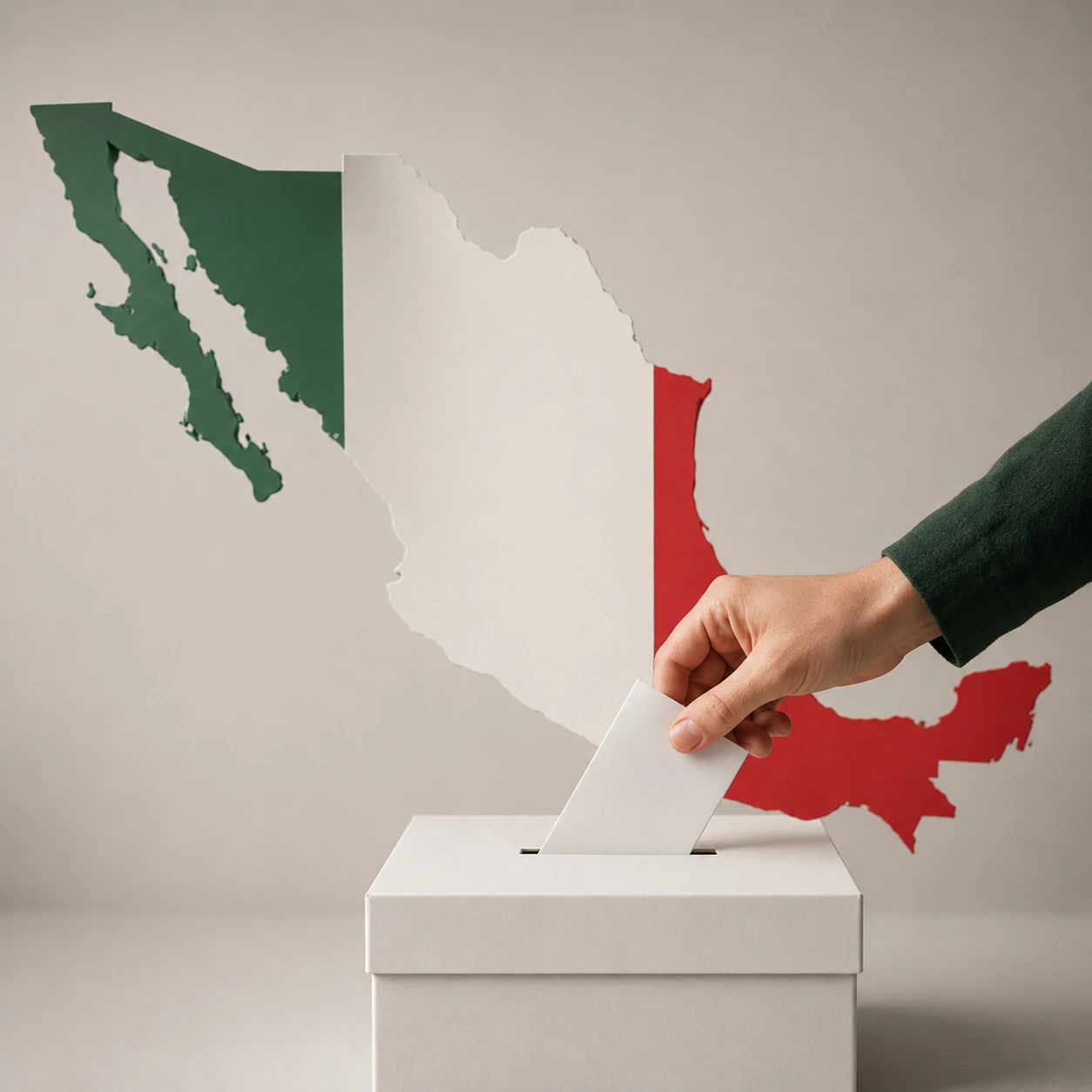
Mexico’s Senate on Friday approved a constitutional amendment that would allow elections in the country to be annulled over cases of foreign interference.
The amendment, which was previously approved by Mexico’s lower house on Thursday, seeks to strengthen safeguards around the country’s electoral process amid growing concerns over digital misinformation, illicit political financing, and foreign influence operations.
Under the proposed reform, foreign interference is defined as “illicit financing, propaganda, the systematic dissemination of misinformation, digital manipulation, and the intervention of foreign governments or agencies.”
The measure modifies provisions within Mexico’s constitution and is aimed at protecting the integrity of elections from both traditional and emerging forms of external influence.
Supporters of the amendment argue that advances in digital technology and social media have increased the risk of foreign actors attempting to manipulate political outcomes through coordinated disinformation campaigns and covert funding channels.
The legislation also comes amid broader global concerns about election interference, cyber influence operations, and online propaganda campaigns targeting democratic institutions
Mexico’s History of Election Interference and Electoral Controversies
Mexico has a long history of electoral controversies and allegations of political interference dating back several decades.
For much of the 20th century, the Institutional Revolutionary Party (PRI) dominated Mexican politics, ruling the country continuously for more than 70 years until 2000. During that era, opposition parties and civil society organisations frequently accused the government of election fraud, voter suppression, and manipulation of electoral processes.
One of the country’s most controversial elections occurred in 1988, when opposition candidate Cuauhtémoc Cárdenas challenged PRI candidate Carlos Salinas de Gortari in a fiercely contested presidential race.
During the vote-counting process, Mexico’s electoral computer system reportedly collapsed, sparking widespread allegations that the election had been manipulated in favour of the ruling party.
In more recent years, concerns over election interference in Mexico have increasingly focused on digital misinformation, online propaganda, organised crime influence, and illicit campaign financing.
Authorities and analysts have warned that social media platforms and digital communication networks have become powerful tools for spreading false information capable of influencing voter behaviour and undermining public confidence in electoral institutions.

Drug cartels and criminal organisations have also been accused of interfering in local and regional elections through intimidation, violence, and financial influence, particularly in areas heavily impacted by organised crime.
Supporters of the constitutional amendment say the reform is designed to modernise Mexico’s electoral protections and prevent external actors from influencing democratic outcomes through covert or technologically driven methods.