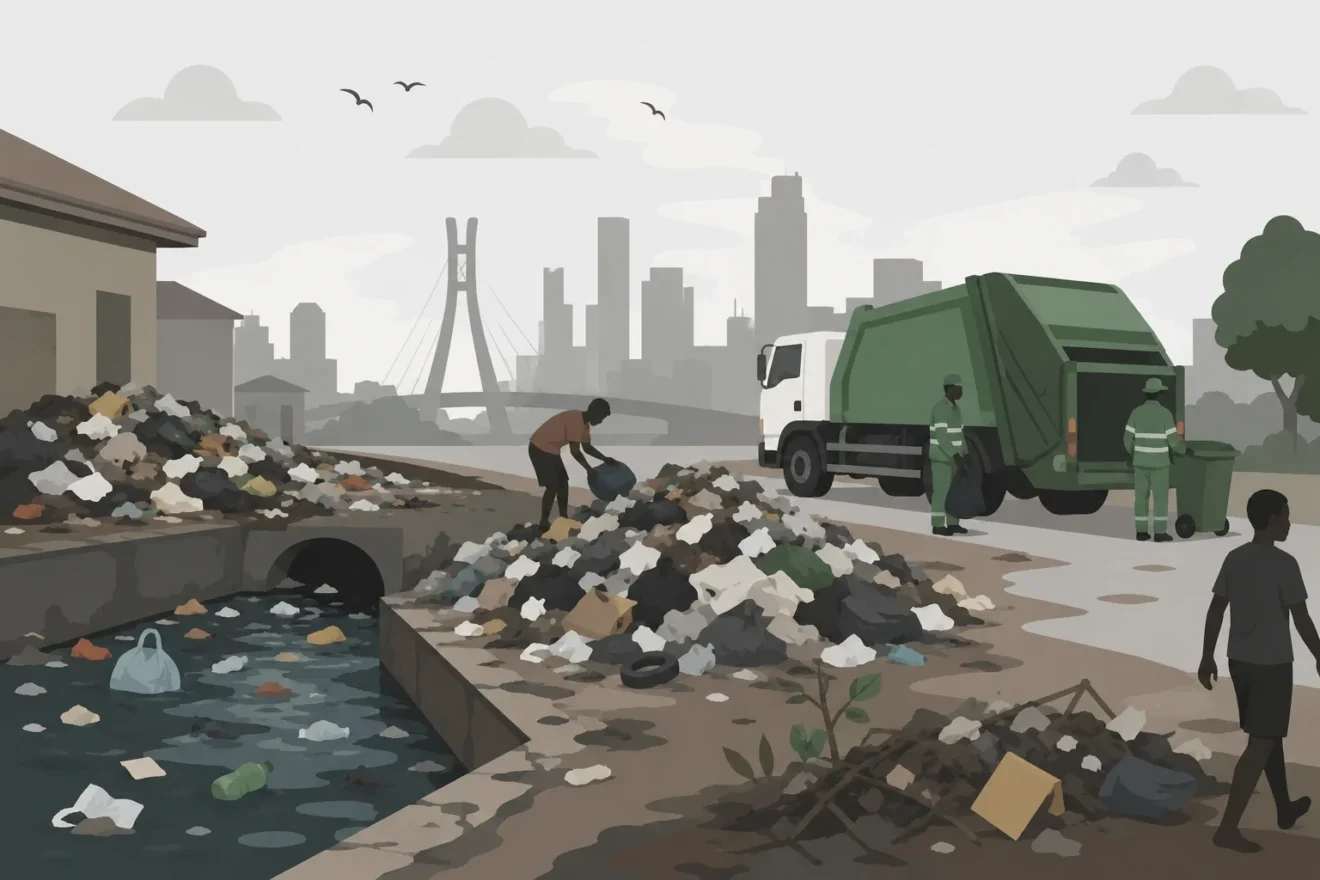
The Lagos State Government has attributed the flooding affecting several parts of the state to a significant rise in lagoon water levels, saying the situation is preventing stormwater from draining effectively through the city’s drainage network.
Commissioner for the Environment and Water Resources, Tokunbo Wahab, disclosed this in a statement shared on his official X account, explaining that the lagoon level has risen by approximately one metre, creating what experts describe as “tidal locking.”
According to the commissioner, the elevated water level is obstructing the discharge of stormwater from drainage channels into the lagoon, resulting in temporary flooding across affected communities following recent heavy rainfall.
“The flooding currently being experienced in some parts of Lagos is largely attributable to a significant rise in the lagoon water level, which has increased by approximately one metre,” Wahab said.
He added that as rainfall eases and the lagoon level gradually recedes, accumulated stormwater on roads and streets is expected to drain naturally. He urged residents to remain patient, exercise caution while moving around flooded areas, and cooperate with government agencies monitoring the situation.
The latest flooding comes amid the peak of the rainy season, with heavy downpours disrupting transportation, damaging property and affecting businesses across several parts of Nigeria’s commercial capital.
The state government has consistently argued that Lagos’ vulnerability to flooding is driven by a combination of its coastal geography, rapid urbanisation and climate change. About one-third of the state consists of lagoons, rivers, swamps and wetlands, while parts of Lagos Island lie below sea level, making flood management particularly challenging.
Environmental experts say decades of wetland reclamation, destruction of mangroves, uncontrolled development in flood-prone areas and inadequate stormwater retention infrastructure have significantly weakened the city’s natural flood defences.

The Lagos State Government said it has continued desilting drainage channels through the Emergency Flood Abatement Gang (EFAG), removing structures blocking waterways and issuing flood advisories ahead of the rainy season.
Authorities are also implementing a long-term flood management strategy unveiled in 2025, which includes the development of a blue-green drainage network incorporating canals, pumps, flap gates, restored wetlands and estate lakes to improve stormwater management and strengthen the state’s resilience against future flooding.