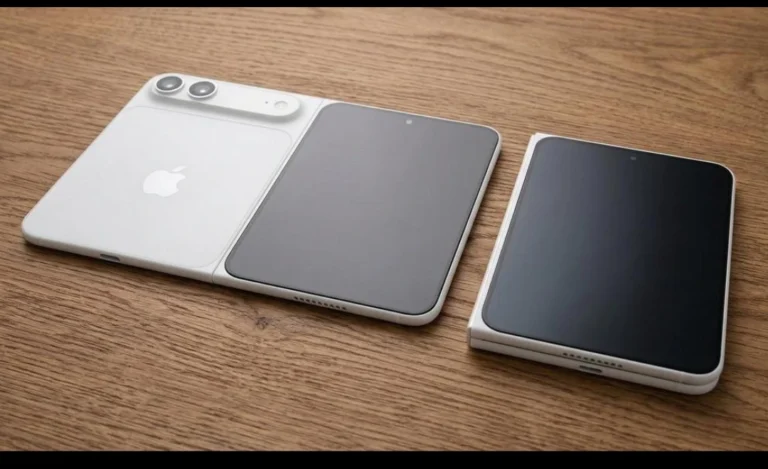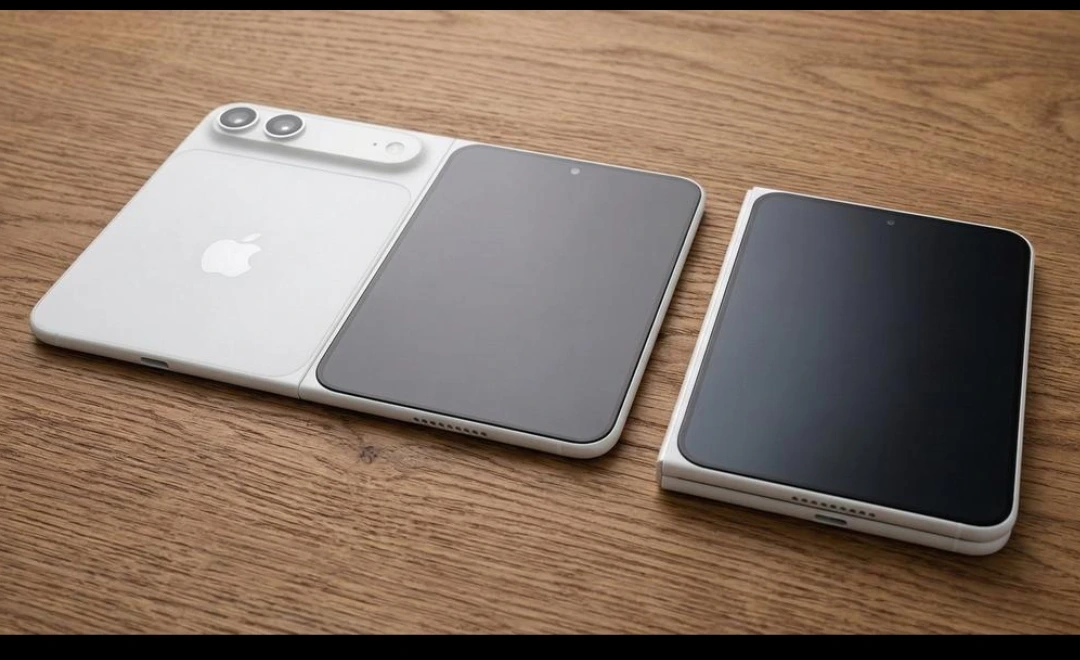
Apple is finally preparing to enter the foldable smartphone market, nearly a decade after Samsung and other rivals began experimenting with phones that open into tablet-sized displays.
The company is expected to unveil its first foldable iPhone at its launch event, with the device reportedly starting at about $2,000 and potentially reaching close to $3,000 for higher-storage configurations.
Bloomberg reports that Apple will call the device the iPhone Duo, with a 256GB model expected to start at around $1,999 in the US.
The price would make the iPhone Duo one of the most expensive smartphones in Apple’s history and put it firmly in the ultra-premium segment. The Wall Street Journal, however, reports that the starting price could be as high as $2,200, reflecting the high cost of the new display technology and other components.
Apple’s bet is that consumers will pay a substantial premium for a foldable phone that solves some of the problems that have held back the category, particularly the crease that has remained visible across many generations of foldable displays.
Leaked Specifications
The iPhone Duo is expected to use a book-style design, with a roughly 5.5-inch outer screen that opens into a 7.8-inch internal display. When unfolded, the device is reportedly only about 4.5mm thick.
But it is the display’s reported near-crease-free appearance that could become one of Apple’s biggest selling points.
According to reports compiled by MacRumors, Apple has been working on a display structure designed to distribute the mechanical stress created when the screen is folded.
A metal plate beneath the display and a liquid-metal hinge are reportedly being used to minimise the crease, with supply-chain reports claiming Apple has effectively solved the problem that has plagued competing foldables.
That would be a significant differentiator in a market where the centre crease remains one of the most recognisable visual characteristics of foldable phones.
The iPhone Duo is expected to use Apple’s A20 Pro chip, the company’s C2 5G modem and two 48-megapixel rear cameras. Apple Pencil support is also reportedly planned, while the large internal display is expected to support side-by-side applications and more iPad-like multitasking.
Apple’s Late Entry Into Foldable Market
Apple’s approach is consistent with the company’s strategy of entering technology categories after competitors have spent years developing them. Samsung and Huawei have been producing foldable smartphones since 2019, but technical limitations around durability, display quality, battery life and price have kept the category relatively small. Reuters estimates Samsung currently has about 40% of the global foldable market and Huawei about 30%.
Apple’s Touch ID Returns
The iPhone Duo is also expected to make a surprising change to Apple’s biometric authentication system.
Instead of Face ID, the foldable iPhone is widely expected to use Touch ID, reportedly integrated into the power button on the side of the device. The reason is primarily engineering: the extremely thin foldable design leaves less room for the components required for Apple’s Face ID system.

The return of Touch ID would represent a major departure for Apple’s premium iPhone strategy. Apple introduced Face ID with the iPhone X in 2017 and has since progressively reduced its reliance on the physical fingerprint sensor.
On the foldable, however, Apple appears willing to bring back the technology it abandoned on its flagship phones if doing so allows the company to achieve the thinness it wants.