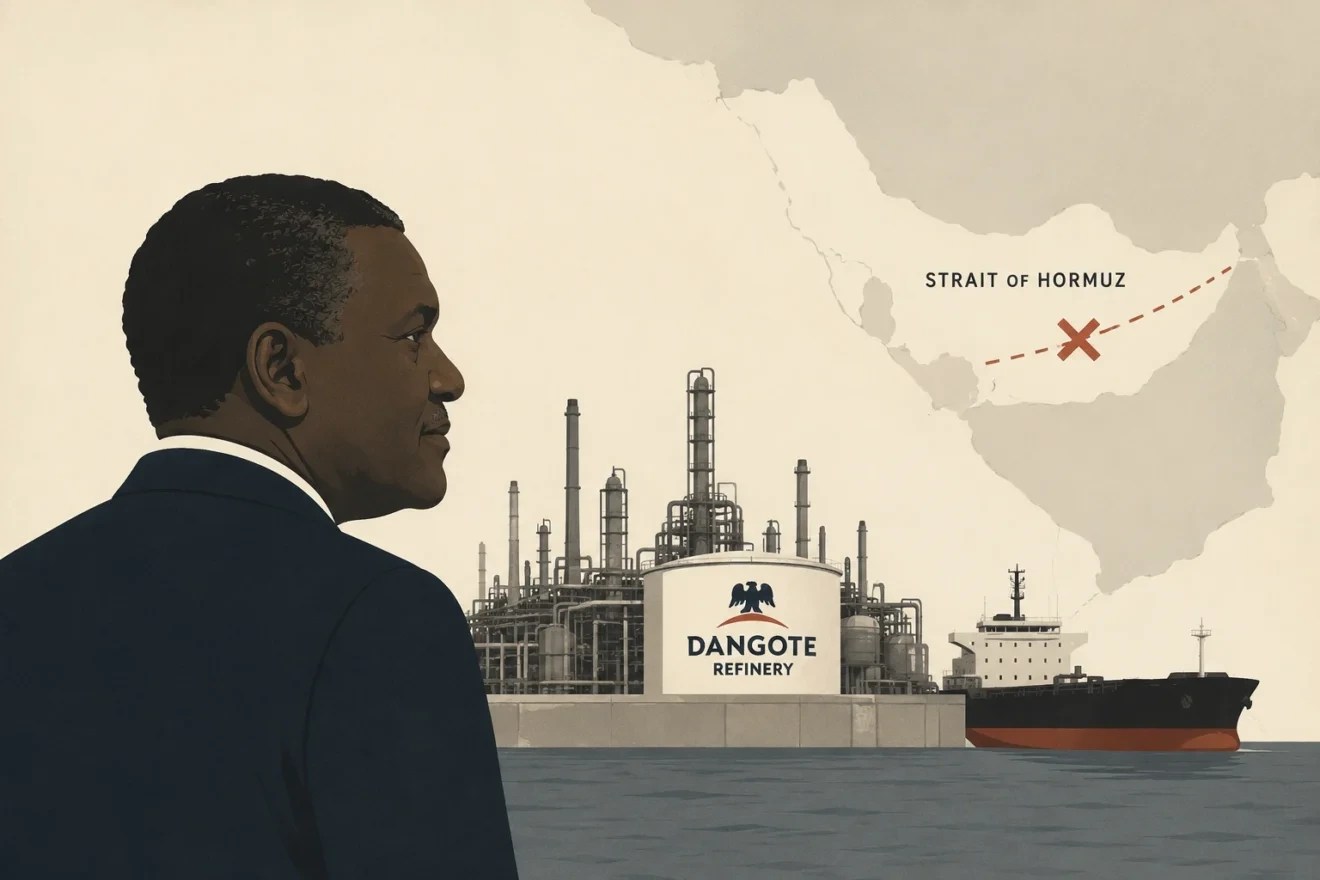
Oil prices jumped in early trading on Wednesday after the United States launched strikes against Iranian military targets and two Iranian government tankers, raising fresh concerns about crude supplies through the Strait of Hormuz.
Brent crude climbed towards $96 per barrel, while West Texas Intermediate (WTI) rose above $91, extending gains recorded after hostilities between the two countries resumed.
Both benchmarks have gained roughly $5 since the latest escalation began, with Tuesday’s session delivering gains of more than $4, the strongest single-day increase for both contracts in more than a month.
Latest US Strikes on Iranian Tankers
The latest oil price rally followed US airstrikes on Iranian military infrastructure and, according to Axios, two Iranian government tankers.
The tanker strikes represent a significant escalation because the vessels were reportedly attacked directly rather than being targeted as part of the broader U.S. naval blockade around the Strait of Hormuz.
According to US officials cited by Axios, the attacks were the first implementation of President Donald Trump’s newly approved “tanker for tanker” policy, which is intended to deter further Iranian attacks on commercial shipping. U.S. drones reportedly struck the engine rooms of the two tankers, which were anchored off Iran’s coast north of the blockade line.
The wider U.S. operation reportedly targeted about 100 sites, including Islamic Revolutionary Guard Corps (IRGC) air-defence systems, radar installations, mine-laying capabilities, communications facilities, anti-ship cruise missile launchers and attack-drone platforms.
Iran Retaliates
Iran responded with missile and drone attacks against targets in Jordan, Kuwait and Bahrain, adding to concerns that the conflict could spread across the Gulf region.
Jordan’s armed forces said they intercepted most of a ballistic missile volley, with reports indicating that 10 of 13 missiles were destroyed while the remaining projectiles landed in remote areas.
Kuwait also activated its air-defence systems against missile and drone threats, while Bahrain issued alerts following reported Iranian drone activity targeting facilities, including a U.S.-linked military base.
Iranian state media and the IRGC described the attacks as retaliation for U.S. aggression and claimed that the renewed conflict had strengthened Tehran’s control over the Strait of Hormuz.
Hormuz Disruption Raises Supply Concerns
The Strait of Hormuz remains at the centre of the oil market’s concerns because of its importance to global energy supplies, shipping data indicate that visible commodity vessel traffic through the strait has fallen sharply in recent days, with some reports putting the number of crossings at just four or five on certain days.
Some Gulf crude continues to move, occasionally with vessels switching off their transponders, but the heightened security risks have forced buyers to seek alternative supplies and kept a geopolitical premium in oil prices.

The market is also factoring in a decline in U.S. crude inventories, adding another layer of support to prices as traders assess the potential impact of the conflict on global supply.
The latest escalation comes after a period in which Washington had largely focused on economic pressure on Tehran rather than direct military action as analysts warn that a further reduction in tanker traffic through the Strait of Hormuz, attacks on energy infrastructure or a broader regional conflict could push crude prices significantly higher.