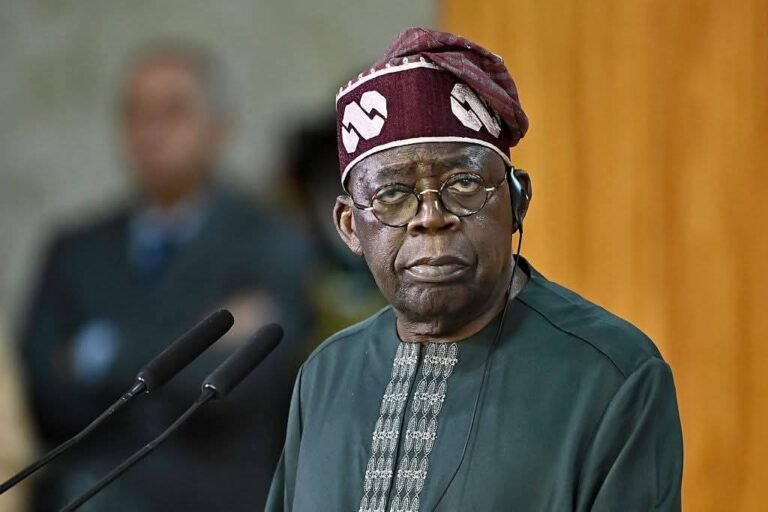
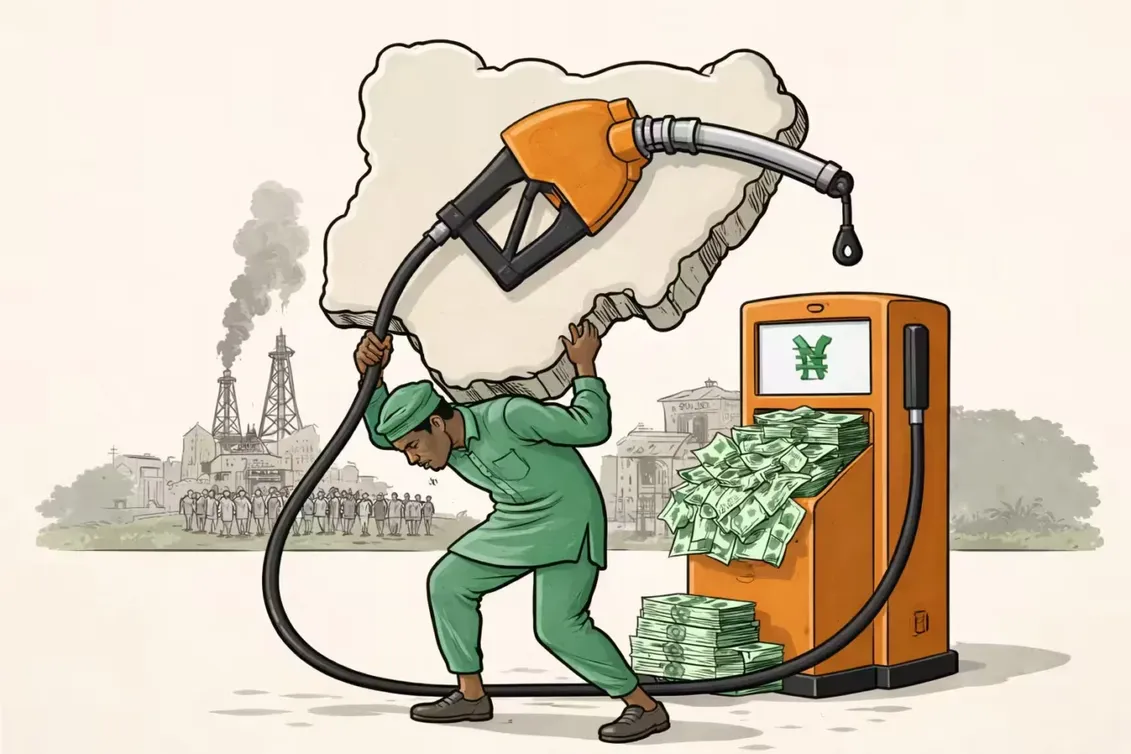
President Bola Tinubu has given Nigerians another deadline. From October 1, he says, cheaper fuel should translate into cheaper transport.
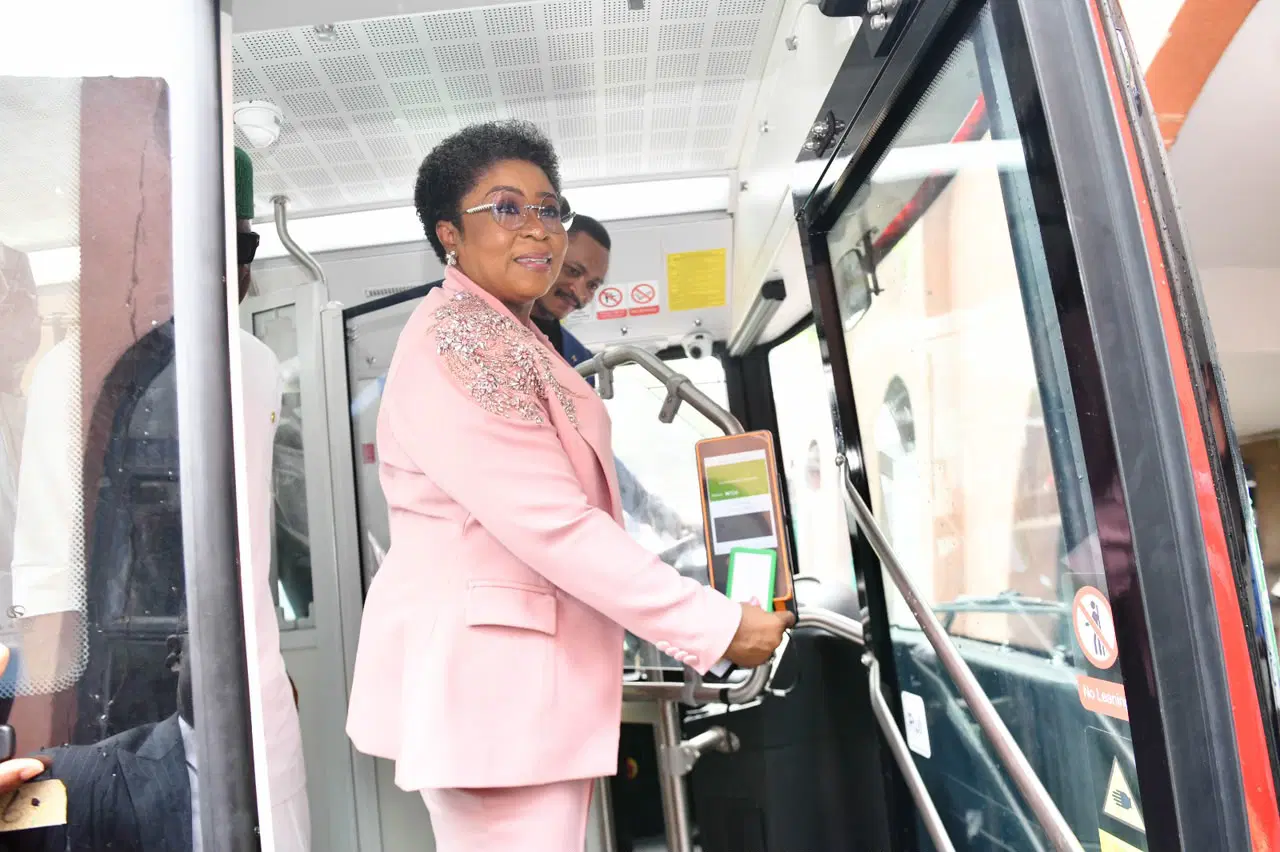
The mechanism is compressed natural gas. The federal government plans to add 500 CNG refuelling stations to an earlier 500-station programme, while state governors have agreed to work with Abuja on a national scheme designed to reduce public transport fares.
It is an attractive proposition.
It is also a promise that arrives with less than a year before Nigeria’s 2027 presidential election.
That makes the government’s record on promises relevant.
Tinubu is asking Nigerians to believe not merely that CNG is cheaper than petrol, but that his government can execute a complex national programme quickly enough for the savings to reach passengers.
The question is therefore not whether the plan sounds sensible.
It does.
The question is: why should this promise be trusted more than the many others Nigerians have heard from the APC since it came to power in 2015?
The APC has a long history of big promises
The All Progressives Congress has governed Nigeria federally for more than 11 years.
It came to power in 2015 promising sweeping changes, including three million jobs annually, improved electricity supply, economic diversification, security reform and major infrastructure development.
Some of those promises produced partial results.
Others did not meet their original targets.
Independent assessments have repeatedly documented the gap between APC campaign commitments and actual delivery. Africa Check, for example, reviewed 20 promises from Muhammadu Buhari’s 2015 and 2019 manifestos and found that the record was mixed rather than the sweeping success later claimed by the former president. (africacheck.org)
That history is not proof that Tinubu’s CNG programme will fail.
But it changes the burden of proof.
A government that has missed or delayed earlier targets cannot reasonably expect a new promise to be judged only by its intentions.
It has to demonstrate delivery.
Tinubu has made big promises too
Tinubu’s presidency has been built around reforms that were presented as difficult but necessary.
When he removed the petrol subsidy in May 2023, he argued that the savings would be redirected towards productive investment and programmes that would ultimately improve living standards.
The administration subsequently announced several measures intended to cushion the impact.
CNG was among the most prominent.
In August 2023, Tinubu announced a ₦100 billion programme to acquire 3,000 CNG-powered buses by March 2024.
The deadline passed without the promised fleet becoming the nationwide transport transformation originally envisaged.
The CNG programme nevertheless continued and expanded.
That distinction matters.
A missed deadline does not necessarily mean a failed policy. Infrastructure projects can be delayed, redesigned or scaled.
But it does mean that another deadline — October 1, 2026 — deserves scrutiny.
What makes this promise different?
There are genuine reasons to believe the CNG programme is more concrete than some political pledges.
Unlike a promise to create millions of jobs or transform an entire economy, this programme has measurable physical outputs.
There should be stations.
There should be converted vehicles.
There should be CNG supplies.
And, most importantly, there should be fares.
The government says more than 120,000 vehicles have already been converted to CNG and that more than 100,000 additional conversion kits are being prepared.
The Presidential Initiative on CNG and Electric Vehicles also reports more than 200 conversion centres and 90 operational refuelling stations across 23 states.
Those are not merely campaign slogans. They are pieces of infrastructure that can be counted.
That gives journalists and voters something unusually useful: the promise can be audited.
But the numbers also expose the problem
The government’s own figures make the scale of the remaining challenge clear.
The programme currently reports about 90 refuelling stations.
The new target is 1,000.
That means the government is attempting to expand the network more than tenfold.
It also needs enough vehicles using CNG to justify the stations, enough gas to supply them and enough conversion capacity to bring commercial transport operators into the system.
The government therefore faces an execution problem, not an ideological one.
Nobody seriously disputes that CNG can be cheaper to operate than petrol.
The difficult part is building the system around it.
Nigeria’s gas sector has long struggled with infrastructure constraints, investment gaps and distribution problems.
Those weaknesses do not disappear because the president announces another 500 stations.
The missing link is the passenger
There is another reason to be cautious.
The government frequently talks about the savings available to CNG operators.
But the election will be fought over the savings available to passengers.
Those are not necessarily the same thing.
If a bus operator spends less on fuel, the money can go towards lower fares.
It can also go towards maintenance, vehicle financing, wages, profit or other operating expenses.
That is why the governors’ proposed National Affordable CNG Transit Programme matters.
The plan reportedly involves government support for vehicle conversions and fleets alongside commitments from participating operators to reduce fares.
But the financing and implementation arrangements are still being developed.
Until those mechanisms are clear, “cheaper CNG” and “cheaper transport” remain two different propositions.
The October deadline is the real test
This is what distinguishes the current promise from the usual political announcement.
Tinubu has attached a date to it.
October 1 is close enough for Nigerians to verify.
If fares fall across major urban routes, the administration will have something concrete to point to.
If they fall only on government-supported buses or in a few participating states, the result will be more limited.
If operators continue charging the same fares despite lower fuel costs, the government will have a harder explanation.
The administration has also brought the governors into the programme, which creates a second layer of accountability.
The president controls federal policy and funding.
Governors control much of the intra-state transport environment.
Transport operators control the fares passengers actually pay.
All three will have to perform for the promise to work.
The 2027 factor cannot be separated from the policy
The timing is politically useful whether or not the policy was designed for electoral purposes.
Tinubu will seek another term in 2027.
His central economic argument will be that the reforms inherited from his first years in office needed time to produce results.
Cheaper transport would provide one of the clearest ways of demonstrating that argument.
It would turn a complicated economic reform into something voters can understand immediately.
A commuter does not need to know the inflation rate to know that a bus fare has fallen.
That is why CNG could become an important part of the political contest.
The opposition, meanwhile, has an equally simple counterargument available.
It can ask why Nigerians had to endure three years of higher transport costs before the promised savings began to appear.
So is this just another promise?
Not quite.
There is more evidence behind the CNG programme today than there was when many of the government’s earlier targets were announced.
There are converted vehicles.
There are conversion centres.
There are operational stations.
There is government funding.
There is a growing network.
And CNG does have a genuine cost advantage over petrol.
But that does not make the October promise inevitable.
The programme still depends on infrastructure expansion, reliable gas supply, state-government participation, transport-operator cooperation and a mechanism for ensuring that savings reach passengers.
Those are precisely the kinds of implementation details that can turn a promising policy into an underperforming one.
So the fairest judgement is neither that Tinubu’s announcement is empty nor that cheaper transport is now guaranteed.
It is this:
The CNG programme has progressed far enough to be taken seriously — but not far enough for the government to be given the benefit of the doubt.
The administration has chosen October 1 as its test.
For Nigerians, the test is even simpler.
They do not need another promise.
They need to see the fare come down.