For Nigeria’s federal civil servants, the arrival of electric buses is being presented as a welfare measure. But the more consequential story is what the government is trying to build around them.
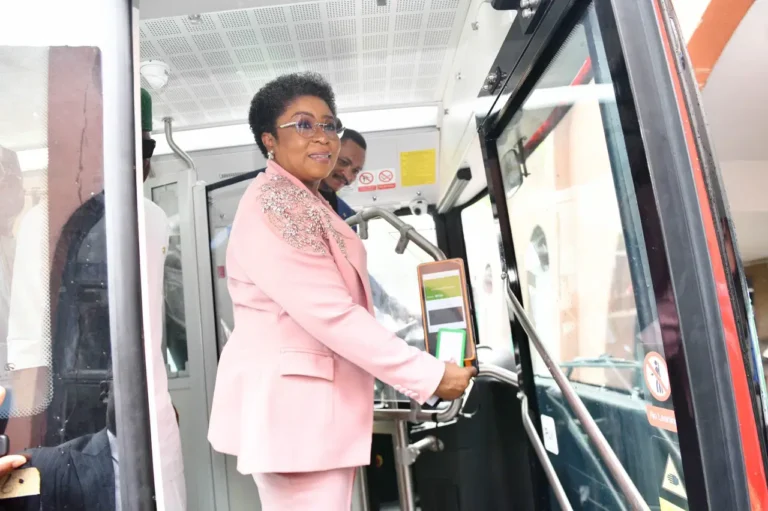
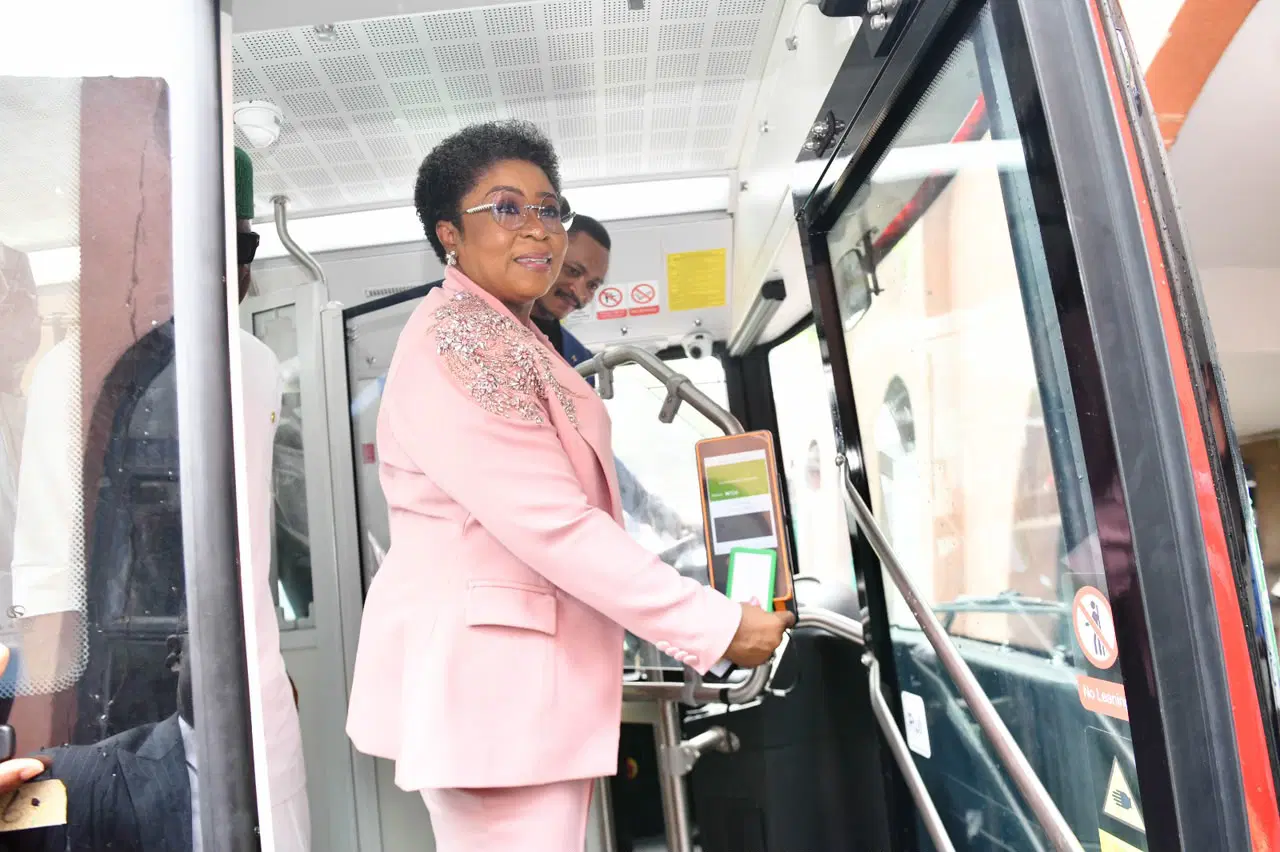
The Federal Government has approved 100 electric buses under the Renewed Hope Mass Transit Programme, with 37 delivered in the first phase and commissioned in Abuja on Wednesday. The buses are intended to provide cheaper and more reliable commuting for federal workers, with operations beginning on selected routes before expansion to Federal Secretariats across the country.
The immediate objective is straightforward: reduce the cost and difficulty of getting to work.
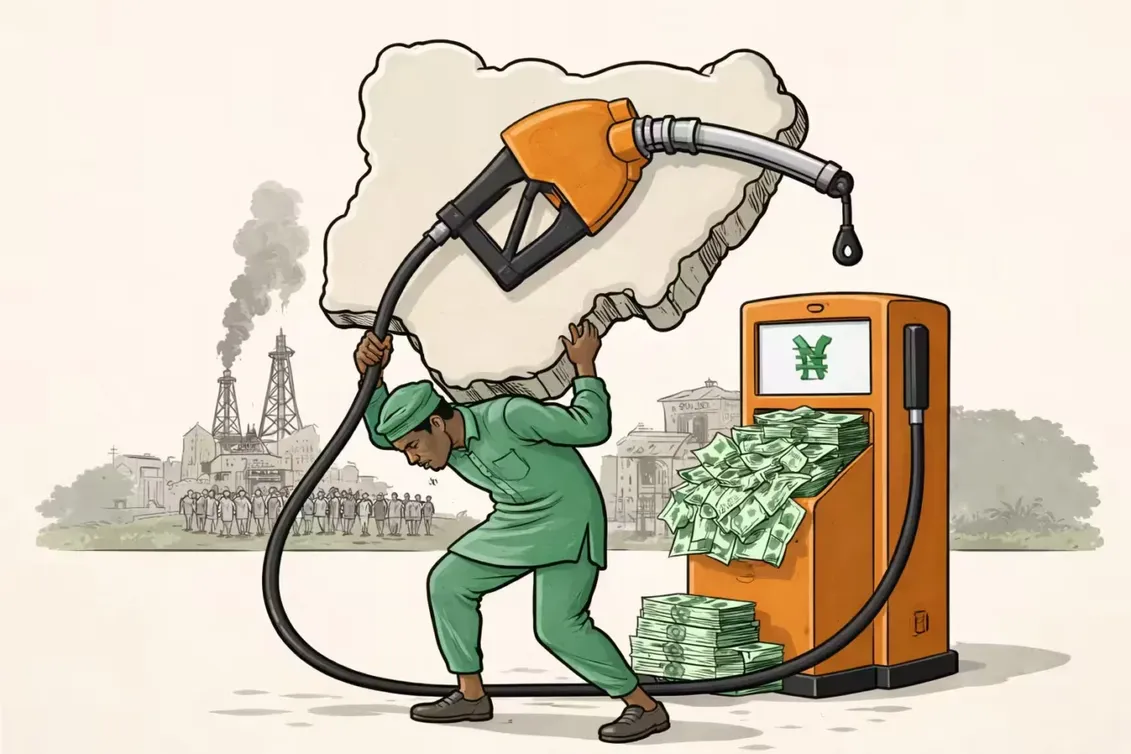
The longer-term ambition is considerably larger. Nigeria is attempting to move from an economy in which transport depends overwhelmingly on petrol and diesel towards one in which compressed natural gas and electricity become significant parts of the transport system.
That transition has been under development since the removal of the petrol subsidy in 2023, when the government began looking for alternatives to petrol-powered mass transit. The National Economic Council subsequently backed the deployment of CNG vehicles and electric buses, including the development of charging infrastructure.
The buses are arriving before the ecosystem is complete
Nigeria’s electric-mobility challenge has never primarily been about buying electric vehicles.
It is about everything that has to exist around them.
Electric buses require dependable charging infrastructure, stable electricity, trained technicians, battery-management systems, spare parts, maintenance facilities and a power system capable of supporting additional demand. Without those pieces, replacing a diesel or petrol bus with an electric one simply shifts the energy problem from the fuel station to the electricity network.
That is one reason the government’s decision to establish a management structure for the fleet matters. Officials say a special-purpose vehicle will oversee the buses, including maintenance, operations and long-term sustainability.
The arrangement will be tested first on selected routes. That gives the government an opportunity to establish whether the economics work in Nigeria’s conditions before attempting a much larger deployment.
The country’s power system remains one of the biggest constraints. World Bank analysis of Nigeria’s electric-mobility prospects has identified unreliable electricity supply and inadequate distribution infrastructure as major obstacles to EV deployment, while recommending investment in charging infrastructure and policies supporting local EV production.
This makes the 100-bus programme less a finished solution than a real-world test.
Why civil servants are being targeted
The choice of federal workers is also deliberate.
Unlike a general public-transport programme, a government employee fleet can be deployed along predictable commuting corridors. Routes can be planned around government offices, demand can be measured and fares can potentially be structured around a known workforce.
That makes civil servants a relatively controlled market in which the government can learn how electric mass transit performs.
It also fits a broader change in the government’s approach to public-sector welfare.
In 2026, the Office of the Head of the Civil Service of the Federation has announced or supported measures ranging from a ₦10 billion housing-loan scheme to changes in allowances and retirement benefits.
Transport is an important part of that package because commuting is effectively a recurring deduction from workers’ incomes.
For a worker travelling to Abuja’s government districts every weekday, a cheaper and predictable bus service can have a more immediate effect on disposable income than a one-off welfare payment.
The government is therefore treating transport not simply as infrastructure, but as part of the compensation and productivity equation.
The bigger bet is Nigerian manufacturing
The most ambitious part of the programme is not the buses themselves.
It is what the government wants to happen after them.
John Owan Enoh, the Minister of State for Industry, Trade and Investment, linked the programme to Nigeria’s attempt to develop an automotive manufacturing industry capable of producing more vehicles and components locally.
That ambition matters because electric vehicles create a different industrial opportunity from conventional automobiles.
The technology shifts value towards batteries, electric motors, power electronics, software, charging equipment and specialised components. A country that merely imports finished electric buses captures only a fraction of that value.
A country that develops the ability to assemble buses, manufacture components, service batteries and eventually produce vehicles for regional markets can turn transport electrification into an industrial policy.
Nigeria’s own clean-transport programme now explicitly combines CNG and electric vehicles. The Presidential Initiative on CNG and Electric Vehicles says its mandate includes deploying electric buses, attracting private investment into the EV value chain and developing technical capacity. It also describes the programme as part of a broader effort to change the country’s transport energy mix.
That is a significant evolution from the immediate post-subsidy period, when the principal concern was simply how to make transportation cheaper.
Nigeria has been here before — at the policy level
The idea of electric public transport is not new in Nigeria.
What has changed is the political and economic pressure behind it.
Before the petrol subsidy was removed, cheap petrol reduced the incentive for governments and consumers to make a rapid transition to alternative transport technologies. The subsidy shock changed that calculation.
Nigeria suddenly had a problem with two dimensions: households faced dramatically higher transport costs while the government had to find a way to reduce its dependence on subsidised petrol.
CNG became the government’s immediate response because Nigeria has substantial natural-gas resources and can use existing internal-combustion technology after vehicle conversion.
Electric vehicles represent the more structural option.
The difference is that CNG still requires a fuel supply chain. Electric mobility requires an electricity and charging network.
The government is now attempting to develop both.
The contradiction at the heart of the strategy
Nigeria wants electric transport partly because petrol is expensive and because the country wants to reduce emissions.
Yet electricity supply remains unreliable.
That creates an uncomfortable contradiction.
An electric bus is only as dependable as the system that charges it.
The World Bank has previously identified electricity reliability as a critical condition for electric-vehicle deployment in Nigeria and argued for stronger incentives for charging infrastructure, local EV production and demand-side support.
The government therefore faces a sequencing problem.
Should Nigeria first build a stronger electricity system and then electrify transport? Or should transport electrification itself help create demand for better power infrastructure?
The 100-bus programme effectively chooses the second path on a small scale.
The fleet creates a concentrated demand for charging infrastructure that can be monitored and managed. If the pilot works, the government has evidence with which to justify broader investment.
If it fails because of electricity shortages, maintenance problems or poor route economics, the weaknesses will also become visible before billions of naira are committed to a national fleet.
The number that matters is not 100
The headline number is 100 buses.
The real test is whether Nigeria can turn 100 buses into a repeatable system.
That requires reliable routes, transparent operations, maintenance funding, trained personnel and charging stations that remain operational after the commissioning ceremony.
It also requires clarity about who pays for the electricity, who sets fares, who maintains the batteries and what happens when the vehicles reach the end of their useful life.
Battery replacement could eventually become one of the most expensive components of an electric-bus programme. Recycling and disposal will also become increasingly important as Nigeria’s EV fleet expands.
These are not distant theoretical questions. They determine whether electric transport becomes cheaper over its lifetime or merely looks cheaper at the point of purchase.
A test of whether reform survives the ceremony
The timing gives the programme an additional political dimension.
Walson-Jack is due to leave office after her tenure as Head of the Civil Service of the Federation. She described the buses as her final gift to federal workers.
But the durability of the project will ultimately depend less on who commissioned the buses than on whether the institutions managing them can operate the fleet after the ceremony is over.
That is the recurring difficulty with large public programmes in Nigeria: commissioning is visible; maintenance is not.
The government has already begun building a wider institutional framework for cleaner transport. Its CNG and EV initiative says more than 120,000 vehicles have been converted, with hundreds of conversion centres and thousands of jobs created across the emerging clean-transport value chain.
The electric-bus programme now adds another layer.
If the buses remain on the roads, charging stations work, maintenance costs stay under control and Nigerian manufacturers begin producing more of the technology, the 100 vehicles could become the beginning of a domestic electric-mobility industry.
If they become stranded assets because the infrastructure and maintenance systems fail, they will instead illustrate one of Nigeria’s oldest development problems: the ability to launch projects faster than the institutions needed to sustain them.

For now, the buses are a relatively small intervention.
The question is whether Nigeria can make the system around them bigger.