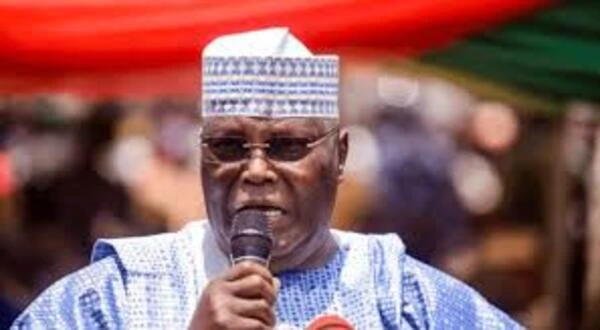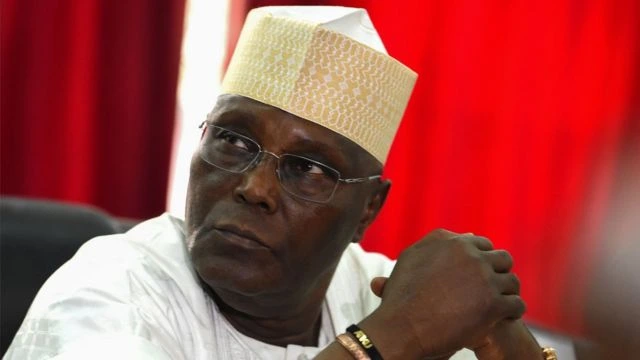
Atiku Abubakar has turned the future of Nigeria’s petrol subsidy into a campaign issue for the 2027 presidential election, promising to restore the policy if elected and demanding an accounting of the money saved since President Bola Tinubu abolished it.
The pledge, made during a social-media interview on Thursday, comes as Nigeria enters the campaign season with the economic consequences of Tinubu’s 2023 reforms becoming a central test of his administration. Atiku, the presidential candidate of the African Democratic Congress (ADC), argues that Nigerians have endured higher prices without seeing sufficient improvements in healthcare, education, security and living standards.
But his proposal would reverse one of the reforms that international lenders and investors have regarded as central to restoring Nigeria’s public finances. The World Bank said the subsidy had become fiscally unsustainable, costing about 2.2% of gross domestic product in 2022 and consuming a larger share of government revenue than health, education and social protection combined.
The question of where the savings went
Atiku’s argument rests on a politically potent question: if subsidy payments have ended, what happened to the money that was previously spent keeping petrol prices artificially low?
“I initially did not oppose the removal of the fuel subsidy,” Atiku said, according to reports of his interview. He then questioned whether the savings had translated into better public services and said that anyone who stole subsidy funds should return them.
There is evidence that the reform did create substantial fiscal savings, although the money was not simply held in a single account waiting to be spent.
In the first four months after the 2023 removal, government savings attributed to the reform reached about ₦1.45 trillion, according to an analysis of Federation Account records. The government also established an Infrastructure Support Fund for states, while the Federation Account Allocation Committee began setting aside part of its increased distributable revenues.
In June 2023 alone, ₦790 billion of the ₦1.9 trillion in distributable revenue was earmarked for savings after statutory deductions, according to the presidency.
The more complicated answer is that the fiscal space created by subsidy removal has subsequently been absorbed by other pressures.
Finance Minister Taiwo Oyedele said in July that savings from subsidy and foreign-exchange reforms had largely been consumed by higher debt-servicing costs and increased government spending.
That distinction matters. The end of the subsidy created fiscal room; it did not create a permanent pool of cash that could automatically be distributed to households.
A reversal of Atiku’s earlier position?
Atiku’s new pledge is politically striking because he has previously supported the eventual removal of the petrol subsidy.
During the 2023 presidential campaign, he said the subsidy system was opaque and that his administration would remove it, while arguing that the process should be gradual and accompanied by measures to protect workers and other vulnerable groups.
After Tinubu announced the immediate abolition of the subsidy on May 29, 2023, Atiku criticised the speed and implementation rather than rejecting the principle of reform. He pointed to the phased approach adopted by the PDP government during his time as vice president and said affected Nigerians should have received palliatives before the policy was implemented.
His position now is therefore less a return to his pre-2023 policy than a rejection of the way the reform has been carried out and its consequences.
Why the subsidy became so expensive
For decades, Nigeria kept petrol prices below market levels by compensating suppliers for the difference between regulated pump prices and their costs.
The arrangement became increasingly difficult to sustain as oil revenues weakened and the cost of imported petrol rose. The World Bank estimated that the subsidy consumed 32.4% of Nigeria’s total revenues in 2022 and contributed to a system in which the country effectively subsidised petrol consumption while importing most of its fuel.
The system also encouraged smuggling because petrol sold cheaply in Nigeria could be transported across borders and sold at higher prices.
By early 2023, the fiscal burden had become particularly severe. NNPC said it spent ₦1.828 trillion on subsidy payments between January and May that year alone.
Tinubu’s announcement therefore represented more than a change in petrol pricing. It was part of an attempt to prevent government revenues from being consumed by a subsidy that had become increasingly difficult to finance.
The World Bank subsequently described the removal, together with the government’s foreign-exchange reforms, as measures that helped Nigeria avoid a potential fiscal crisis.
The political cost of an economic reform
The problem for Tinubu is that the fiscal logic of subsidy removal has been much easier to defend internationally than domestically.
Petrol prices rose sharply after the policy was announced, feeding into transport, food and business costs. The World Bank recorded an average 163% increase in retail gasoline prices in the months following the reform and warned that poor and vulnerable households would bear a disproportionate share of the adjustment.
The government introduced measures intended to cushion the impact, including transfers and support for states. But for many households, the immediate experience was not an improvement in public services; it was a higher cost of getting to work, transporting goods and running generators.
That gap between macroeconomic reasoning and household experience is now becoming an electoral issue.
Reuters reported this week that the reforms have been welcomed by investors and international financial institutions while intensifying a cost-of-living crisis that has generated widespread public discontent.
Atiku’s subsidy promise is designed for precisely that political environment.
What restoring the subsidy would mean
A future government could theoretically subsidise petrol again, but doing so would recreate the central fiscal problem that led to the reform.
The key question would be how much the government is prepared to spend and where the money would come from.
A universal subsidy benefits every petrol consumer, including wealthier households and businesses, rather than directing assistance exclusively towards poorer Nigerians. The old system also created opportunities for smuggling, arbitrage and opaque payments, problems that helped make the policy increasingly controversial.
Atiku would therefore need to explain not only how he would restore the subsidy, but how his administration would prevent the fiscal leakage and distortions associated with the previous regime.
That is particularly important because Nigeria’s public finances remain under pressure from debt-service obligations. The money saved by ending one expenditure can quickly disappear when the government faces larger bills elsewhere.
A choice between two economic narratives
The 2027 election is beginning to frame the subsidy debate around two competing interpretations of the same reform.
Tinubu’s argument is that Nigeria could not continue financing an expensive and distortionary system and that the country must endure the initial pain of reform to create room for investment and growth.
Atiku’s emerging argument is that Nigerians accepted that pain but have not received a corresponding improvement in their lives — and that government has failed to account convincingly for the benefits of the savings.
Neither position eliminates the underlying economic trade-off.
Restoring the subsidy could lower petrol prices and provide immediate relief to consumers, but it would also require the government to find a large and recurring source of funding. Keeping the subsidy removed protects fiscal resources but leaves households exposed to market-linked fuel prices.

The political question in 2027 may therefore be less about whether Nigerians like subsidies — they generally benefit from cheaper petrol — than about whether voters believe the alternative offered by Tinubu’s reforms has delivered enough to justify the sacrifice.
Atiku’s pledge gives that question a simple campaign slogan: if the subsidy was removed to save money, Nigerians want to know what they received in return.