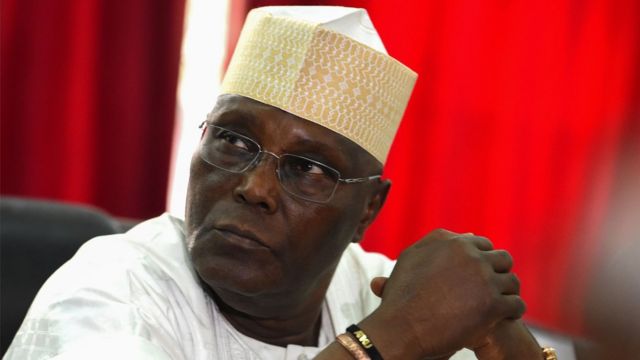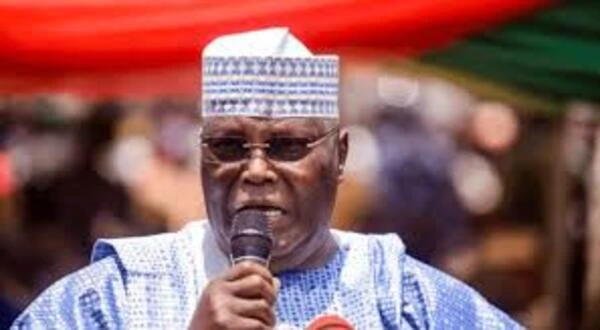
Atiku Abubakar has said the 2027 presidential election will be his final attempt to become Nigeria’s president, putting a potential endpoint on a political pursuit that has stretched across more than three decades.
The former vice president made the declaration in a Hausa-language interview on Wednesday, saying he would not seek the presidency again if he loses the election. The statement comes as Atiku, now the presidential candidate of the African Democratic Congress (ADC), prepares for another contest against President Bola Tinubu and a field of opposition candidates.
Atiku had already described 2027 as likely to be his last presidential outing in an April interview. His latest statement is more categorical: there will be no 2031 bid.
A political career built around the presidency
Atiku’s significance in Nigerian politics goes beyond the number of elections he has contested. He was vice president under Olusegun Obasanjo from 1999 to 2007 and has remained a major opposition figure through successive political realignments.
His presidential ambitions predate Nigeria’s current Fourth Republic. He participated in the Social Democratic Party’s presidential contest in the early 1990s before eventually stepping aside in favour of Moshood Abiola. He later became a presidential candidate in 2007, while subsequent attempts to secure party nominations came in 2011 and 2015. He won the PDP nomination in 2019 and again in 2023.
The 2027 election will therefore be another test of whether Atiku can convert decades of political experience, a national network and a new opposition platform into the coalition required to win Nigeria’s presidency.
Why 2027 is different
The political environment surrounding Atiku has changed considerably since his first presidential campaign.
In 2023, he contested under the PDP and finished second behind Tinubu. The election also exposed the growing fragmentation of Nigeria’s traditional two-party contest, with Peter Obi drawing substantial support outside the two established parties.
Atiku subsequently left the PDP and joined the ADC, which has become a vehicle for opposition figures seeking to challenge the APC ahead of 2027. His move has placed greater emphasis on whether opposition politicians can overcome their longstanding divisions and present a credible alternative to Tinubu.
That challenge is particularly important because Nigeria’s electoral system rewards broad geographic coalitions. Winning the presidency requires more than dominating one region or relying on a single political base; a candidate must secure the largest number of votes nationally while also meeting the constitutional spread requirement across states.
Age has become part of the debate
Atiku’s decision to make 2027 his final contest also reflects the question of political succession that has followed him for years.
Born in 1946, he will be around 80 during the 2027 election cycle. He has nevertheless repeatedly rejected suggestions that his age prevents him from serving as president and told the Hausa-language interviewer that he considers himself physically fit.
The issue is not simply personal. Nigeria’s political system has repeatedly been dominated by older politicians, while younger voters make up a large share of the electorate. Atiku has previously argued that younger Nigerians seeking power should first gain experience and learn from older political leaders.
His final-bid declaration could therefore become part of a broader generational debate: whether established political figures should continue seeking the presidency or begin transferring influence to a younger generation.
The opposition’s bigger problem
Atiku’s announcement does not resolve the central strategic problem facing the opposition.
The 2027 contest is shaping up against an incumbent who benefits from the institutional advantages of governing and a political environment in which opposition parties remain divided. The Associated Press reported that Atiku and Peter Obi remain among the leading challengers to Tinubu but that efforts to build a unified opposition front have struggled.
That fragmentation matters because Atiku’s strongest electoral performance came in 2019, when he secured a large share of the vote but still lost to Muhammadu Buhari. In 2023, his vote total fell sharply as Obi attracted support from voters who might otherwise have formed part of a broader anti-APC coalition.
The ADC’s challenge is therefore not merely to sell Atiku’s experience. It must persuade voters who have previously backed different opposition candidates that a single political vehicle can defeat the APC.
A final campaign with a wider message
Atiku is already combining his presidential bid with calls for greater voter participation.
In his latest interview, he urged Nigerians with Permanent Voter Cards to vote and remain at polling stations to observe the counting process. His appeal reflects a recurring problem in Nigerian elections: the distance between casting a ballot and ensuring that votes are properly counted and transmitted through the electoral system.
The Independent National Electoral Commission has already begun preparations for the 2027 elections. INEC says the constitutional tenure of the president and vice president expires on May 28, 2027 and has formally set the electoral process in motion under the Constitution and Electoral Act.
For Atiku, that timetable gives the declaration a practical meaning. If he loses, the political career that began around Nigeria’s transition-era presidential politics would move into a different phase.

His decision to rule out 2031 also gives the 2027 campaign a personal finality that his earlier contests did not have.
Whether that makes him a more compelling candidate remains to be decided by Nigerian voters. But it removes one uncertainty from the country’s political calculations: whatever happens in 2027, Atiku Abubakar says he will not be back on the presidential ballot four years later.