Over the past few months, the Director General of the National Agency For Food and Drug Administration and Control (NAFDAC), Prof. Mojisola Christianah Adeyeye has clashed with Nigerians over the spate of fake and substandard items passing under the Agency’s nose.
The clearest example is a September press briefing, when a journalist asked Adeyeye about calls for her resignation amid concerns over fake and substandard products.
She reportedly laughed when the question was put to her, before launching into a defence of her record stating “I lived in the US for 34 years. I was a professor for 30 years in an all-white school. I retired happily. I came here to serve…”
“I was ashamed of my country! I came to remove some of the shame. And the world is seeing it!” She added.
Responding to calls for her resignation, she stated “I hope you got the answer?, Tell the person that sent you to ask that question that you have got the answer. Don’t be afraid to deliver the answer.”
Prof. Adeyeye resumed her disagreement with Nigerians who had sought clarifications on what falls under the purview of NAFDAC stating “We are ignorant in this country. We are very ignorant. We don’t read. We don’t understand.”
“So, in the social media thing that we responded to, they said apples, NAFDAC; oranges, NAFDAC. No… Everything is about NAFDAC — yam is NAFDAC; fufu is NAFDAC. No.” She stated while explaining the division of responsibility between NAFDAC and other agencies over food safety.
Emphasis on Problems Inherited
The NAFDAC DG has never spurned any opportunity to remind Nigerians of the problems she inherited including about N3.2bn in liabilities; dysfunctional laboratory equipment; weak ICT infrastructure; excessive official travel; and an agency operating at a low regulatory maturity level which she argues she has fixed.
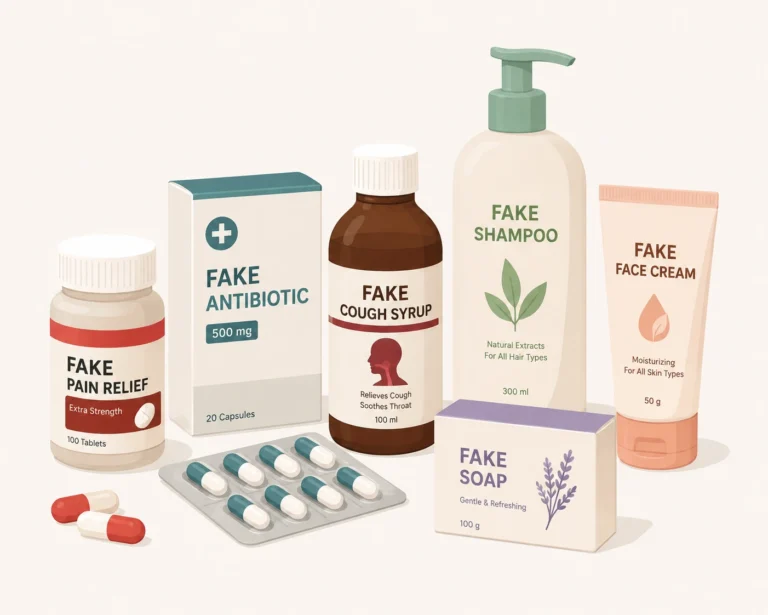
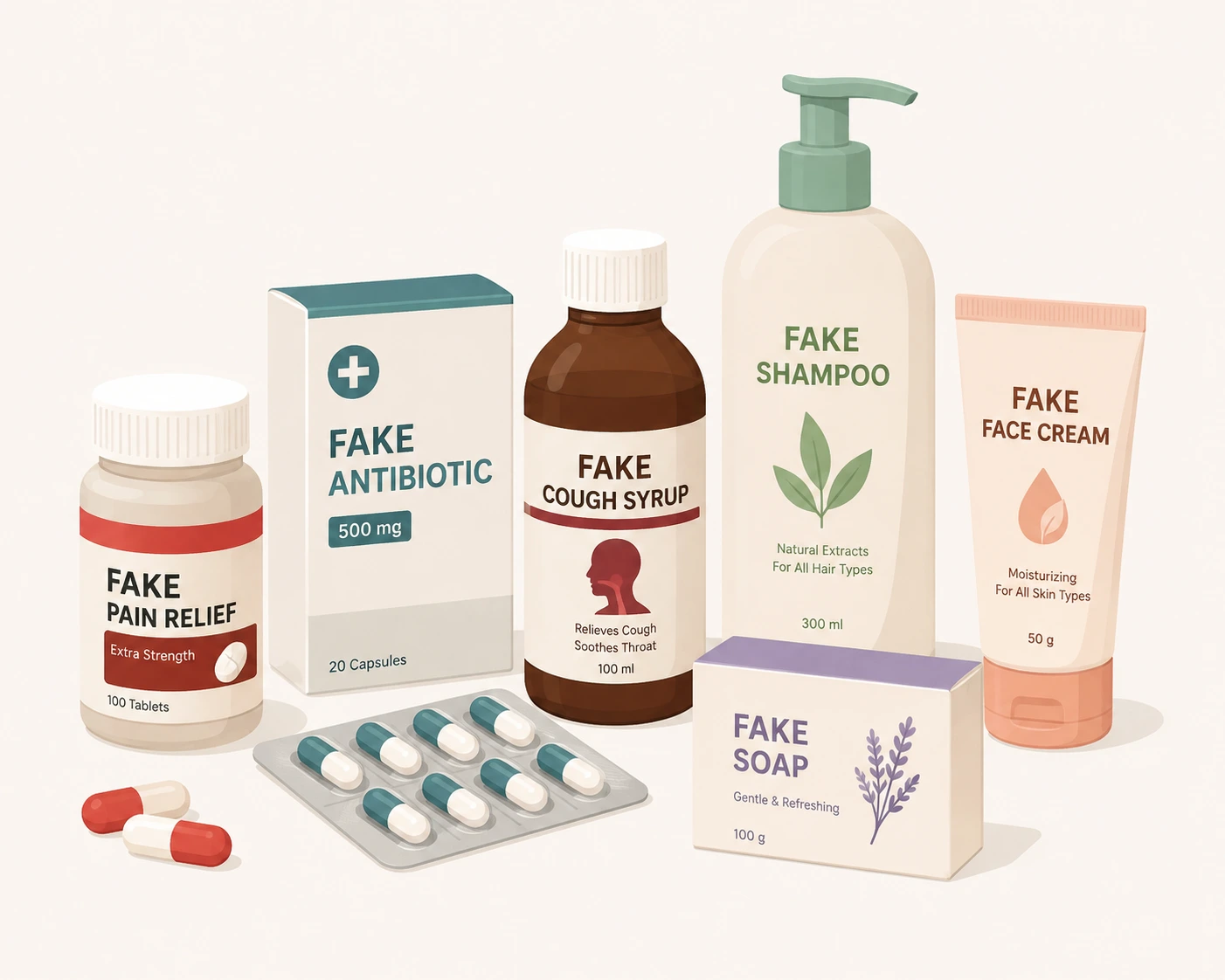
However while the NAFDAC DG continues to point to these institutional “achievements”, there is the ‘small’ matter of the impact of the reported proliferation of fake and substandard goods on Nigerians. This impact is felt across every segment of everyday life, from food, healthcare to personal wellness items.
Fake Products Carrying NAFDAC Numbers
The problem faced by Nigerians is however more troubling as some counterfeit products found in Nigeria were not simply sold without regulatory numbers but carried NAFDAC registration numbers, some of them genuine numbers belonging either to the authentic product or to an entirely different medicine.
One of the clearest examples involved Augmentin 625mg, manufactured by GlaxoSmithKline. In 2022, NAFDAC warned Nigerians about a suspected counterfeit batch, 562626, which carried NAFDAC registration number 04-1928. The number itself was genuine and belonged to Augmentin 625mg in NAFDAC’s register, yet the agency said the particular product was falsified after identifying discrepancies in its labelling, manufacturing and expiry dates, packaging and other security features.
A similar case involved Noristerat 200mg, a contraceptive manufactured by Bayer Pharma AG of Germany. NAFDAC warned in 2025 that counterfeit Noristerat circulating in Kano, Bauchi and Niger states carried NAFDAC number 04-5715, the legitimate registration number for genuine Noristerat. Investigators found that the purported contraceptive had instead been repackaged from ampoules containing chlorpheniramine and dexamethasone, meaning the counterfeit product did not contain the contraceptive medicine consumers were being led to believe they were buying.
The same problem was reported with Postinor-2, manufactured by Gedeon Richter of Hungary. Two falsified batches—T36184B and 332—were found carrying NAFDAC number 04-6985, which is the legitimate registration number for Postinor-2. The marketing authorisation holder, Society for Family Health, subsequently confirmed that it had not imported the two batches into Nigeria.
In other cases, counterfeiters appear to have appropriated genuine NAFDAC numbers belonging to completely different medicines.
In 2025, NAFDAC identified counterfeit BETACLOX, purportedly manufactured by India’s Saeny Laboratory, carrying NAFDAC number A4-4724. The number, however, belonged to Mebendazole 500mg manufactured by Chi Ltd, rather than BETACLOX.
The same pattern emerged in 2026 when NAFDAC warned about counterfeit Projeanil and Re-Granil, two purported Proguanil products from Indian manufacturers. Both carried NAFDAC number 04-6433, which NAFDAC said actually belonged to Feroglobin B12 Capsules manufactured by Vitabiotics Nigeria.
There have also been cases where counterfeiters simply used registration numbers that did not exist. In 2024, NAFDAC declared ZACEF-TZ injection, purportedly manufactured by India’s JioPharm International, unregistered and falsified, noting that the A-46344 number printed on the product did not exist in its database. In another case involving four purported Chinese-made oxytocin products, NAFDAC said the number A4-9566 was fake and did not correspond to a registered product.
The pattern extends beyond medicines to products consumed or used by ordinary Nigerians. In 2025, NAFDAC warned against counterfeit Cowbell “Our Milk” 12g sachets circulating in the market. Promasidor Nigeria, the manufacturer of Cowbell, had discontinued the particular “Our Milk” product in 2023 and replaced it with “Our Creamy Goodness”. Yet counterfeiters continued producing the old packaging. NAFDAC said the counterfeit sachets carried a cloned NAFDAC registration number, alongside the Cowbell trademark and other features designed to make the product appear genuine.
The Cowbell case is significant because the product did not merely imitate the appearance of a well-known food brand. The counterfeiters also reproduced a regulatory identifier intended to distinguish an approved product from an unregistered one. The case therefore illustrates how a NAFDAC number can itself become part of the deception.
A similar, although different, issue arose with Whippy Real Mayonnaise. NAFDAC in 2023 alerted consumers to batches of the product carrying NAFDAC registration number A8-0700 after laboratory examination found the implicated mayonnaise unwholesome and rancid. The case was not one of counterfeiting—the registration number related to a legitimately registered product—but it demonstrated that the presence of a valid NAFDAC number did not, by itself, establish that a particular batch remained safe and compliant.
NAFDAC has also uncovered counterfeit and unregistered personal-care products carrying purported regulatory credentials. In the case of Miracle Water and Miracle Soap, the agency said products being marketed by Christ MercyLand Delivery Ministries were unregistered and were being produced and sold under the pretext of a fake NAFDAC registration number. The agency subsequently moved against the facility involved.
Counterfeit cosmetics have similarly featured in NAFDAC enforcement operations, including seizures involving purported NIVEA products and other personal-care brands. However, the available evidence does not establish in those cases that the numbers printed on the counterfeit cosmetics were genuine NAFDAC numbers belonging to the authentic products. They should therefore not be presented as equivalent to the Augmentin, Noristerat or Postinor-2 cases.
There have also been instances in which counterfeiters dispensed with regulatory numbers altogether. In 2026, NAFDAC warned against counterfeit toothpaste sold under names such as “Coglaet ActivGel” and “Coglaet Herbal”, which the agency said were counterfeit and unregistered and carried neither batch numbers nor NAFDAC registration numbers.
Taken together, the cases expose an important limitation in relying on the NAFDAC number printed on a product as proof of authenticity. A number can be completely fabricated, cloned from a legitimate product, appropriated from another registered product or, as in the Augmentin, Noristerat and Postinor-2 cases, be the genuine registration number of the authentic product while appearing on a counterfeit batch.
For consumers, therefore, seeing a NAFDAC number on a medicine, food, drink or personal-care product does not by itself establish that the particular item or batch is genuine. Verification has to go beyond the number to the product name, manufacturer, formulation, batch details, packaging and, where applicable, the agency’s registration and authentication systems.
Situation on Ground Highly Contradicts NAFDAC DG’s Claims
Despite the NAFDAC DG’s Claims of taking away the ‘shame of Nigeria’, the current state of things raise lots of questions over the effectiveness of the monitoring, regulation and institutional reforms she constantly points to.

The big question is how do counterfeiters obtain or reproduce legitimate regulatory information especially where a counterfeit carries a genuine registration number belonging to the authentic product or a number belonging to an entirely different registered product?, and why the resulting product was able to circulate before being detected.
So while NAFDAC calls Nigerians “ignorant”, there are valid questions as to the level of sensitization being carried out, the effectiveness of the institutional reforms by the current DG but for now Nigerians continue to be at the mercy of certain fake and substandard items while the NAFDAC DG Prof. Mojisola Christianah Adeyeye continues her war of words with Nigerians.