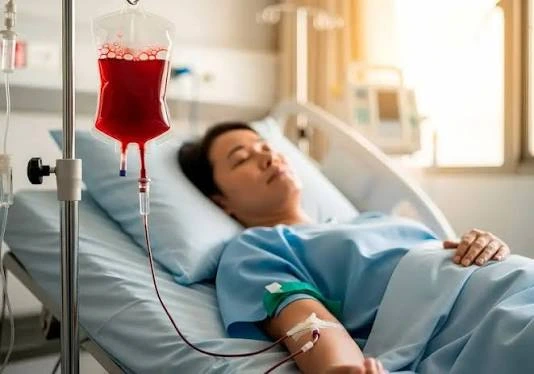
Jehovah’s Witnesses have adjusted their long-standing policy on blood transfusions, allowing individual members to decide according to personal conscience whether to accept or donate the four primary components of blood — red blood cells, white blood cells, plasma and platelets.
The change was announced by the Governing Body of Jehovah’s Witnesses on Friday, September 18, 2026, in a statement issued from the organisation’s World Headquarters in Warwick, New York. The organisation, however, stressed that its prohibition against whole-blood transfusions remains unchanged.
Under the revised position, a Jehovah’s Witness can personally decide whether to accept blood components obtained from another person. Members can also decide whether to donate blood specifically for the purpose of producing components or fractions for another person’s medical treatment.
The change represents an extension of the organisation’s existing principle that some medical decisions involving blood are matters of individual conscience.
Jehovah’s Witnesses previously rejected transfusions of whole blood as well as transfusions of its four primary components. The organisation’s current position now distinguishes between whole blood and the four components, with decisions concerning the components transferred to the individual conscience of each member.
What has changed?
The four primary components affected by the new policy are red blood cells, white blood cells, plasma and platelets. A member may now decide whether to accept any of these components from a donor. The decision is not presented as a new requirement to accept blood products; rather, the organisation says the choice belongs to the individual Witness and his or her conscience.
The same principle applies to donation. Members must personally decide whether to donate blood when it is specifically intended to provide components or fractions for another person’s treatment. The organisation also says local congregations will not interfere with or judge members over decisions that fall within individual conscience.
Paul Gillies, an international spokesman for Jehovah’s Witnesses at the organisation’s world headquarters, said blood continues to be regarded as sacred and life as a gift from God and said the organisation recognises that medical decisions involving blood components are matters of conscience between individual Witnesses and their God.
Whole-blood Transfusions Remain Prohibited
Despite the adjustment, Jehovah’s Witnesses have not abandoned their religious objection to whole-blood transfusions. The organisation says its refusal of whole blood remains a core teaching based on the biblical command to “abstain from blood,” particularly Acts 15:20.
This distinction is important because the new policy does not mean that Jehovah’s Witnesses have generally adopted blood transfusion as acceptable medical treatment. Instead, the change specifically concerns the four main components of blood.
The organisation continues to describe life and blood as sacred while giving members greater individual responsibility over decisions involving the primary components.
The September announcement follows an earlier 2026 adjustment concerning the medical use of a member’s own blood.
According to the organisation, its 2026 Governing Body Update #2 clarified that the Bible does not specifically address the use of a person’s own blood during medical and surgical procedures. Consequently, each Christian is to decide personally how his or her own blood may be handled in medical care.
That can include procedures in which a patient’s blood is removed, processed or otherwise handled and subsequently returned, depending on the individual’s conscience and the particular medical procedure.
The organisation says the September decision extends the same reasoning to blood components obtained from another person.
Blood Fractions Remain Separate
Blood can be separated into red cells, white cells, platelets and plasma, which can themselves be processed into smaller substances known as fractions. These include products such as albumin, immunoglobulins and certain clotting factors.
Jehovah’s Witnesses have for years treated decisions involving many blood fractions as matters of individual conscience rather than imposing a uniform prohibition.
The organisation’s medical guidance explains that some members may choose to accept particular blood fractions while others may refuse them based on their understanding of biblical principles and their personal conscience.
The September 2026 announcement therefore does not eliminate the distinction between whole blood, primary components and fractions; instead, it moves the four primary components into the category of decisions that individual members must make for themselves.
Religious Backing For Policy
Jehovah’s Witnesses base their position on biblical passages concerning abstinence from blood. Among the passages cited by the organisation are Genesis 9:3-4, Leviticus 17:13-14 and Acts 15:19-20. The group interprets the biblical instruction to abstain from blood as applying not only to consuming blood but also, historically, to medical transfusion of whole blood and its primary components.
The organisation says its understanding is rooted in the belief that blood represents life and therefore has a sacred significance and noted its updated position does not change that underlying belief. Instead, the Governing Body says the Bible does not provide specific instructions concerning the medical use of the four primary components, leading it to conclude that individual Christians should make their own decisions about them.
Doctors Still Need to Discuss Individual choices
The organisation’s medical information instructs clinicians to establish in advance which blood products or procedures an individual patient is willing to accept. Its guidance also encourages patients to communicate their decisions clearly to their doctors before treatment or surgery.
This means two Jehovah’s Witness patients could potentially make different decisions about the same blood component while both remain within the organisation’s revised policy. The organisation says congregations should respect those individual decisions rather than impose a collective position.

Jehovah’s Witnesses also maintain that they seek quality medical treatment and do not practise faith healing. The organisation provides medical information for clinicians on strategies intended to minimise or avoid the use of donor blood where appropriate.
The September 18 announcement therefore marks a substantial change in how the organisation handles the four primary components of blood, while preserving its longstanding religious prohibition against whole-blood transfusion.