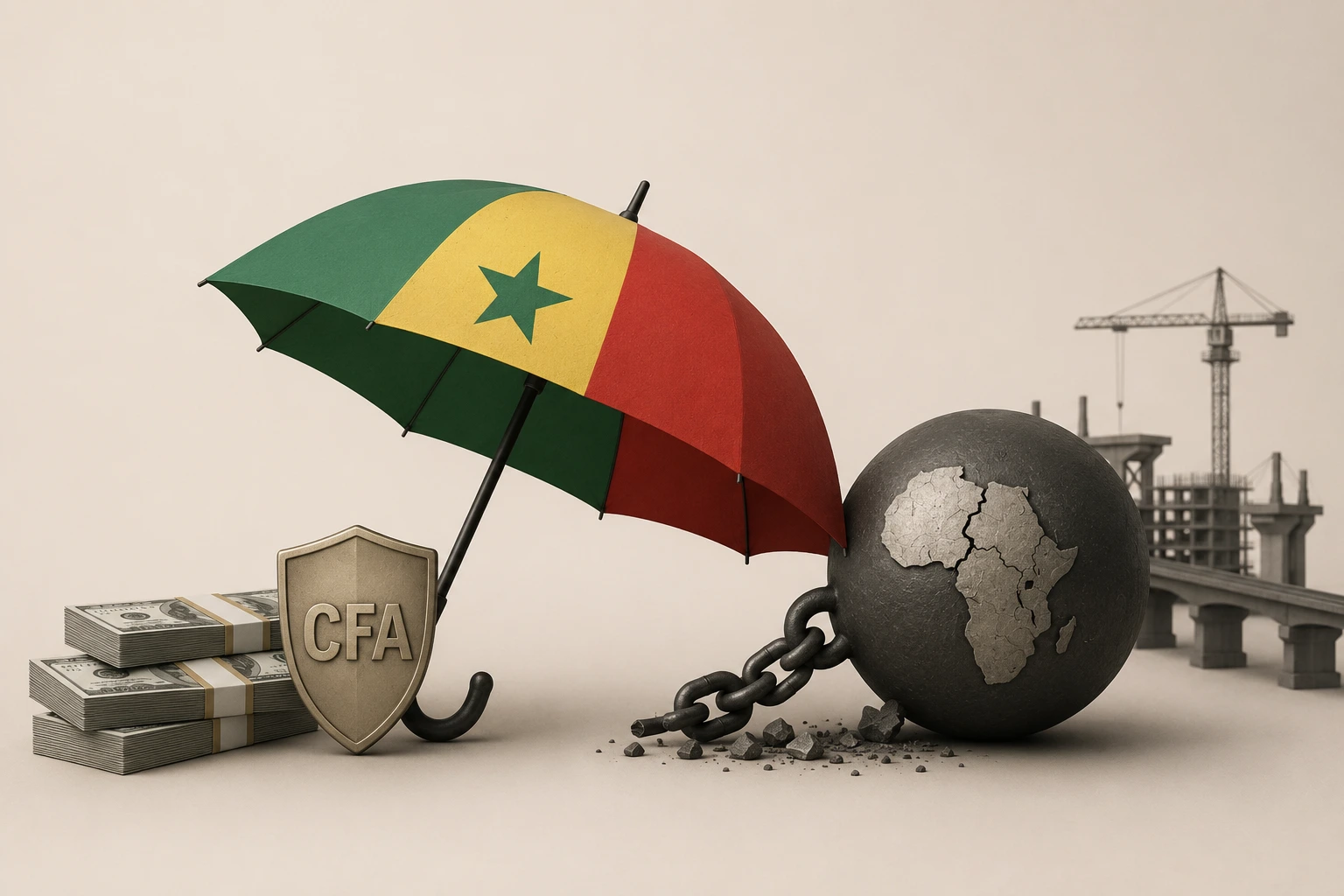
Rolake Akinkugbe-Filani has identified a central weakness in African infrastructure finance: governments borrow in dollars and euros to build assets that generate revenues in local currencies. But Senegal’s experience suggests a more nuanced lesson. Africa’s infrastructure deficit is too large to be financed from domestic capital alone, making international finance indispensable. The country’s membership of the CFA franc zone has provided important protection against currency risk, but its debt crisis shows that fiscal transparency and governance ultimately matters even more than currency risk.
Africa needs between US$130 billion and US$170 billion of infrastructure investment every year, yet faces an annual financing gap of as much as US$108 billion. Its domestic financial markets are nowhere near deep enough to close it. Outstanding corporate bonds and syndicated loans across the continent amount to barely US$180 billion, about 1% of the global total, while pension assets average only 23% of GDP, well below the global average.
Infrastructure requires long-term money but Africa’s financial systems are dominated by commercial banks funded largely with short-term deposits. Bond markets are shallow. Pension and insurance assets are still too small in many countries to finance projects with maturities of 20 or 30 years.
The rewards from closing Africa’s infrastructure gap would be substantial. The African Development Bank estimates that better infrastructure could add around two percentage points to annual economic growth. Roads, railways, ports and power plants raise productivity, reduce the cost of doing business and connect firms and workers to larger markets.
The attraction of international markets is therefore obvious. European bond markets can absorb hundreds of billions of euros of new debt each year. The European Union’s Global Gateway programme alone aims to mobilise €150 billion for investment in Africa between 2021 and 2027, an average of more than €20 billion a year. For governments operating in small and illiquid domestic markets, the contrast is difficult to ignore.
Africa’s infrastructure deficit is too large to be financed entirely from domestic savings, at least for now. The danger lies in how African countries raise, record and repay foreign capital.
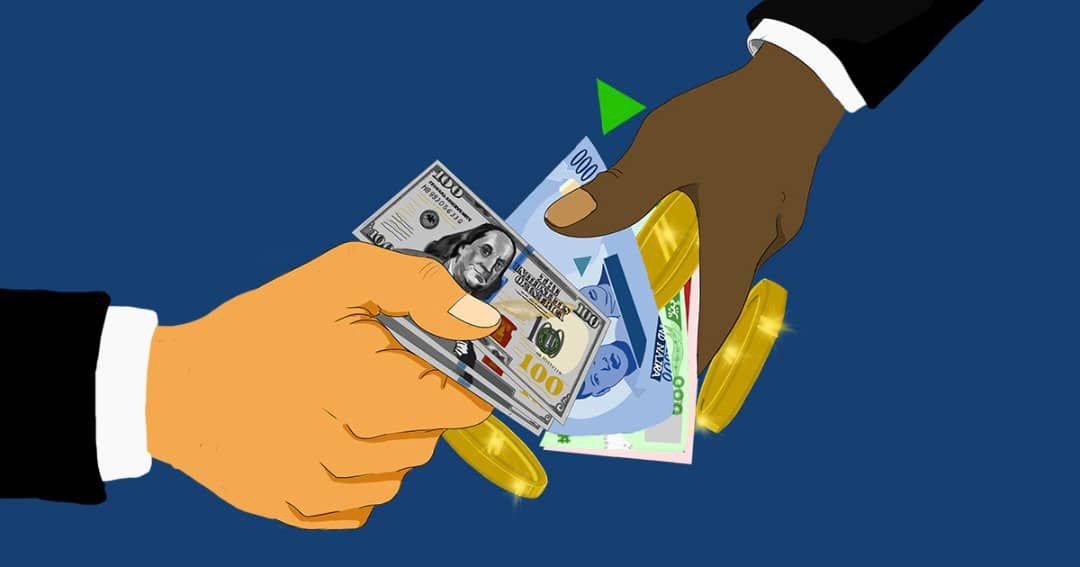
Discussing Senegal’s debt crisis on Arise TV’s Business Africa, Rolake Akinkugbe-Filani used the country’s new railway linking Dakar to Blaise Diagne International Airport to illustrate a wider African dilemma. Governments borrow dollars and euros to finance infrastructure that generates revenues in local currencies. When the loans fall due, the foreign exchange needed to service them may be difficult to come by due to sharp currency devaluations.
The warning is broadly correct but it is also incomplete. Senegal is not Ghana or Nigeria. Its currency is fixed to the euro. But that neither makes infrastructure projects economically viable nor the debts incurred to finance them automatically affordable. It does not turn a poorly chosen or badly designed project into a productive one. But it does remove one of the quickest routes through which foreign borrowing can develop into a wider economic crisis.
The CFA Franc Provides Senegal With a Currency Buffer
The West African CFA franc has been fixed at CFAF655.957 to the euro since 1999. Senegal therefore carries very little exchange-rate risk when it borrows in euros. The CFA-franc cost of repaying a euro loan does not jump when investors lose confidence in Senegal.
The contrast with Nigeria is stark. Nigeria’s official exchange rate averaged about ₦192 to the dollar in 2015. By 2025, it was above ₦1,500. A US$1 billion loan worth roughly ₦192 billion when contracted in 2015 would be worth more than ₦1.5 trillion at the later exchange rate, before interest. The dollar debt has not changed. Nigeria’s capacity to service it in naira has.
This is how foreign loans that initially appear cheap become punishingly expensive. The currency falls, debt service absorbs more revenue and investors become more anxious. Senegal cannot suffer this particular spiral on euro debt. Bad news about its budget may raise bond yields and shut it out of international markets. It cannot, on its own, cause the CFA franc to lose half its value against the euro.
That is substantial protection. Senegal has discovered previously unreported liabilities, lost access to its former IMF programme and suffered repeated credit-rating downgrades. A country with a freely floating currency might have faced a sovereign debt crisis, a currency crisis and an inflation crisis at the same time. The CFA franc has blocked at least one part of that sequence. The difference also appears in consumer prices. Nigeria’s inflation rose above 30% in 2024 and remained above 20% on average in 2025. Inflation across the West African Economic and Monetary Union, to which Senegal belongs, stayed in the low single digits.
(The CFA franc is not the sole reason. Food harvests, energy costs, public spending and insecurity also shape inflation. But exchange-rate stability matters in economies that import fuel, medicine, machinery and industrial inputs).
The monetary union has given Senegal a stable exchange rate, lower inflation and less volatility in the domestic value of euro debt.
CFA Currency Protection Is Only Partial: Governance Matters More
Andrew Alli, the former Chief Executive of the Africa Finance Corporation, recently observed that governance failures lay behind 95% of the institution’s troubled investments. Senegal illustrates why. Currency risk is important, but it is only one element of infrastructure finance. Transparency, project selection, debt management and fiscal credibility ultimately determine whether international capital becomes a catalyst for growth or a source of crisis. A railway does not have to earn euros to justify a euro loan. It has to generate enough economic value.
A railway may reduce journey times, raise land values, connect workers to jobs, attract businesses and increase tax revenue. These wider gains can make borrowing sensible even when ticket sales do not cover the debt. Its benefits often spread across the economy rather than sit neatly in a project company’s accounts.
The real questions are harder. Was the project properly costed? Were passenger forecasts realistic? Were contracts competitive? Did the government borrow on reasonable terms? Will the railway generate enough direct and indirect revenue to help repay what was borrowed?
The CFA peg cannot repair a bad answer to any of these questions. Nor can it repair hidden borrowing.
The change of government altered the market’s understanding of Senegal’s public finances. Billions of dollars in previously undisclosed liabilities emerged. Reported public debt rose sharply. The IMF suspended its programme, ratings agencies downgraded Senegal and access to the Eurobond market became much more expensive.
Investors may lose confidence in Senegal’s public finances. They cannot trigger a collapse of the CFA franc against the euro. The peg prevents that. But it cannot restore trust in the government’s accounts or generate the revenue required to meet repayments.
Senegal’s crisis is therefore not mainly about a railway earning CFA francs while its loans are denominated in euros. It is about how much the state borrowed, what it disclosed and whether the assets financed can support the resulting debt.
Better Borrowing: Financial Isolation Is Not the Answer
Akinkugbe-Filani’s wider warning remains valid. Road tolls, electricity tariffs and railway tickets are paid for in naira, cedis, kwacha or shillings. Borrowing in dollars, euros or yuan to finance them could be risky. Governments should not borrow dollars merely because the initial interest rate looks lower. Depreciation can overwhelm the apparent saving. Nigeria’s exchange-rate history over the past decade makes the point with brutal clarity.
Yet the answer cannot be to retreat from international capital markets. Africa’s infrastructure needs are too large, and its domestic pools of long-term capital are still too small. The sensible model is a blend: lower-cost foreign finance where the terms and risks are manageable, combined with reforms that gradually make more domestic savings available for long-term infrastructure investment.
That requires more than clever financial engineering. Transparent debt accounts, credible budgets, realistic project appraisal and consistent fiscal and monetary policies all reduce the risks attached to borrowing abroad. They also lower the cost of capital. Investors will lend more cheaply to governments whose numbers can be trusted and whose macroeconomic policies reduce the probability of sharp depreciation, inflation or default.
Pension rules can be adjusted to allow carefully governed infrastructure allocations. Bond markets can be deepened. Project preparation can be improved so that institutional investors are offered credible, investible assets rather than political ambitions dressed as breakthrough infrastructure solutions. Development banks and guarantees can help bridge the gap while these markets mature.
Senegal illustrates both the value and the limits of monetary stability. The CFA franc prevented a fiscal crisis from immediately becoming a currency crisis. But once hidden liabilities undermined confidence in the government’s accounts, debt service crowded out public spending, financing became more expensive and investment slowed. The railway entered a weaker fiscal and economic environment than the one in which it had been conceived.

The wider lesson is not about the CFA franc. It is about governance. Exchange-rate risk matters, but it becomes far more dangerous when governments conceal liabilities, weaken fiscal credibility or borrow for projects whose economic returns have never been rigorously tested. Transparent public finances and credible macroeconomic policy make access to international capital both cheaper and safer.
Africa should therefore resist a false choice between foreign and domestic capital. It needs both. International markets provide the scale and maturities that Africa’s infrastructure still requires, while domestic reforms will gradually expand local-currency financing. Senegal reminds us that a stable currency can reduce one important risk. Ultimately, however, it is the quality of governance that determines whether foreign capital finances development—or tomorrow’s fiscal crisis.