Nigeria’s growing public debt has sparked intense public debate, but analysts say the headline figures should be viewed in context rather than as evidence of an impending fiscal crisis.
In a recent Arise News Global Business Update segment titled Putting Nigeria’s Debt in Context, business analyst Aruoture “Rotus” Oddiri argued that Nigeria’s debt story is better understood through budget deficits, currency movements, debt composition, and market confidence.
One of the major comparisons is that South Africa and Egypt each owe roughly three times more than Nigeria in U.S. dollar-denominated debt.
According to figures cited in the analysis, Nigeria’s external debt stands at approximately $51.9 billion, while South Africa and Egypt each have external debt stocks exceeding $150 billion.
Nigeria’s Borrowing Driven by Large Fiscal Deficits
Nigeria’s debt accumulation is primarily a consequence of persistent budget deficits.
The federal government projected a deficit of about ₦13.08 trillion in the 2025 budget, while the proposed 2026 budget outlines a much larger shortfall of roughly ₦23.8 trillion.
These gaps arise when government spending exceeds revenue, forcing authorities to borrow to fund infrastructure, security, and recurrent expenditures.
Fiscal policy experts, including BudgIT, have noted that revenue projections are often ambitious, increasing the likelihood that actual borrowing needs will exceed initial estimates.
According to the Debt Management Office (DMO), Nigeria’s total public debt reached approximately ₦159.3 trillion as of December 2025, covering obligations of the federal government, states, and the Federal Capital Territory.
Naira Devaluation Inflates Debt in Local Currency
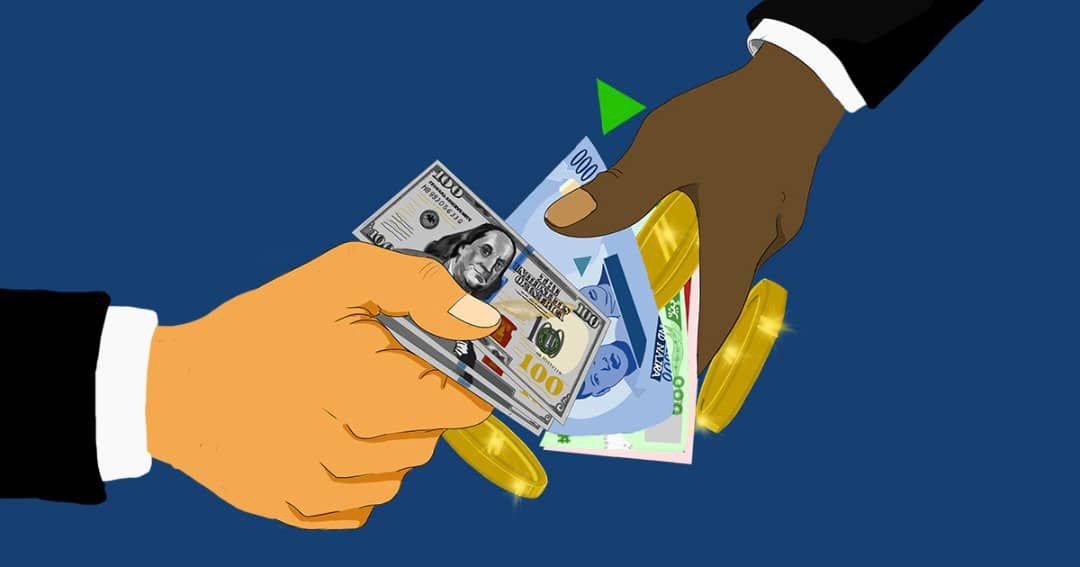
Since the foreign exchange reforms introduced in 2023, the naira has weakened significantly against the U.S. dollar. As a result, the local-currency value of external loans has surged even without a proportional increase in actual borrowing.
For instance, a $10 billion loan that was worth about ₦4.6 trillion at an exchange rate of ₦460 per dollar would exceed ₦15 trillion at an exchange rate of ₦1,500 per dollar.
This valuation effect has amplified debt numbers reported in naira terms, contributing to public concern.
Nigeria’s Debt Is Mostly Domestic
Nigeria’s debt portfolio remains predominantly domestic, with local obligations accounting for roughly two-thirds of total public debt.
These debts are raised through treasury bills, Federal Government bonds, and Sukuk instruments, and are mostly held by domestic investors such as pension funds and banks.
This reduces Nigeria’s exposure to foreign exchange risks compared with countries that rely more heavily on external borrowing.
South Africa and Egypt’s Far Larger Dollar Debt
Although Nigeria has Africa’s largest population and one of its biggest economies, its external debt in U.S. dollars is substantially lower than that of South Africa and Egypt.
Each country’s external debt stand at Nigeria – $51.9 billion, South Africa – $150+ billion and Egypt – $150+ billion
The figures show that South Africa and Egypt each owe approximately three times more than Nigeria in dollar-denominated debt.
No Default From Nigeria, No IMF Bailout
Nigeria has maintained a strong repayment record and has not defaulted on its debt obligations.
Unlike Zambia and Ghana, which underwent debt restructurings after recent defaults, Nigeria remains current on both domestic and external debt payments.
The country is also not under an active adjustment programme with the [International Monetary Fund (IMF), although it has worked with multilateral lenders and repaid previous emergency financing obtained during the COVID-19 pandemic.
Nigeria’s Major Problem is Revenue
Nigeria’s greatest fiscal challenge is not the size of its debt, but the government’s weak revenue base.

Low tax collection and limited non-oil earnings mean a large share of government income is devoted to debt servicing, reducing resources available for health, education, and infrastructure.
Nigeria’s long-term debt sustainability will depend on whether ongoing reforms can strengthen revenue collection, reduce deficits, and ensure borrowed funds are invested in projects that stimulate economic growth.