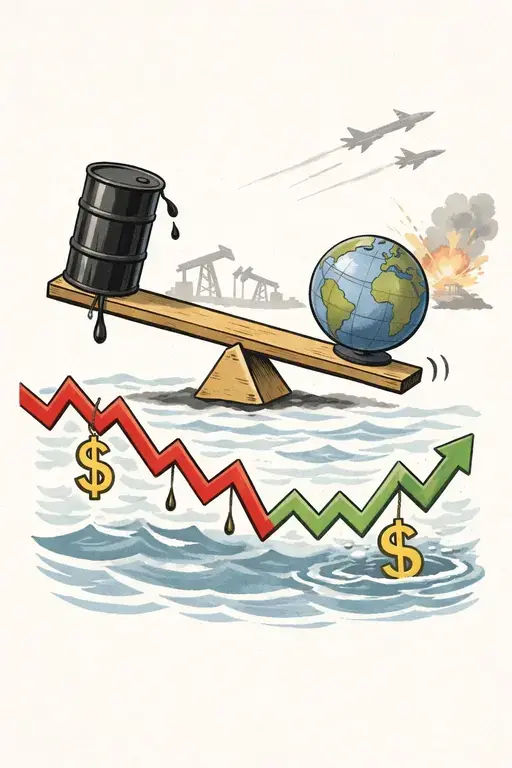
Global oil prices remained under pressure on Wednesday, November 25, 2026, as expectations of an emerging supply surplus heading into 2027 continued to outweigh concerns over geopolitical tensions and shipping disruptions in the Middle East.
Brent crude traded at approximately $91.34 per barrel, down 0.07%, while US West Texas Intermediate (WTI) stood at $81.77, declining 0.34%, according to the latest market quotes supplied.
Earlier in Wednesday’s session, prices had fallen more sharply, with Brent dropping towards $89.93 and WTI touching approximately $80.53 before recovering some of their losses.
Supply Recovery Strengthens Bearish Outlook
The International Energy Agency (IEA) has identified a significant recovery in global oil production as a major factor shaping the market’s outlook.
In its November Oil Market Report, the agency estimated that global oil supply increased by 2.3 million barrels per day to 105.4 million barrels per day in October, driven largely by higher Gulf exports.
The IEA expects global oil supply to rebound by 6.6 million barrels per day in 2027, reaching an average of 108.1 million barrels per day.
This anticipated increase is considerably higher than its projected growth in demand, raising the possibility of a substantial supply surplus next year.
The agency expects global oil demand to decline by 2.7 million barrels per day in 2026 to 102.3 million barrels per day before recovering by approximately 2 million barrels per day in 2027.
It also expects the market to return to surplus in the fourth quarter of 2026, with a more substantial imbalance developing in 2027.
The changing supply-demand outlook has contributed to the decline in crude prices from their October highs, when geopolitical disruptions had pushed international benchmarks significantly higher.
Forthcoming OPEC+ Meeting
Attention is also shifting to the November 29 meeting of the Organisation of the Petroleum Exporting Countries and its allies (OPEC+), where members are expected to discuss production policies for 2027.
The meeting comes at a sensitive time for the oil market, with producers facing competing priorities between defending prices and regaining market share.
Iraq is reportedly pushing for an upward revision of its estimated crude production capacity, a development that could influence its future production allowance.

The United Arab Emirates’ position also adds uncertainty to the group’s outlook, following its departure from OPEC+ constraints.
Any indication that OPEC+ members are willing to increase output could add further downward pressure on prices, particularly if global demand fails to recover as anticipated.