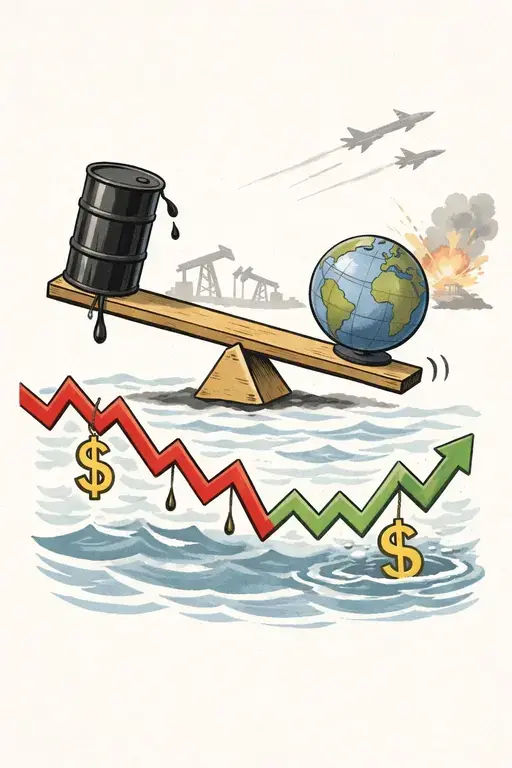
Global oil prices remained under pressure on Thursday, November 19, 2026, with US West Texas Intermediate (WTI) crude falling to $82.93 per barrel and Brent crude declining to $91.89.
Compared with Wednesday’s quoted prices of $85.35 for WTI and $92.88 for Brent, the latest figures represent declines of approximately 2.8% and 1.1%, respectively.
The latest movement follows several sessions of volatility. On November 17, WTI traded at $86.20 per barrel, while Brent stood at $92.98. On November 16, the two benchmarks were higher at $88.30 and $95.36, respectively.
Why Oil Prices are Falling
The main pressure on oil prices comes from expectations that global supply could exceed demand in the coming months.
US crude inventories increased by 3.4 million barrels to 417.8 million barrels in the week ended November 13, according to the Energy Information Administration (EIA). This was significantly above analysts’ expectations of a 58,000-barrel increase.
US gasoline inventories also rose by 5.2 million barrels, while distillate stocks increased by 1.6 million barrels, reinforcing concerns about excess supply.

Supply expectations have also improved as crude shipments through the Strait of Hormuz recover towards pre-war levels. The International Energy Agency has projected a fourth-quarter supply surplus of around 1.7 million barrels per day, adding to bearish sentiment.
However, geopolitical tensions continue to limit the extent of the decline. Attacks on oil tankers around the Strait of Hormuz and the continuing US-Israeli conflict with Iran remain significant risks to global oil shipments.