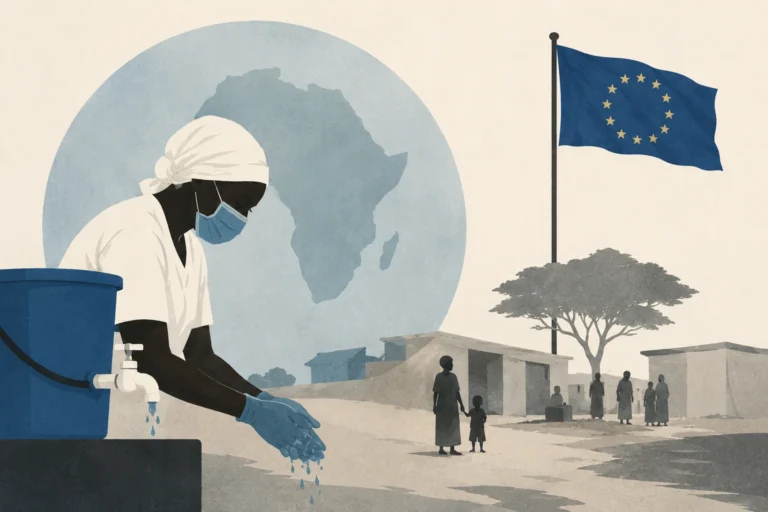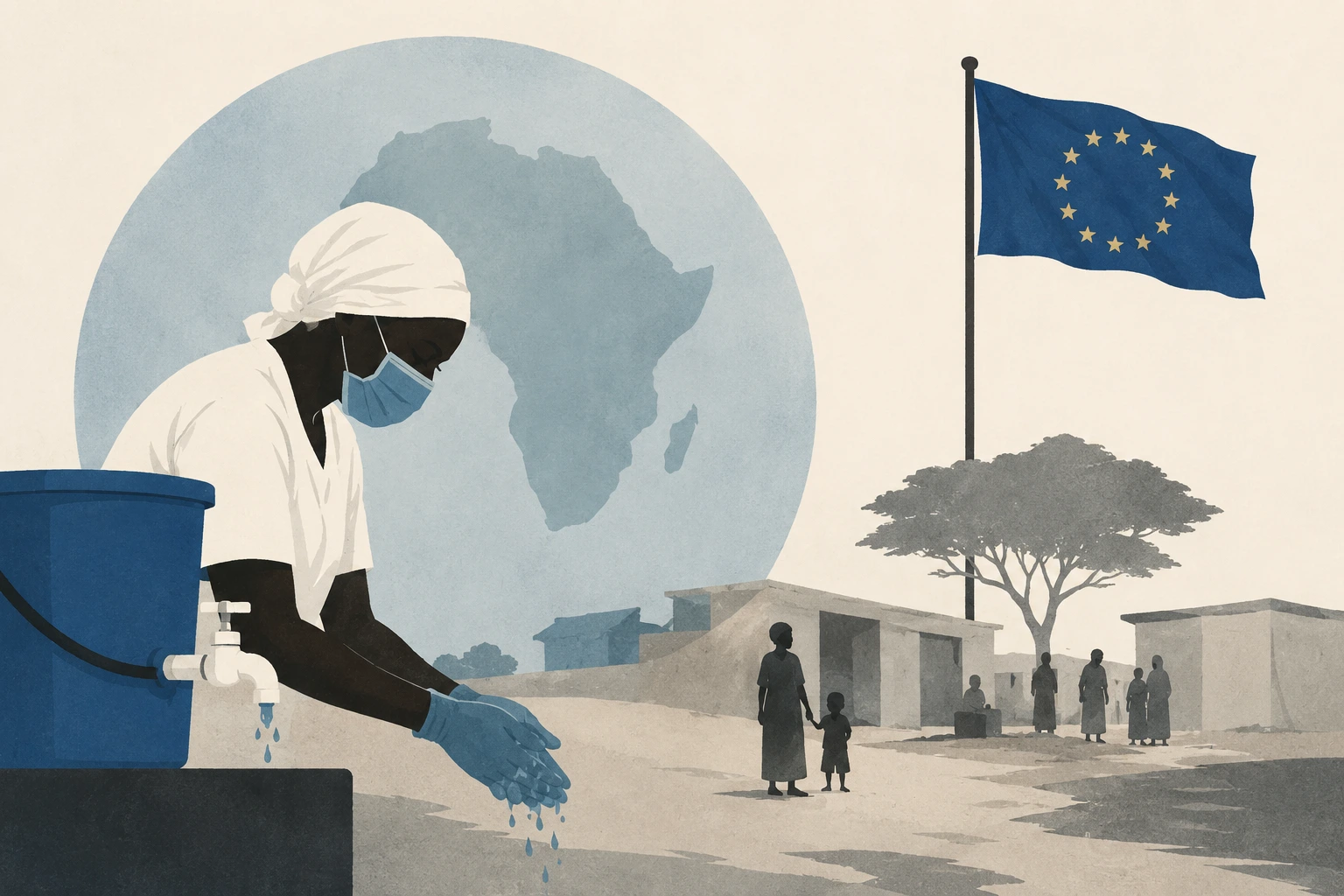
The European Union is committing €2.3 million in emergency humanitarian funding to four African countries battling cholera outbreaks, putting Nigeria at the centre of a regional response to a disease increasingly linked to fragile water systems, displacement and extreme weather.
The European Commission said on August 17 that €1.5 million of the package would go to Nigeria, while Cameroon would receive €100,000, the Central African Republic €500,000 and Chad €200,000.
The money is intended to finance emergency treatment and prevention rather than simply expand hospital capacity, with water, sanitation and hygiene measures forming a large part of the intervention.
The scale of the intervention reflects a wider deterioration in Africa’s cholera picture. The World Health Organization recorded 61,888 cholera cases across 16 countries in its African Region between January 1 and May 31, alongside 1,230 deaths. Nigeria was among the countries reporting the largest number of new cases during May.
Nigeria’s outbreak has already moved beyond isolated clusters
Nigeria’s allocation is the largest in the EU package, and the timing is significant.
WHO data showed that Nigeria recorded 6,860 cases and 80 deaths between January and May. Almost all of the country’s reported cases during that period were concentrated in a dramatic May surge: 5,798 new cases and 54 deaths were recorded that month alone.
Borno was a major driver. WHO reported 5,267 cumulative cases and 49 deaths in the state by the end of May, with Maiduguri and Jere among the worst-affected areas. UNICEF subsequently reported that the Borno outbreak had reached 8,457 cases and 85 deaths by June 7, although outbreak figures can change as surveillance data are revised.
The outbreak has not remained confined to the northeast. Plateau State, for example, began reporting laboratory-confirmed cholera in Mangu in June. By late July, the state government said 441 suspected cases and 14 deaths had been recorded across four local government areas.
That geographic spread helps explain why the European funding is directed not only at treating patients but also at surveillance and prevention.
Why the EU is paying for water infrastructure
Cholera is often described as a disease of contaminated food or water. The more consequential question for public-health authorities is why contamination is able to occur repeatedly.
The answer is usually infrastructure.
WHO identifies inadequate access to safe water, sanitation and hygiene as fundamental conditions behind cholera transmission. Conflict, population displacement, flooding and other climate-related events can compound those weaknesses by forcing people into crowded environments or disrupting existing water systems.
This is why €1.5 million earmarked for Nigeria includes support for treating public water points and household water, as well as cholera kits, additional intervention teams, epidemiological surveillance and case management. The strategy is aimed at interrupting transmission before contaminated water produces another chain of infections.
The same logic applies elsewhere in the package. In Cameroon, EU funds will support additional cholera treatment units and oral rehydration points. In the Central African Republic, the money will finance case management, vaccination, surveillance and WASH interventions. Chad’s allocation will focus partly on breaking transmission through better water, sanitation and hygiene services.
Africa’s cholera problem is increasingly a humanitarian problem
The regional figures show why emergency health responses are becoming harder to separate from humanitarian operations.
WHO has linked recent cholera outbreaks to conflict, mass displacement, natural disasters and climate-related events, particularly in rural and flood-affected areas where damaged infrastructure and limited healthcare access can delay treatment. Cross-border transmission adds another complication because an outbreak can move through populations faster than national response systems can coordinate.
Nigeria illustrates that interaction. UNICEF’s assessment of the Borno outbreak identified displacement, overcrowding and limited access to safe water and sanitation as major risk factors, with the rainy season adding another layer of exposure through possible contamination of water sources.
The pattern is not unique to West Africa. Earlier this year, WHO reported that cholera cases in Southern Africa had increased more than sevenfold during the first six weeks of 2026 compared with the same period in 2025, with flooding, damaged infrastructure and inadequate WASH services among the factors driving transmission.
The money can contain outbreaks, but it cannot replace infrastructure
The immediate value of the EU funding is speed. Cholera can cause severe dehydration rapidly, but timely oral rehydration and appropriate treatment can dramatically reduce deaths. Surveillance and rapid-response teams can also identify transmission before an outbreak expands across communities.
The harder problem is structural.
WHO’s assessment of cholera in Africa has repeatedly pointed toward inadequate WASH infrastructure as a persistent vulnerability. Emergency funding can disinfect water points, supply treatment centres and deploy response teams, but those measures do not substitute for reliable municipal water systems, sanitation networks and functioning public-health surveillance.
Nigeria’s experience in 2026 demonstrates the distinction. The country began the year with relatively limited reported cholera activity, but by May the number of cases had surged sharply. That acceleration shows how quickly a waterborne disease can overwhelm a response when several vulnerabilities converge.

For the EU, the €2.3 million package is therefore both an emergency intervention and a bet on prevention: spend money at water points and in communities now, rather than wait for more patients to arrive at hospitals later.
For Nigeria and its neighbours, however, the longer-term test will be whether emergency assistance can be converted into systems capable of stopping the next outbreak without another emergency appeal.