China’s punishment of Evergrande founder Xu Jiayin is the most severe legal reckoning yet for the corporate excesses that helped turn the country’s property boom into one of its deepest economic problems.
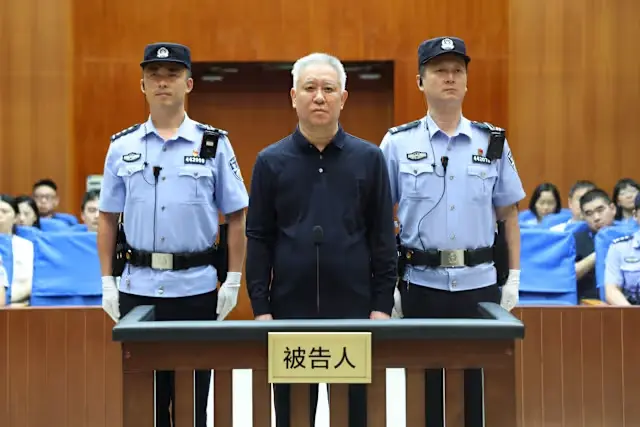
A Shenzhen court sentenced Xu, also known as Hui Ka Yan, to life in prison on Thursday for multiple financial crimes, including large-scale fraud, while ordering the confiscation of his personal property. Evergrande Group and its property subsidiary were fined a combined 15.82 billion yuan ($2.4 billion). Five other senior executives received prison sentences ranging from six to 18 years.
The court said the fraud covered the period from 2016 to 2021, accusing Xu and Evergrande of inflating assets and concealing liabilities. The charges provide a legal explanation for conduct that had previously been viewed largely through the lens of excessive borrowing, declining property sales and a liquidity crisis.
How Evergrande Became Too Big to Ignore
The case goes beyond the collapse of a single developer.
Evergrande became the most visible example of a growth model in which developers borrowed heavily, sold homes before construction was completed and used rising property values to support ever larger volumes of debt.
Founded in 1996, Evergrande expanded rapidly alongside China’s urbanisation and property boom. Xu became one of the country’s best-known businessmen, while the company expanded beyond property into a sprawling conglomerate with interests in sectors including finance, electric vehicles and consumer businesses.
Its expansion, however, depended heavily on continued access to credit and strong property sales.
That model became increasingly difficult to sustain as Beijing moved to curb excessive leverage among developers. New restrictions on borrowing narrowed Evergrande’s financing options at precisely the moment when its enormous debt obligations required continued refinancing.
The 2021 Default Changed China’s Property Market
Evergrande defaulted on its offshore debt in 2021 after accumulating liabilities of more than $300 billion.
The failure transformed the developer from a symbol of China’s economic ascent into a warning about the risks embedded in the country’s property-driven growth model.
The consequences extended well beyond shareholders.
Homebuyers faced uncertainty over apartments they had already paid for. Contractors and suppliers were left exposed to unpaid bills. Banks and other lenders faced losses, while investors holding Evergrande’s offshore debt entered years of restructuring negotiations.
In January 2024, the High Court in Hong Kong ordered Evergrande into liquidation after the developer failed to produce a workable restructuring plan.
The liquidation demonstrated the complexity of the company’s collapse. Evergrande was a mainland Chinese business with a Hong Kong listing and creditors spread across different jurisdictions, making the recovery of assets and enforcement of claims considerably more complicated.
The Property Crisis Did Not End With Evergrande
Evergrande’s demise did not resolve China’s property problem.
Official figures show that the sector continued to contract sharply in 2025. Property development investment fell 17.2%, while new-home sales by floor area declined 8.7% and sales value dropped 12.6%.
Developers’ available funding also fell 13.4%, while mortgage financing for homebuyers declined 17.8%.
The figures point to a problem larger than corporate insolvency. Chinese households have traditionally regarded property as one of their most important stores of wealth. Falling prices and weak sales therefore affect not only developers but also household confidence and spending.
Why Beijing Cannot Simply Let the Market Collapse
China’s property sector has long been closely connected to the broader economy.
Construction supports millions of jobs, while property transactions generate revenue for local governments and create demand for industries ranging from steel and cement to household appliances.
The International Monetary Fund has identified the prolonged property adjustment as one of the major domestic risks facing China’s economy. It has warned that weak property demand and high debt could weigh on household confidence and consumption while increasing pressure on local-government finances.
This leaves policymakers facing an awkward balancing act.
They want to reduce excessive leverage and discourage speculative property investment, but an uncontrolled collapse in housing could weaken banks, local governments, households and businesses simultaneously.
Millions of Homes Remain Part of the Problem
The unfinished-home problem makes the recovery particularly difficult.
China has introduced programmes intended to help complete pre-sold housing projects and restore confidence among buyers. By the end of 2025, a government programme had supported the delivery of about 7.5 million housing units.
But the scale of the existing problem remains substantial.
The World Bank estimated in 2026 that this represented only part of China’s unfinished pre-sold housing stock. It also estimated that existing housing inventories could take roughly 30 months to clear if no new construction were added.
That means the authorities are dealing with two problems at once: completing homes that were already sold and finding buyers for homes that remain unsold.
From Property-Led Growth to a New Economic Model
The deeper issue exposed by Evergrande is China’s dependence on property and construction as engines of economic growth.
For decades, rapid urbanisation, rising household incomes and expanding credit created a powerful feedback loop. More people moved into cities, demand for housing increased, developers borrowed to build more homes, and rising property values encouraged households and investors to buy more.
The model generated enormous economic activity.
It also accumulated enormous debt.
Now China must find alternative sources of growth as property investment weakens, demographics become less favourable and the returns from infrastructure and construction diminish.
The IMF has argued that China needs to shift towards stronger household consumption rather than relying so heavily on investment.
Xu’s Sentence Is the End of One Era — Not the Crisis
Xu’s life sentence sends a clear message about the government’s willingness to punish executives for financial misconduct associated with the property collapse.
But imprisonment cannot complete unfinished apartments, repay creditors or restore the value of homes.
The Evergrande case therefore closes one chapter without resolving the larger economic problem.
Xu Jiayin built his fortune during China’s extraordinary property expansion. His imprisonment comes as that expansion is being unwound.

The question for China now is whether it can dismantle the debt-heavy property model that produced Evergrande while creating another source of sustainable growth.
That economic transition will matter considerably more to China’s future than the fate of any single developer.