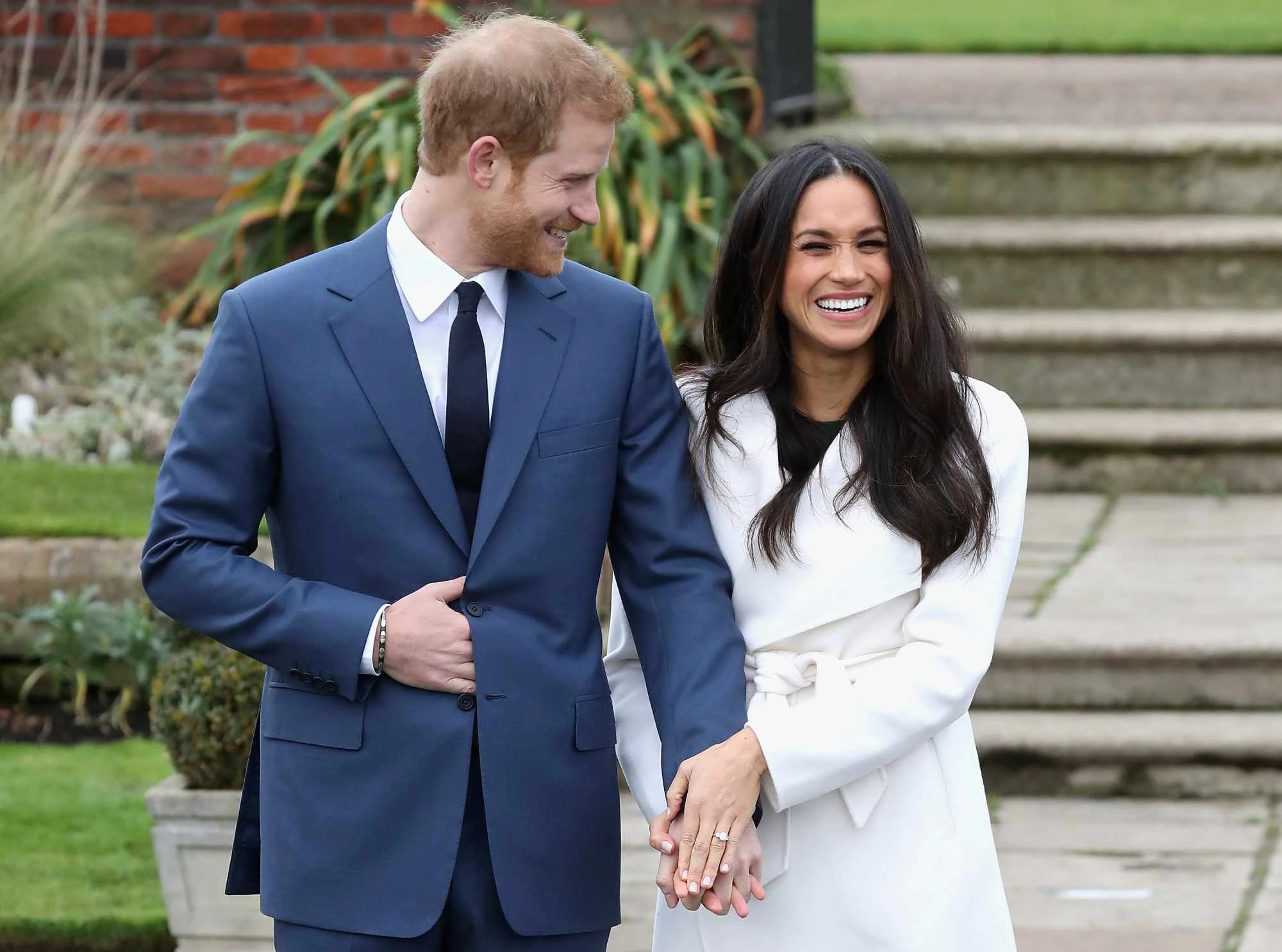
The return of Prince Harry and Meghan Markle to Britain is less a restoration of royal life than a test of whether the settlement that ended their working roles in the monarchy can survive a new reality: the Sussexes are coming home, but they are not coming back as working royals.
The couple intend to relocate from California later this month with their children, Prince Archie, seven, and Princess Lilibet, five, who are expected to begin school in Britain in September. Their new home is understood to be a private property outside London rather than a royal residence. The family is expected to retain its homes in Montecito, California, and Portugal.
That distinction matters. When Harry and Meghan left Britain in 2020, the dispute was partly about how they could remain connected to the institution while gaining greater financial and personal independence. The arrangement eventually produced a clean separation: they would cease royal duties, stop using their HRH styles and no longer receive public funds for royal work.
The Palace has never formally reopened that settlement. In February 2021, Buckingham Palace confirmed that the Sussexes would not return as working members of the Royal Family.
So the development is not a second “Megxit”. It is something more complicated: a private family attempting to establish a permanent life in Britain without returning to the constitutional and institutional role it abandoned.
A family decision with royal consequences
The immediate beneficiary may be King Charles III.
The King was informed of the Sussexes’ plans shortly before the news emerged and is understood to welcome the prospect of seeing more of his son and grandchildren in a private capacity. The family reunion at Highgrove in July was particularly important because it brought Charles together with Archie and Lilibet for the first time in about four years.
The significance is personal rather than constitutional.
Charles can see his grandchildren more easily. Harry can spend longer periods in his country of birth. Archie and Lilibet can grow up with a direct connection to Britain and the wider royal family.
But geography cannot by itself repair the institutional rupture.
Harry and Meghan remain private individuals. There is no indication that the King has offered them a hybrid arrangement in which they would undertake selected royal duties while retaining the independence they sought in 2020.
That possibility was effectively settled during the negotiations surrounding their departure. The Queen’s January 2020 statement said the Sussexes wanted a more independent life and would no longer rely on public funds for their new arrangements.
Buckingham Palace subsequently confirmed that they would step back from royal duties and would not use their HRH titles.
Their return therefore puts the monarchy in an unusual position: one of the world’s most recognisable royal couples may once again live in Britain while remaining outside the working institution.
The unresolved problem Harry took to court
The most obvious practical obstacle is security.
Harry’s decision to bring his family back to Britain comes after years in which he has argued that the level of publicly funded protection available to him is inadequate.
That dispute was not simply a family disagreement. It became a legal battle involving the Home Office and the Executive Committee for the Protection of Royalty and Public Figures, known as RAVEC.
When Harry ceased to be a working royal and moved abroad, RAVEC decided in 2020 that he and Meghan would no longer receive the same degree of publicly funded protection. Harry challenged the decision, arguing that the arrangements applied to him were inadequate and unlawful.
In May 2025, the Court of Appeal rejected his challenge.
The court found that RAVEC was entitled, in the unusual circumstances of the case, to depart from its normal procedure and that the security arrangements provided to Harry on visits to Britain were not unlawful.
That ruling is crucial to understanding the Sussexes’ return.
Harry has previously said he did not feel comfortable bringing his wife and children back to Britain without police protection. Yet the family is now preparing to establish a British base despite the fact that the court has upheld the government’s existing framework.
It does not follow that Harry has suddenly received permanent taxpayer-funded security. Nor does the move establish that the government has changed its policy. The British authorities have continued to stress that protection decisions are made through confidential risk assessments.
The unresolved security issue therefore travels with the family.
Why the children’s schooling changes the calculation
The children’s education may be the most consequential element of the move.
Until now, Harry and Meghan’s British connection could largely be managed through visits. A school-age child creates a different relationship with a country.
Archie and Lilibet will potentially spend most of the academic year in Britain rather than visiting occasionally. That creates a routine: school, friends, holidays, family occasions and a permanent physical connection to the country from which their parents departed.
It also gives Charles something that previous arrangements could not easily provide — regular access to his grandchildren.
For Harry, the decision may represent an attempt to give his children a relationship with Britain that he and Meghan were unable to maintain from California.
For the monarchy, however, it creates a new category of royal-adjacent family life. The children have royal titles but their parents do not perform official duties. Their education and upbringing will be private, yet their identity will inevitably attract public interest.
The decision to keep the school’s location and the family’s new address private reflects precisely that tension.
William is the harder relationship
If Charles is the family member with whom Harry has begun rebuilding contact, Prince William remains the more difficult problem.
The brothers’ relationship has deteriorated dramatically since Harry and Meghan left Britain. Harry’s public criticism of members of the Royal Family, his interviews and his 2023 memoir Spare exposed disputes that had previously been handled largely behind palace walls.
The return places the brothers physically closer without resolving those disputes.
That could eventually encourage reconciliation. It could also make the separation more uncomfortable.
Harry will now have a permanent British presence rather than appearing intermittently for court cases, charity engagements or royal occasions. William, meanwhile, is heir to the throne and has a distinct institutional role that Harry has explicitly abandoned.
The prospect is not necessarily of two competing royal institutions, but of two branches of the same family operating in close proximity with very different relationships to the monarchy.
That distinction will matter increasingly as the children grow older.
The Sussexes have also built a life outside Britain
The move should not be read as an abandonment of the couple’s American life.
Harry and Meghan have spent six years building a commercial and philanthropic identity in California. Their production company, Archewell Productions, continues to have a multi-year first-look arrangement with Netflix. The partnership, renewed in 2025, covers film and television projects and followed programmes including Harry & Meghan, Heart of Invictus, Polo and Meghan’s With Love, Meghan.
That means the couple’s centre of gravity is unlikely to return entirely to Britain.
Instead, the emerging model resembles a transatlantic life: Britain for family and education, California for business and established networks, and Portugal as another private base.
That is markedly different from the world they left in 2020, when their dispute centred on how to remain within the royal orbit while gaining independence.
A reversal without a royal comeback
There is an irony at the heart of the Sussexes’ return.
Six years ago, Harry and Meghan argued for distance from the royal system while retaining a connection to Britain. Today, they are moving physically closer to the monarchy while remaining institutionally outside it.
The arrangement may ultimately prove more stable than the compromise they once sought.
Harry no longer needs to be a working royal to live in Britain. Meghan does not need a formal royal role to raise their children there. Charles does not need to restore their titles or duties to maintain a relationship with his grandchildren.
What remains uncertain is whether the same separation can be maintained under the pressure of constant proximity.
The Sussexes’ return will test not only the family’s willingness to reconcile but also Britain’s ability to distinguish between royal status, private celebrity and publicly funded protection.

For the first time since 2020, Harry and Meghan will be trying to live in Britain without being part of the working monarchy.
Whether that becomes a quiet family arrangement or the beginning of another chapter in the royal family’s long-running internal conflict will depend less on where the Sussexes live than on what happens when private reconciliation collides with public life.