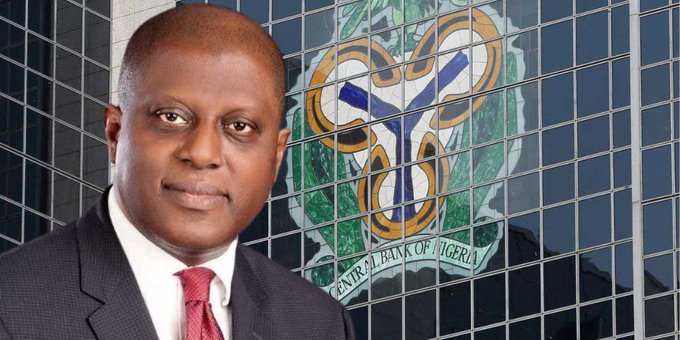
The Central Bank of Nigeria (CBN) has directed banks, Payment Service Banks, and other regulated financial institutions to immediately freeze the accounts and assets of individuals and companies recently designated under terrorism and terrorism financing sanctions by Nigerian and United States authorities.
The directive was contained in a circular dated June 24, 2026, issued by the CBN’s Compliance Department to all institutions regulated under the Banks and Other Financial Institutions Act (BOFIA) 2020.
According to the apex bank, the directive follows fresh sanctions imposed by the Nigeria Sanctions Committee and the U.S. Department of the Treasury’s Office of Foreign Assets Control (OFAC) under Executive Order 13224, as amended, targeting individuals and entities linked to terrorism financing activities.
“The Nigeria Sanctions List has been updated as at June 18, 2026. These designations constitute binding sanctions measures requiring immediate implementation by all regulated entities,” the CBN stated.
Sanctioned BDCs and Individuals
The updated sanctions list includes six individuals:
- Muktar Muhammad Adamu
- Babangida Muhammed Adamu Hammajam
- Abdullahi Umar Usman
- Ibrahim Abubakar
- Adamu Chiroma
- Yakubu Ogirima Ibrahim
The CBN also identified four Bureau de Change operators allegedly owned or controlled by the designated individuals:
- Generation Currency Bureau de Change Limited
- Manhattan Bureau de Change Limited
- Nine to Nine Exchange Bureau de Change Limited
- Abbal Bako & Sons Bureau de Change Limited
Banks Ordered to Freeze Assets Without Notice
As part of the enforcement measures, financial institutions have been instructed to immediately screen all existing customers, beneficial owners, and incoming and outgoing transactions against the updated sanctions lists, including aliases and other identifying information.
The regulator directed institutions to freeze, without prior notice, all funds, assets, and economic resources belonging to or controlled directly or indirectly by the designated individuals and entities.
The circular stated that banks must identify and freeze assets owned, held, or controlled by the sanctioned parties, including entities that are owned 50% or more, either individually or collectively, by those listed.
Financial institutions were further prohibited from making funds, financial services, or economic resources available, directly or indirectly, to the designated persons and organizations.
Mandatory Reporting Within 48 Hours
The CBN instructed all regulated institutions to file Suspicious Transaction Reports (STRs) with the Nigerian Financial Intelligence Unit (NFIU) for any confirmed or attempted matches involving sanctioned persons or entities.
In addition, banks and other financial institutions are required to submit compliance reports to the apex bank within 48 hours, detailing any matching accounts identified, amounts frozen or restricted and actions taken to enforce the sanctions
Institutions that do not identify any matches are also required to submit mandatory nil returns.
Enhanced Monitoring for Terrorism Financing Risks
The regulator directed financial institutions to strengthen monitoring systems to detect indicators of terrorism financing, including:
- Structuring and rapid movement of funds
- Use of money service businesses and bureau de change
- Informal money transfer channels
- Transactions involving high-risk jurisdictions
Banks were also instructed to conduct retrospective reviews of customer relationships and transactions to identify any previous dealings linked to the designated individuals or entities.
CBN Warns Against Non-Compliance
The apex bank warned that all compliance submissions must be accurate, complete, and verifiable.
According to the circular, the submission of false or misleading information will constitute a regulatory violation and attract sanctions under BOFIA 2020 and other applicable laws.
The CBN said it would undertake off-site reviews, on-site examinations, and supervisory engagements to verify compliance across the financial sector, stressing that the directive takes immediate effect.

The latest directive comes shortly after the United States designated a Nigerian national and three Nigeria-based companies among a wider group of individuals and entities accused of facilitating financial transactions linked to the terrorist organization ISIS.
The U.S. action targeted three individuals and six entities allegedly involved in supporting the movement of funds for ISIS operations across multiple jurisdictions.