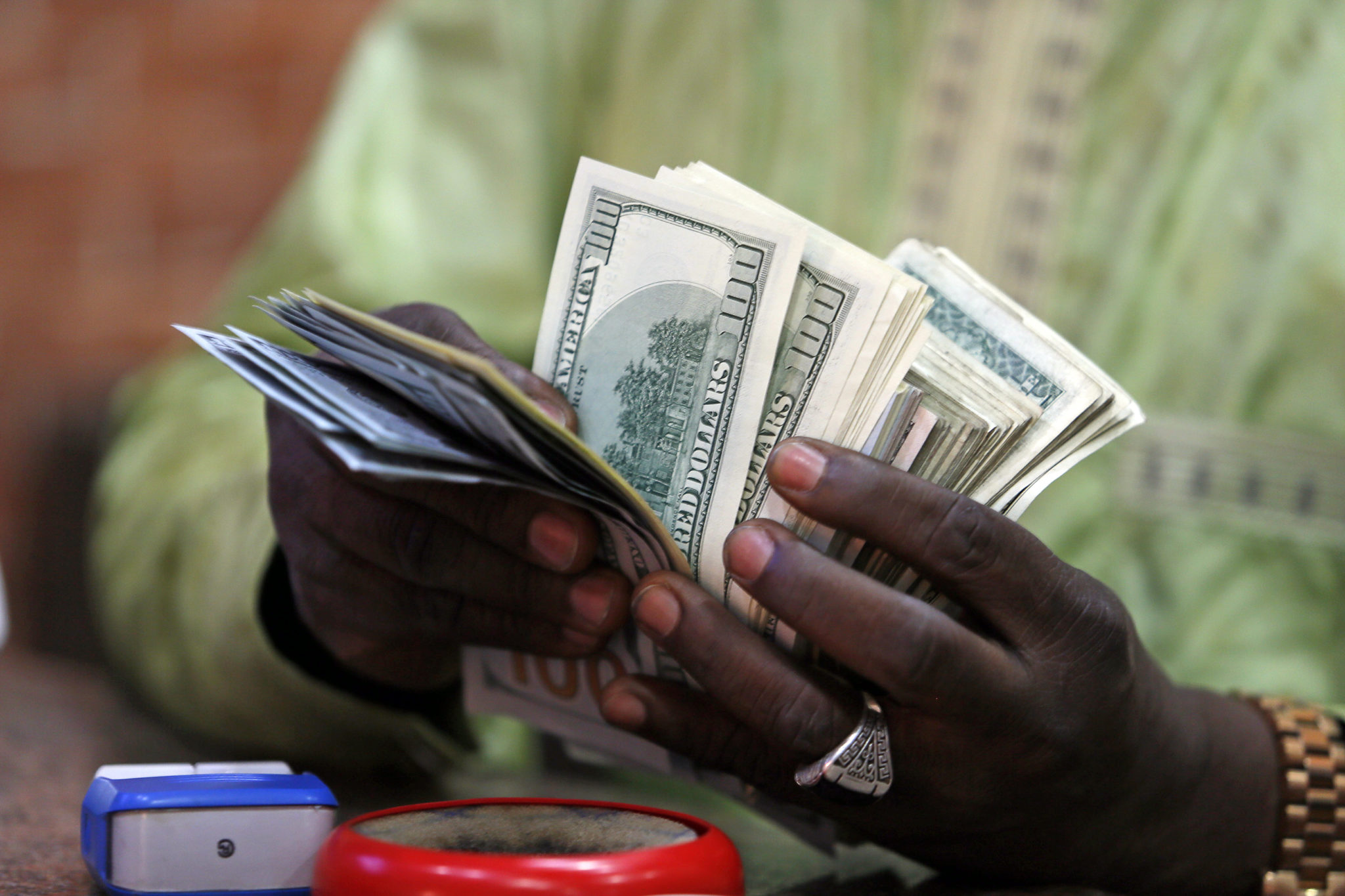
The United States government has imposed sanctions on a Lagos-based Bureau De Change (BDC) operator, Mukhtar Muhammad, and three companies allegedly linked to him over accusations that they facilitated financial transactions for the Islamic State West Africa Province (ISWAP), the West African affiliate of ISIS.
The sanctions were announced by the U.S. Department of the Treasury’s Office of Foreign Assets Control (OFAC), which alleged that Muhammad, also known as Mukhtar Adamu Muhammad, played a significant role in ISWAP’s financial network by enabling the movement of funds through multiple money exchange businesses operating in Nigeria.
According to OFAC, Muhammad used three BDC firms—Nine To Nine Exchange Bureau De Change Limited, Generation Currency Bureau De Change Limited, and Manhattan Bureau De Change Limited to process and transfer funds on behalf of the extremist group.
The U.S. agency stated that the companies were owned, controlled, or directed by Muhammad and were used as financial conduits that helped sustain ISWAP’s activities across Nigeria’s North-East and the wider Lake Chad Basin region.
ISWAP, a breakaway faction of Boko Haram, has been responsible for numerous attacks on civilians, military formations, and government infrastructure in Nigeria and neighboring countries over the past decade.
Wider US Counterterrorism Efforts
The sanctions form part of a broader U.S. effort to disrupt financial networks linked to ISIS globally. Alongside the Nigerian designations, OFAC also sanctioned several individuals and entities operating in Europe, the Middle East, and Türkiye.
Among those sanctioned are France-based ISIS financial facilitator Miloud Abderrahmane and Syria-based financial operative Abdelhakim Boukich, who reportedly owns and controls Bitcoin Xchange, a money services business accused of facilitating transfers for ISIS-linked individuals.
The Treasury Department also designated Mohamad Alhmidan, previously sanctioned in 2016, along with Spider Gayrimenkul Ve Genel Ticaret Limited Sirketi and Alkaram Danismanlik Gayrimenkul Ic Ve Dis Genel Ticaret Limited Sirketi, alleging that they provided material support or services to ISIS-affiliated financial networks.
According to OFAC, these entities helped move funds across multiple jurisdictions, including Europe, North America, Africa, and the Middle East.
The designation marks the first public appearance of Muhammad and the three Nigerian BDC firms on an international terrorism financing sanctions list.
Nigerian authorities have in recent years intensified efforts to identify and disrupt financial channels supporting terrorist groups. The government has periodically updated its domestic list of terrorism financiers, leading to asset freezes, travel restrictions, and financial sanctions against designated individuals and entities.
Implications of the Sanctions
Under the sanctions, all property and interests in property belonging to the designated individuals and entities that are within U.S. jurisdiction, or controlled by U.S. persons, are blocked.
The sanctions also prohibit U.S. citizens, businesses, and financial institutions from conducting transactions with the designated parties unless specifically authorized by OFAC.

In addition, the Treasury Department warned that foreign financial institutions and individuals that knowingly facilitate significant transactions or provide material support to the sanctioned persons or entities could themselves face secondary sanctions.
The move underscores growing international efforts to dismantle financial networks that sustain terrorist organizations and highlights the increasing scrutiny facing money transfer operators and foreign exchange businesses operating in high-risk jurisdictions.