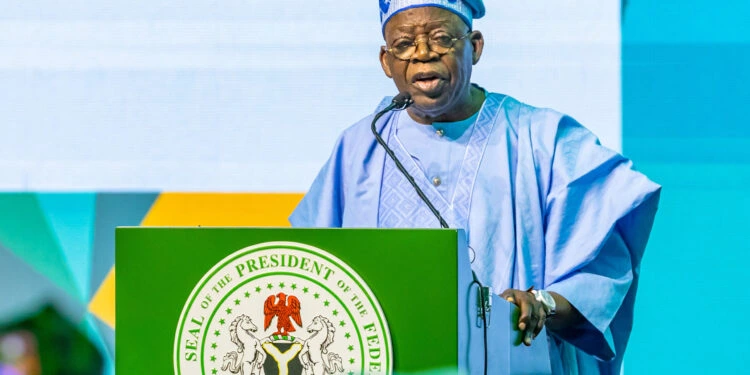
Since assuming office in 2023, President Bola Ahmed Tinubu has repeatedly spoken about his ambition of growing Nigeria into a $1 trillion economy by 2030. Three years into his administration, however, and with four years remaining before the target date, many economists believe the goal is becoming increasingly difficult to achieve.
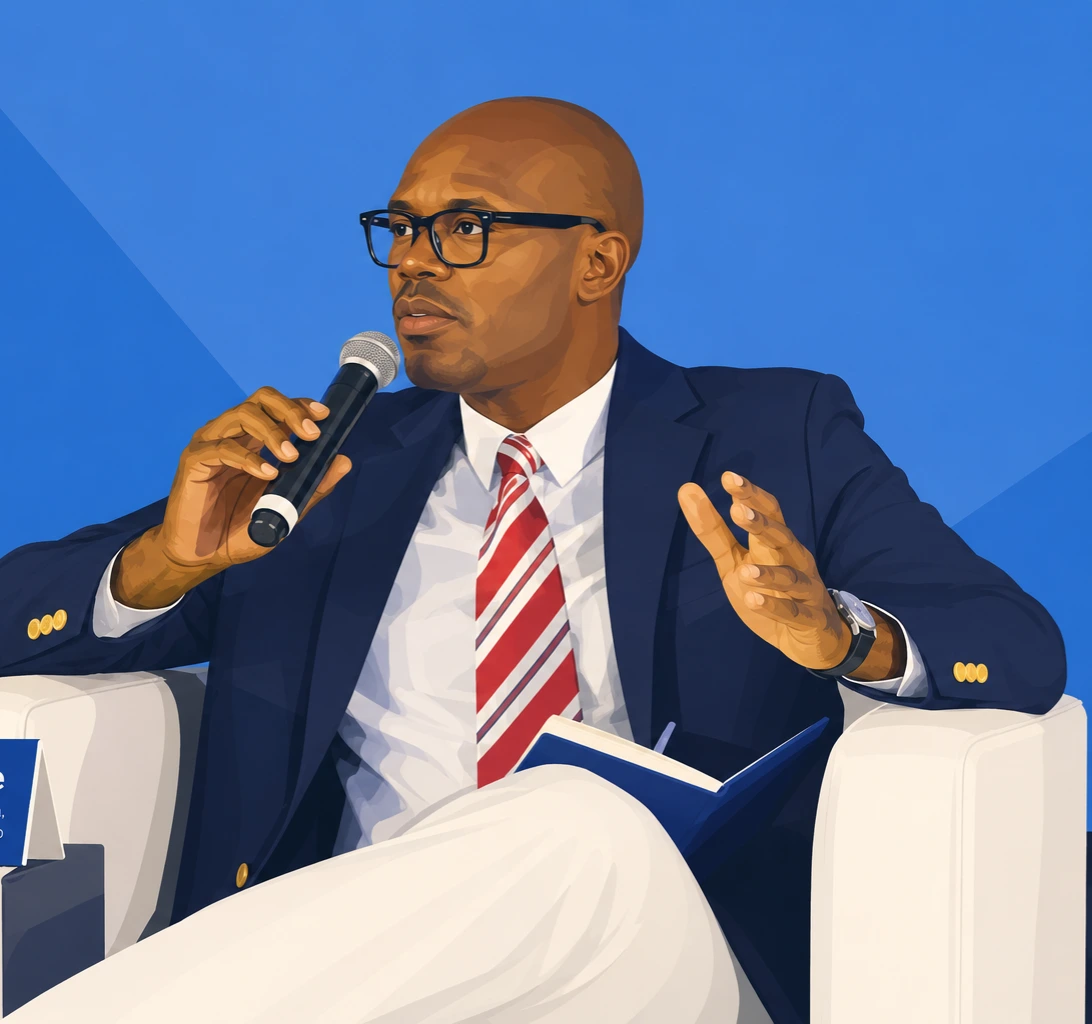
Among those unconvinced of this ambition is economist and political commentator Mustafa Chike-Obi, who argues that, under current conditions, the target is highly improbable.
“It is more likely that a lottery ticket buyer will buy a house in Ikoyi than it is for the Nigerian government to achieve a $1 trillion economy in five years,” he said.
Chike-Obi attributes his pessimism to Nigeria’s chronic infrastructure deficit, inadequate electricity supply, skills shortages and weak institutional capacity, all of which constrain the pace of economic expansion.
Nigeria’s economy has recorded real GDP growth of around 3–4% in recent years, well below the sustained high-growth rates achieved by countries that rapidly expanded the size of their economies.
$1 Trillion Economy Not Solely About Real Growth
A common misconception is that Nigeria must achieve annual real GDP growth of 20% or more to become a $1 trillion economy.
In reality, the size of an economy measured in US dollars depends on several variables, including real economic growth, inflation, exchange rates and periodic statistical revisions such as GDP rebasing.
Nigeria could expand significantly in dollar terms through a combination of stronger productivity growth, moderate inflation and a stable or stronger naira.
Conversely, even robust real GDP growth could translate into a smaller economy in dollar terms if the naira depreciates sharply.
Exchange-rate stability is therefore almost as important as real output growth in determining whether Nigeria reaches the $1 trillion threshold.
However, major risks remain. Lower global oil prices, renewed exchange-rate pressures, food inflation driven by insecurity and climate shocks, and persistent deficiencies in electricity and transport infrastructure could all undermine growth. Sustained macroeconomic stability, alongside deeper structural reforms in power, infrastructure, agriculture and human capital, will determine whether the target becomes attainable or remains aspirational.
Reforms Have Improved Macroeconomic Stability
Since 2023, the Federal Government has implemented some of Nigeria’s most significant macroeconomic reforms in decades.
These include the removal of petrol subsidies, exchange-rate liberalisation, tax and fiscal reforms, efforts to raise oil production and measures aimed at restoring investor confidence.
The International Monetary Fund says these reforms have strengthened macroeconomic stability and improved economic resilience, while stressing that much deeper structural reforms are still required.
The IMF projects Nigeria’s economy to grow by about 4.1% in 2026, an improvement on recent performance but still below the pace typically associated with rapid economic transformation.
While reforms have improved macroeconomic stability, inflation remains elevated by historical standards, eroding household purchasing power, increasing business costs and keeping borrowing costs relatively high.
Nigeria’s external reserves have risen to their highest level in more than a decade, oil production has recovered from recent lows, the foreign-exchange market has become more market-driven, and inflation has begun to moderate, although it remains well above the Central Bank’s target range.
Significant Structural Gaps Remain
Despite recent progress, Nigeria continues to face deep structural constraints.
Electricity remains perhaps the country’s biggest economic bottleneck. Grid electricity generation typically fluctuates between about 5,000 and 6,000 megawatts for a population exceeding 230 million people, forcing businesses to rely heavily on self-generated power and substantially increasing production costs.
Infrastructure deficits across transport, ports, rail and logistics continue to reduce competitiveness and increase the cost of doing business.
Human capital also remains a challenge, with weaknesses in education, healthcare and technical skills limiting productivity.
Agriculture, which employs a significant share of the workforce, continues to face insecurity, low mechanisation, inadequate irrigation and poor storage infrastructure.
The IMF has consistently identified electricity, infrastructure, governance, security and human capital as key constraints on Nigeria’s long-term growth potential.
Lessons from Other Economies
Critics often argue that very few countries have achieved the pace of growth required to reach such an ambitious target. History, however, provides several examples.
China sustained average annual growth of around 10% for nearly three decades. South Korea transformed itself from a low-income economy into an advanced industrial nation within a generation, while Vietnam has maintained growth rates above 6% for much of the past two decades.
Nigeria’s institutional and structural conditions differ considerably from those countries, meaning their experience cannot simply be replicated. Nevertheless, they demonstrate that rapid economic transformation is possible when sustained reforms are effectively implemented.
The greater challenge for Nigeria is therefore not economic theory but policy execution as there is already a lot of economic theorizing ongoing with haphazard effort put into policy execution.
Nigeria’s Untapped Advantages
Nigeria possesses several structural advantages that could support faster long-term growth if effectively leveraged.
These include Africa’s largest population, one of the continent’s largest consumer markets, substantial oil and gas reserves, vast agricultural resources, a growing technology ecosystem and an increasingly sophisticated financial services sector.
Oil production has improved after years of disruptions, strengthening foreign-exchange earnings and government revenues.
Beyond hydrocarbons, telecommunications, financial technology, entertainment, manufacturing and digital services continue to expand and could contribute a larger share of future GDP growth.
Economists generally agree that no single sector will deliver a $1 trillion economy. Sustained expansion will require simultaneous growth across multiple industries, supported by higher levels of domestic and foreign investment.
Priority areas include expanding electricity generation, modernising transport infrastructure, improving security, investing in education and healthcare, increasing agricultural productivity, strengthening institutions and maintaining consistent economic policies.
$1 Trillion Target Ambitious, But Not Impossible
Available evidence suggests Nigeria is not currently on a trajectory that makes a $1 trillion economy by 2030 likely. Current growth rates remain below the level that would ordinarily be required, while longstanding structural constraints continue to weigh on productivity.

At the same time, declaring the target impossible extends beyond what the evidence can conclusively support. Nigeria has made progress in restoring macroeconomic stability, oil production is recovering, foreign reserves have strengthened, and several non-oil sectors continue to record steady expansion.
Ultimately, the debate is no longer about whether the ambition is bold. It is whether Nigeria can translate recent macroeconomic reforms into sustained productivity gains, higher investment and faster long-term growth.