The Trump administration is trying to achieve through regulation what it has so far failed to sustain in court: making the extraordinary cost of hiring skilled foreign workers part of the permanent architecture of the U.S. immigration system.
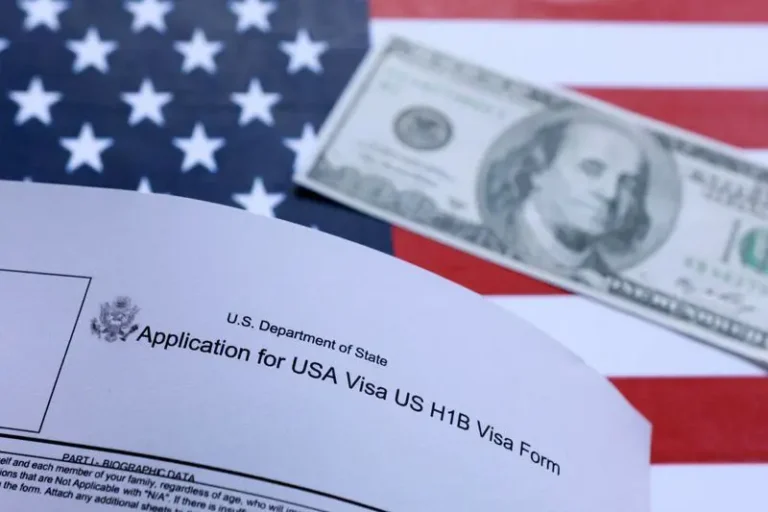
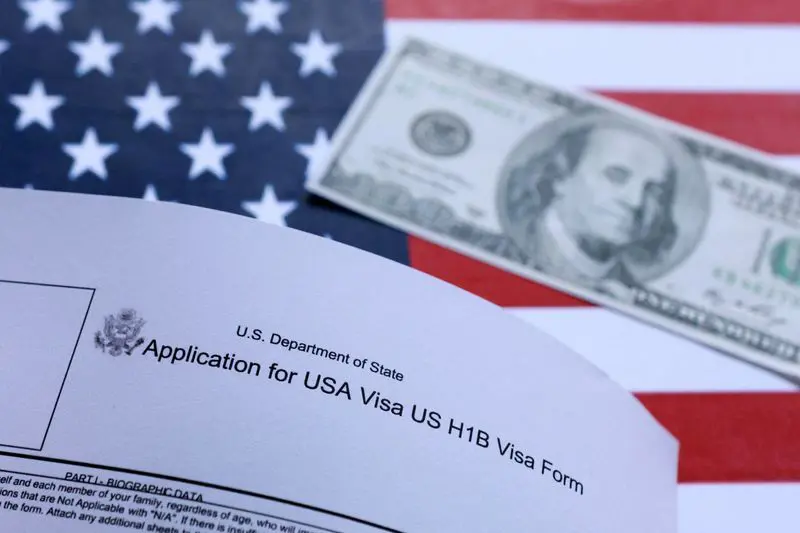
The Department of Homeland Security on Monday proposed a $103,265 fee for H-1B workers covered by the programme’s annual cap, a measure that would dramatically change the economics of one of America’s main channels for recruiting foreign professionals.
The proposal follows a federal judge’s ruling in June that Trump’s earlier $100,000 charge was unlawful and a subsequent appeals-court decision allowing that ruling to remain in effect while litigation continues.
The new proposal is therefore more than a fee increase. It represents an attempt to move the dispute from presidential proclamation into the federal rule-making system, where the administration argues it can establish a recurring charge for the H-1B programme even as the courts examine the limits of executive power over immigration.
The proposed fee would apply to petitions subject to the annual H-1B cap, including the separate allocation for foreign workers with advanced U.S. degrees.
The programme is legally capped at 65,000 regular visas a year, with another 20,000 places reserved for people with qualifying U.S. master’s or higher degrees.
That ceiling is already far below demand. Employers registered roughly 344,000 eligible candidates for the fiscal 2026 H-1B selection process, while the statutory cap remained 85,000.
The gap between those figures is one reason the programme operates through a selection system rather than allowing every qualified applicant to receive a visa.
The proposed fee would add another filter — this time based not on qualifications or lottery selection, but on the ability of an employer to absorb a six-figure government charge.
From visa fee to immigration policy
The administration’s argument is that the H-1B system should serve a narrower and more economically valuable segment of the labour market.
Trump and other critics have long argued that companies can use H-1B workers to reduce labour costs or replace American employees. Business groups, technology companies and universities counter that the programme exists partly because employers cannot always find workers with the specialised skills they need domestically.
The administration has already moved beyond the fee itself.
A separate rule has shifted H-1B selection toward higher-paid workers by weighting registrations according to the wage level associated with the job.
That means the government is simultaneously changing who is more likely to win access to the programme and increasing the cost of employing those who do.
Taken together, the measures amount to a redesign of the programme rather than a simple increase in administrative charges.
For employers, the distinction matters. A normal visa-processing fee is generally a cost of navigating government bureaucracy. A charge of $103,265 can affect the underlying decision to recruit a foreign worker at all.
Bloomberg Law reported that DHS estimates the new fee could generate about $8.8 billion a year if payments were collected for each cap-subject worker.
The proposed rule says the money would help finance immigration administration across the federal government, including adjudication, fraud detection, national-security vetting and technology modernisation.
That creates a second dimension to the policy: the H-1B programme is being treated not only as a labour-market mechanism but also as a potential source of federal revenue.
The courts have already rejected the first version
The administration’s immediate problem is that the policy’s legal foundation has already been challenged successfully.
Trump introduced the $100,000 charge in September 2025 through a presidential proclamation. The government relied on federal immigration law granting the president authority to restrict the entry of foreign nationals whose admission he determines would be detrimental to U.S. interests.
A coalition led by Democratic state attorneys general challenged the measure, arguing that the president had effectively imposed a tax without congressional authorization.
U.S. District Judge Leo Sorokin in Boston agreed with the challengers in June, finding that the administration had exceeded its authority. The administration appealed, but the 1st U.S. Circuit Court of Appeals in July rejected its request to suspend the ruling while the case proceeds.
The legal question now extends beyond whether $100,000 is reasonable.
It is whether the executive branch can use immigration powers to impose a charge of that scale without Congress expressly authorising it.
That distinction could determine whether the administration’s new rule survives even if the underlying policy objective remains intact.
The proposed regulation may also change the legal battlefield. Rather than relying solely on a presidential proclamation, DHS is attempting to establish the fee through formal administrative rule-making, giving opponents another target for litigation once the rule is finalised.
The administration has not abandoned the original legal theory. It maintains that the charge is not an ordinary tax but a mechanism connected to the president’s authority over admission to the United States.
Critics argue that calling it an immigration fee cannot give the executive branch powers that Congress has not granted.
The workers who could be squeezed
The economic consequences extend beyond multinational technology companies.
Universities, research institutions and education providers have historically relied on H-1B workers for specialised positions. USCIS data show that thousands of approved H-1B petitions are associated with higher education and research organisations.
In fiscal 2024 alone, more than 23,500 approved petitions were for employers identified as institutions of higher education, while thousands more involved nonprofit or government research organisations.
The structure of the proposal also matters for foreign graduates already studying in the United States.
An H-1B route has traditionally allowed some international students to move from U.S. education into skilled employment without first leaving the country. A sufficiently large new cost could change the calculation for employers deciding whether to sponsor those graduates.
That comes as the administration considers further restrictions on the pathway from foreign education to U.S. employment.
Bloomberg Law reported that DHS is also considering a separate $100,000 charge connected to Optional Practical Training, the programme that allows eligible foreign students to work temporarily after graduation.
If both measures proceed, the effect would reach earlier into the migration pipeline: from the period when a student studies in America to the point at which an employer seeks to retain that person permanently in a skilled role.
A programme already losing applicants
There is evidence that the H-1B system has become less attractive or less accessible even before the proposed fee.
Eligible registrations fell to about 344,000 in the fiscal 2026 selection process, down sharply from the previous year’s level and less than half the roughly 794,000 registrations recorded in 2023.
The decline has occurred alongside tighter scrutiny, changes to registration procedures and a broader political campaign against what the administration describes as misuse of employment-based immigration.
Yet demand remains several times greater than the number of places available.
That tension captures the central contradiction in the government’s approach. The United States continues to have an immigration system in which employers compete intensely for access to a limited pool of specialised foreign workers, while policymakers are simultaneously making that pool more expensive and more selective.
For companies that can afford the cost, the policy may simply turn H-1B sponsorship into a more expensive recruitment expense.
For smaller employers, universities and organisations operating with fixed budgets, the same charge could make international recruitment economically impractical.
India stands at the centre of the debate
The consequences would be particularly pronounced for Indian professionals, who account for the largest share of H-1B beneficiaries.
USCIS data for fiscal 2024 show that the programme approved 399,402 H-1B petitions overall, although that figure includes extensions and other petitions outside the annual cap.
Indian workers have dominated the H-1B system for years, making changes to the programme closely watched in India and among the technology and professional-services industries that depend on the U.S. market.
The effect is not limited to people physically outside America. H-1B rules govern a wider employment ecosystem that includes workers changing status, extending employment and moving between employers, although the proposed $103,265 charge is focused on cap-subject petitions.
For countries that have built large professional migration pipelines into the United States, the policy could therefore alter career decisions long before an individual receives an H-1B approval.
Washington is testing how far immigration power can reach
The administration’s broader strategy is becoming clearer.
Instead of abolishing the H-1B programme, it is attempting to make access more expensive, favour higher-paid workers, increase scrutiny and reduce what officials regard as opportunities for employers to exploit the system.
That approach allows the government to preserve a programme demanded by American employers while changing the economic incentives surrounding it.
But the legal fight may ultimately prove more consequential than the fee itself.
The June ruling placed a limit on the administration’s ability to use immigration authority as a substitute for congressional action.
The proposed rule now asks a related question through a different institutional route: whether DHS can create a six-figure charge through regulation that the president could not sustain through proclamation.
The answer will help define not only the future cost of an H-1B visa, but the boundary between presidential immigration powers and Congress’s authority over federal taxation and spending.
DHS will accept public comments on the proposal for 30 days. The administration could finalise the regulation by the end of the year, but litigation is likely to follow if it does.

For American employers, the immediate question is how much they are willing to pay for access to global talent.
For foreign workers, the question is becoming more fundamental: whether the United States will remain a destination where specialised skills can overcome the barriers of immigration policy, or whether the cost of crossing that barrier will itself become a means of deciding who gets through.