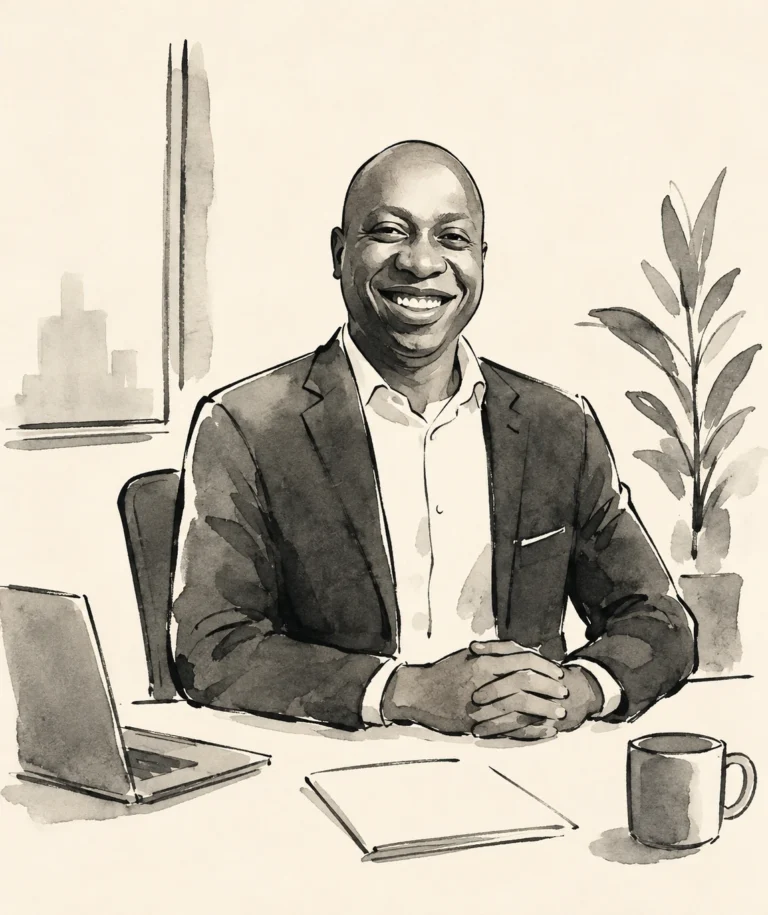
The students who remember Professor Jason Arday do not begin with his Cambridge title.
They remember the small things.
He knew their names. He remembered where they lived. He asked about their journeys to university. He stayed behind after lectures to answer questions. Sometimes, students remained simply to show him funny videos on social media.
One former student remembers something even more unusual: Arday once gave him £10 after he correctly guessed a Simply Red song during a lecture.
Years later, those are the memories that have stayed.
Arday, who died in August at 41, had become the subject of intense public attention during the final weeks of his life after resigning from the University of Cambridge amid questions about his academic career.
But former students have offered another picture of the professor they knew in the classroom: a teacher who gave students his time, remembered personal details and made them feel comfortable enough to ask questions without fear of embarrassment.
He knew his students
At Durham University, where Arday taught, students remember how he would greet them individually as they entered the classroom.
He did not simply say hello.
He might ask about someone’s journey to campus or mention something they had told him weeks earlier. Students noticed that he remembered.
One former student said this made a difference because it showed that Arday saw them as people rather than simply names on a class register.
His attention to students continued after lectures.
He would stay behind to answer questions, sometimes for another 30 minutes. His tutorials could also run much longer than scheduled if a student was still struggling with a subject.
According to one former student, Arday was willing to spend that extra time even when it meant staying late to prepare his own lectures or continue his research.
That was the kind of teacher his students remember.
Sometimes the lesson continued after class
Not every memory is about studying.
Some students stayed behind simply because they enjoyed talking to him.
They would show him social-media videos about “aunty” and “uncle”. Arday would watch them with them.
Another student remembers his sense of humour and his love of music.
The £10 Simply Red story has survived for the same reason. It was not a major event. It was simply a funny moment between a lecturer and a student.
But these are often the moments students remember longest.
An anonymous MPhil student described Arday as the kindest and most genuine teacher they had ever had.
They recalled leaving his classes wishing they could have lasted for hours longer.
More importantly, they said they left feeling “seen and capable.”
His students saw a different side of academic life
Arday’s own career had taken him from teacher training to some of Britain’s most prestigious universities.
He became a professor at a relatively young age and was appointed Professor of Sociology of Education at Cambridge in 2023.
His personal journey was unusual.
According to Cambridge, Arday had been diagnosed with autism as a child and did not speak until he was 11. He did not learn to read and write until his late teens.
He went on to study at the University of Surrey, train as a teacher, complete master’s degrees and earn a PhD before building an academic career at universities including Durham, Glasgow and Cambridge.
For students, however, none of that necessarily mattered when they walked into his classroom.
They encountered a professor who was willing to explain something twice.
Or three times.
A professor who would stay behind when everyone else had left.
A professor who remembered what they had told him.
Students remember his kindness more than his titles
That is what makes the tributes from former students striking.
They do not focus primarily on his academic achievements.
They talk about his patience.
His humour.
His music.
The questions he asked.
The extra time he gave them.
One former student said Arday was the best lecturer they had ever had and described him as one of the kindest and most thoughtful people they had met.
Another remembered him as “hilarious, gentle” and “profound”.
Those descriptions are personal rather than academic.
They tell us what it was like to be taught by him.
And they suggest that Arday understood something that can easily get lost in university life: students may forget individual lectures, but they rarely forget how a teacher made them feel.
His final months brought a very different story
The warmth of those memories exists alongside serious questions about Arday’s academic career.
He resigned from Cambridge on August 5 after the university began investigating information concerning his academic qualifications and honorary appointments.
The university said it would investigate the circumstances surrounding his appointment and his time at Cambridge. It also said the findings would be used to review its procedures for appointing senior academics.
Other universities connected to Arday’s career also began examining aspects of his appointments.
Those investigations are about institutional decisions and academic records. They are separate from the experiences described by his former students.
His students cannot answer questions about how universities assessed his qualifications.
But they can describe what happened when he stood in front of a classroom.
And their memories are remarkably consistent.
He knew their names.
He gave them his time.
He listened to them.
He made them laugh.
He remembered things about their lives.
And sometimes, after the lecture had ended and the serious academic work was over, he simply stayed.
The memories that remain
There is something revealing about what people choose to remember after a teacher dies.
They remember the big achievements, but they also remember the ordinary moments.
For Arday’s students, those moments include a question about a long drive to university, an extra half-hour after class, a conversation about music and £10 won by guessing a Simply Red song.
None of these things appear particularly important on a university CV.
To the people who experienced them, they were.

They are the memories of a professor before the headlines — a teacher standing in a classroom, learning his students’ names and making sure they knew he remembered them.
That is the Jason Arday many of his former students are now choosing to remember.