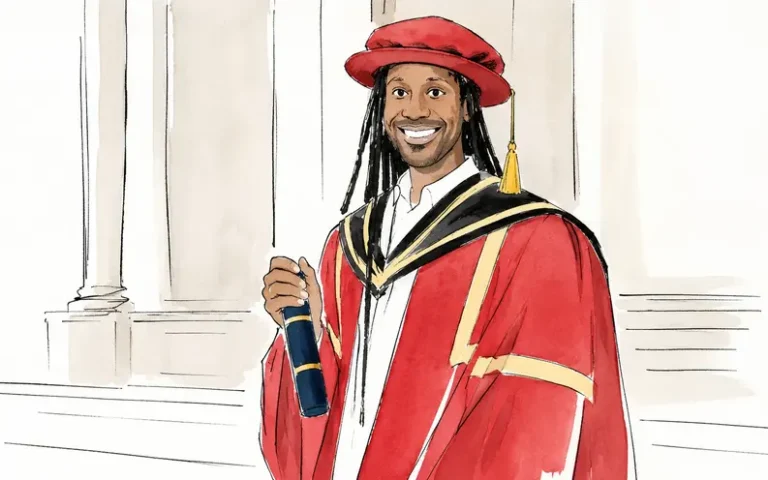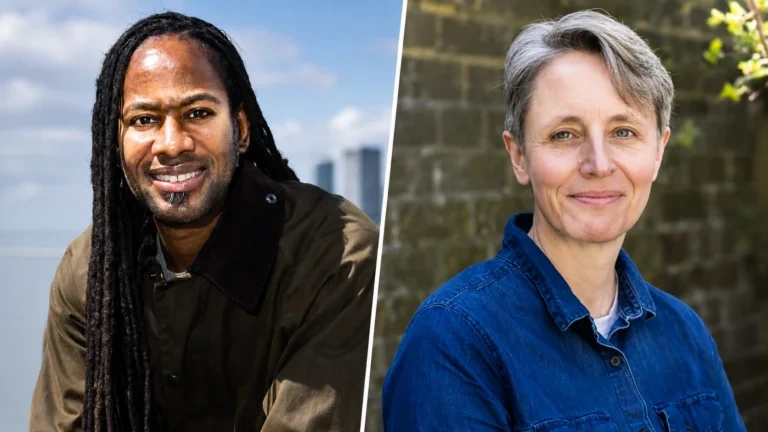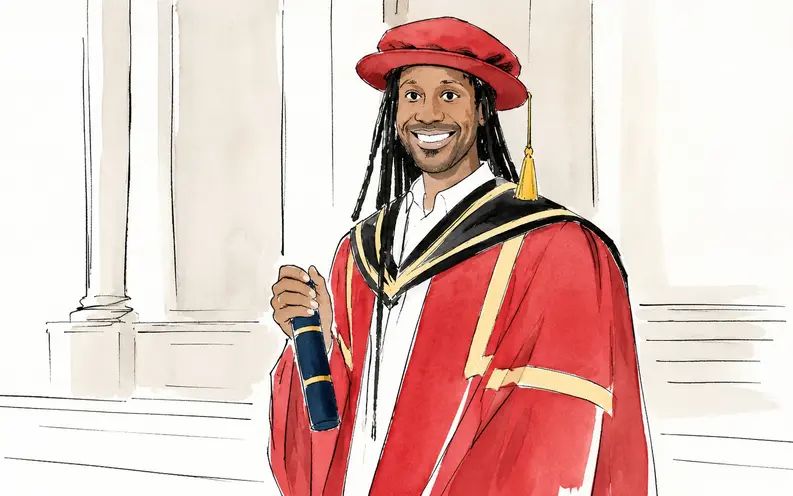
Jason Arday’s resignation from the University of Cambridge has revived an uncomfortable question for British higher education: when academics are accused of plagiarism, are they treated consistently?
The comparison now circulating most widely is with William O’Reilly, an associate professor of early modern history at Cambridge. In 2023, Cambridge upheld a complaint that O’Reilly had plagiarised work produced by one of his own undergraduate students. Yet O’Reilly remained in his job. Arday, by contrast, resigned in August 2026 after weeks of intense scrutiny over allegations concerning his PhD thesis, journal publications, academic affiliations and other claims on his public record.
At first glance, the contrast appears stark. But a closer look at British cases shows that plagiarism sanctions have varied enormously — from no dismissal at all, through suspension, to loss of a degree and termination of employment. The decisive variables have usually been the scale of the copying, whether investigators judged it deliberate or dishonest, whether it was repeated, and whether other misconduct was involved.
That makes Arday’s case more complicated than a simple claim of a double standard. There is evidence that some academics accused of plagiarism have been treated more leniently than he was. There is also evidence that others faced consequences at least as severe, and sometimes considerably harsher. Crucially, however, Arday resigned before Cambridge’s latest investigation had reached a finding of misconduct.
The O’Reilly comparison
The case of William O’Reilly is the strongest evidence for critics who argue that British universities do not impose plagiarism rules evenly.
Cambridge investigated O’Reilly after a former undergraduate discovered that an article published under O’Reilly’s name in the Journal of Austrian-American History contained extensive passages drawn from two of the student’s supervision essays. Varsity, Cambridge’s student newspaper, reported that more than 12 pages had been lifted almost word for word. O’Reilly had supervised and marked the essays and had praised the student’s originality.
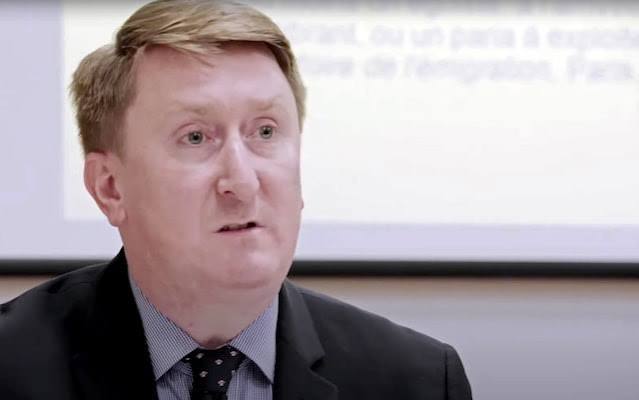
After a two-year investigation, a Cambridge tribunal upheld the plagiarism complaint. But it concluded that the offence resulted from negligence rather than deliberate misconduct. O’Reilly kept his job. Cambridge’s then research-misconduct framework distinguished between deliberate or reckless misconduct and error or negligence, a distinction also reflected in wider UK research-integrity practice.
The case therefore produced an outcome that looked extraordinary to many observers: a senior academic had published a student’s work under his own name, the allegation of plagiarism was upheld, yet he was not dismissed. O’Reilly said the copying had occurred through the use of material as a placeholder or aide-mémoire while preparing the article and that he deeply regretted what happened.
For anyone asking whether Arday was treated more harshly, O’Reilly is the most difficult comparator for Cambridge. The university tolerated an upheld case of extensive copying when it accepted that the conduct was negligent rather than intentional.
Tony Antoniou: plagiarism led to dismissal
A very different precedent comes from Durham University.
Tony Antoniou, a former dean of Durham Business School and professor of finance, was investigated in 2007 after allegations that substantial parts of a journal article and his University of York DPhil thesis had been copied verbatim from other sources. Durham suspended him while the case was investigated. York later stripped him of the doctorate it had awarded in 1986.

In 2008, Durham’s disciplinary tribunal upheld misconduct charges and concluded that the plagiarism amounted to “good cause” for dismissal. Antoniou was sacked.
The Antoniou case demonstrates that British universities have treated serious plagiarism as a dismissible offence, particularly when it affected both a doctoral thesis and published work. It is therefore not possible to say that academics in Britain normally keep their jobs after plagiarism is established.
Derek Gadsdon: false publication record, immediate resignation
Liverpool John Moores University — the institution that awarded Arday his PhD — has itself previously dealt severely with academic dishonesty.
In 1999, Derek Gadsdon, a professor of medical cell pathology, resigned after an investigation found that he had falsified his publication record. He had claimed authorship of dozens of publications, including papers that did not exist. The university withdrew his professorial title.
This was not a conventional plagiarism case, but it is relevant to the Arday controversy because the current scrutiny extends beyond unattributed copying to the accuracy of academic and professional claims. British universities have historically treated deliberate falsification of a scholarly record as a grave offence.
Raj Persaud: professional suspension for repeated plagiarism
The career of Raj Persaud, then one of Britain’s best-known psychiatrists and broadcasters, offers another example of substantial punishment.
In 2008, the General Medical Council found that Persaud had repeatedly copied material from other scholars in a book and in articles published in medical journals and newspapers. He admitted the plagiarism but disputed that it was dishonest. The GMC rejected that defence, finding his conduct dishonest and damaging to public confidence in the medical profession.
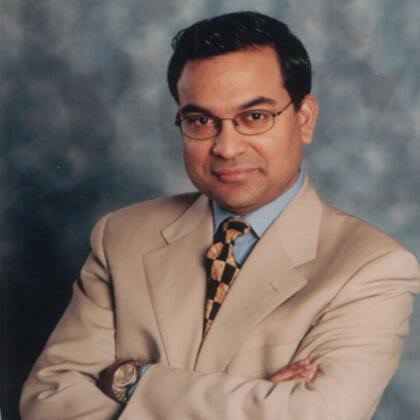
Persaud was suspended from medical practice for three months. The sanction did not end his career, but it went well beyond a private reprimand and followed a formal finding of dishonesty.
What makes Arday different
The central difficulty in comparing Arday directly with these cases is that, as of his resignation, Cambridge had not found him guilty of plagiarism in its latest process. Liverpool John Moores University had previously considered allegations about his PhD and did not uphold them as research misconduct. Cambridge initially relied on that outcome when defending him.
The renewed controversy became much wider in July and August 2026. Critics identified passages in Arday’s 2015 thesis that closely resembled an earlier doctoral thesis by Paula Zwozdiak-Myers. Retraction Watch reported that a dossier prepared for Times Higher Education had also raised questions about several journal articles. Subsequent reporting raised separate issues involving research data, ethics statements, academic affiliations and claims made in his biography.
Cambridge then announced a new investigation after receiving what it described as new information about his academic qualifications and honorary appointments. Arday resigned before that inquiry was completed. He has denied being dishonest, while acknowledging mistakes and errors in parts of his record.
This matters because resignation under scrutiny is not the same thing as dismissal following a finding of plagiarism. Arday was not formally sacked for plagiarism by Cambridge. He chose to leave while an inquiry was under way and while media scrutiny was intensifying.
Was the media treatment unequal?
The stronger argument for differential treatment may concern publicity rather than formal university sanctions.
O’Reilly’s case received significant coverage from the Financial Times and Varsity but never became a sustained national controversy. Arday’s case, by contrast, became a major story across national and international media, drawing in questions about race, diversity policies, Cambridge’s appointment procedures and the credibility of his public biography.
The difference in media intensity is real. But the stories were also structurally different. O’Reilly faced one established plagiarism case. Arday faced allegations concerning plagiarism alongside questions about qualifications, appointments, research practices and public claims, while also being a unusually prominent academic whose appointment had itself attracted extensive media attention.
Race is nonetheless impossible to exclude from the debate. Some Black British academics have argued that Arday’s errors and alleged misconduct became a vehicle for a wider attack on diversity initiatives and Black scholarship. Critics on the other side argue that Cambridge was initially too protective of Arday precisely because his appointment had become symbolically important to the university’s diversity agenda. Both claims are politically charged; neither can be established simply by comparing headline counts.
The institutional inconsistency is the bigger problem
What the cases do establish is that British academia lacks a simple, uniform sanction for plagiarism by staff. Universities make distinctions between intentional misconduct, recklessness, negligence and honest error, and disciplinary outcomes depend on institutional rules and the facts of each case. The UK Research Integrity Office describes research misconduct as behaviour that deliberately or recklessly falls below expected standards and distinguishes it from genuine errors and lesser questionable practices.
Cambridge’s own older misconduct policy stated that proven research misconduct would normally merit dismissal, while also defining misconduct in a way that left room to distinguish deliberate wrongdoing from negligent conduct. That distinction was central to O’Reilly’s survival.
The result is a system in which two cases involving extensive unattributed copying can produce radically different consequences depending on how intent is assessed. That is defensible in principle: negligence and deliberate theft are not the same offence. But it also creates a transparency problem. Universities rarely publish the full evidential reasoning behind staff misconduct decisions, making it difficult for outsiders to know whether distinctions are being applied consistently.
The verdict
So, was Jason Arday treated differently? Yes — but the evidence does not support the simple claim that white academics accused of plagiarism routinely keep their jobs while Arday was forced out.
William O’Reilly unquestionably received a more lenient employment outcome after Cambridge upheld a plagiarism complaint against him. Tony Antoniou received a harsher one: he lost his doctorate and his Durham professorship. Raj Persaud was professionally suspended after repeated plagiarism was judged dishonest. Derek Gadsdon resigned and lost his professorial title after falsifying his publication record.
Arday’s position sits awkwardly between these precedents. He resigned before Cambridge concluded its fresh investigation, meaning there is still no final institutional finding against which to calibrate a formal sanction. His departure was therefore shaped as much by reputational and media pressure as by university discipline.

The more defensible conclusion is that British universities have been inconsistent and opaque in how they punish academic misconduct, not that the available evidence proves a simple racial double standard. The O’Reilly case gives critics legitimate grounds to ask why one Cambridge academic survived an upheld plagiarism finding while another left amid allegations that had not yet been adjudicated. But the Antoniou and Persaud cases show that severe penalties for plagiarism are hardly unprecedented.
The larger question for Cambridge is whether it can explain, in a way that survives scrutiny, why negligence was enough to save O’Reilly’s job — and what threshold it would have applied to Arday had he remained long enough for the process to finish.