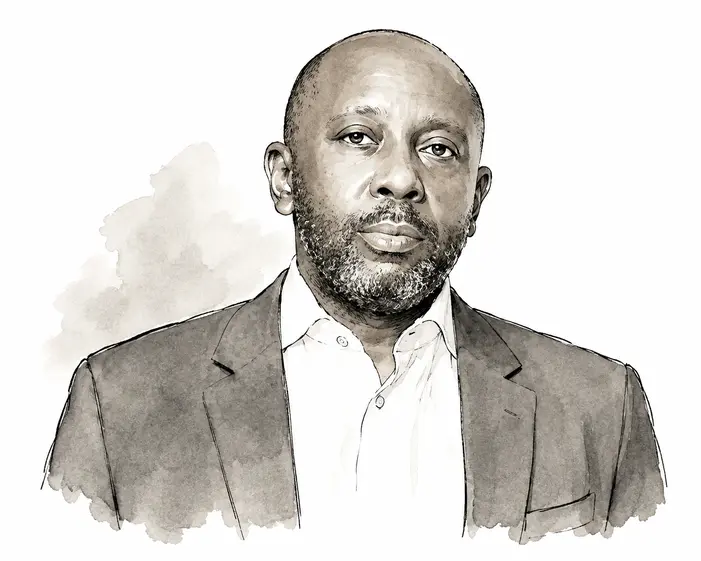
For Kola Aina, one of the more difficult lessons of building businesses was not about technology, fundraising or finding customers. It was about what happens when someone you have chosen to help decides that your opportunity should become theirs.
Aina, the founding partner of Ventures Platform and an early investor in companies including Paystack, PiggyVest and Moniepoint, recently recounted the episode while discussing the less visible side of investing in founders: judging character, not just business plans.
The story began when someone introduced Aina to an entrepreneur who was only 19 years old.
Aina said he took the young man under his wing, mentoring him and eventually investing in his company. At the time, the relationship appeared to fit the model Aina has long advocated for African technology businesses: experienced entrepreneurs providing young founders with capital, access and practical guidance.
That relationship changed when Aina’s technology business had a contract with a university.
According to Aina’s account, the young entrepreneur’s company became involved in providing technology services to the institution. The young founder subsequently went behind Aina and attempted to take over the contract for himself.
The dispute eventually ended the relationship between the two men.
Aina did not identify the entrepreneur or the university in the account, making it impossible to independently verify the allegations or establish the other side’s version of events.
But the story did not end when they parted ways.
Four years later, the past returned
About four years later, Aina said, the same entrepreneur was pitching his company to a private-equity fund.
One of the people sitting on the fund’s investment committee already knew about the earlier episode involving Aina.
The pitch did not result in an investment.
Aina’s account illustrates a part of venture investing that is rarely visible in funding announcements. Investors are not assessing only a founder’s product, market size, revenue or technical ability. They are also assessing whether the person running the company can be trusted with customers, employees, partners and other people’s capital.
That distinction becomes more important as African startups mature and larger pools of institutional capital enter the market.
Ventures Platform, which Aina founded in 2016, has invested in more than 90 startups and has backed companies including Paystack, PiggyVest and Moniepoint. Paystack was acquired by Stripe in 2020, helping turn the Nigerian payments company into one of the continent’s best-known technology exits.
The firm has since moved beyond the small accelerator model with which it began. Its first institutional fund closed at $46 million, while a second fund reached a $64 million first close in 2025, with institutional investors including the International Finance Corporation, British International Investment and Proparco among its backers.
That evolution has changed the nature of the responsibility attached to investment decisions.
When reputation becomes part of due diligence
For a founder seeking institutional money, a pitch is only one part of the process.
Investors typically conduct commercial, financial and background due diligence before committing capital. References from previous employers, investors, customers and business partners can become particularly important when a company is still young and has limited financial history.
The episode Aina described therefore points to a broader feature of startup investing: a founder’s reputation can travel considerably further than the company that created it.
Aina has previously spoken publicly about the importance of founders and teams in investment decisions. Ventures Platform’s own description of his approach emphasises mentoring entrepreneurs alongside providing capital, while Aina has described his investment philosophy as being centred on backing people capable of building enduring businesses.
The irony in the story is that the young entrepreneur had originally received precisely the kind of access many African founders spend years trying to obtain: an introduction to an established investor, mentorship and investment.
Yet the alleged attempt to take a customer’s contract created a record that remained relevant long after the business relationship itself had ended.
The lesson for Africa’s startup economy
African venture capital has spent much of the past decade building financial infrastructure around founders: accelerators, angel networks, venture funds, institutional limited partners and increasingly sophisticated investment committees.
The ecosystem has also become more connected. A founder who interacts with one investor may eventually encounter that investor’s colleagues, portfolio companies, limited partners, board members or fellow members of the technology community.
That interconnectedness can work in a founder’s favour. A strong reputation can generate introductions and repeat opportunities. The reverse can also be true.
Aina’s experience also captures a tension in mentorship-driven investing. Investors are expected to provide young entrepreneurs with unusually high levels of access and trust, particularly at the earliest stages, when founders may have little track record. But that trust itself becomes an asset that founders can damage.
Ventures Platform’s investment history shows why Aina’s judgment carries weight in Nigeria’s technology ecosystem. The firm has backed several companies that went on to become major players in African financial technology, while Aina has described his role as extending beyond writing cheques to helping founders navigate the difficult transition from idea to institution.
The unidentified entrepreneur’s eventual rejection by a private-equity investor therefore became, in Aina’s telling, something larger than an old business dispute.

It was evidence that decisions made at 19 can remain part of a founder’s professional record years later.
And in an investment industry built heavily on networks and references, the person deciding whether to back a founder may already know what happened before the pitch began.