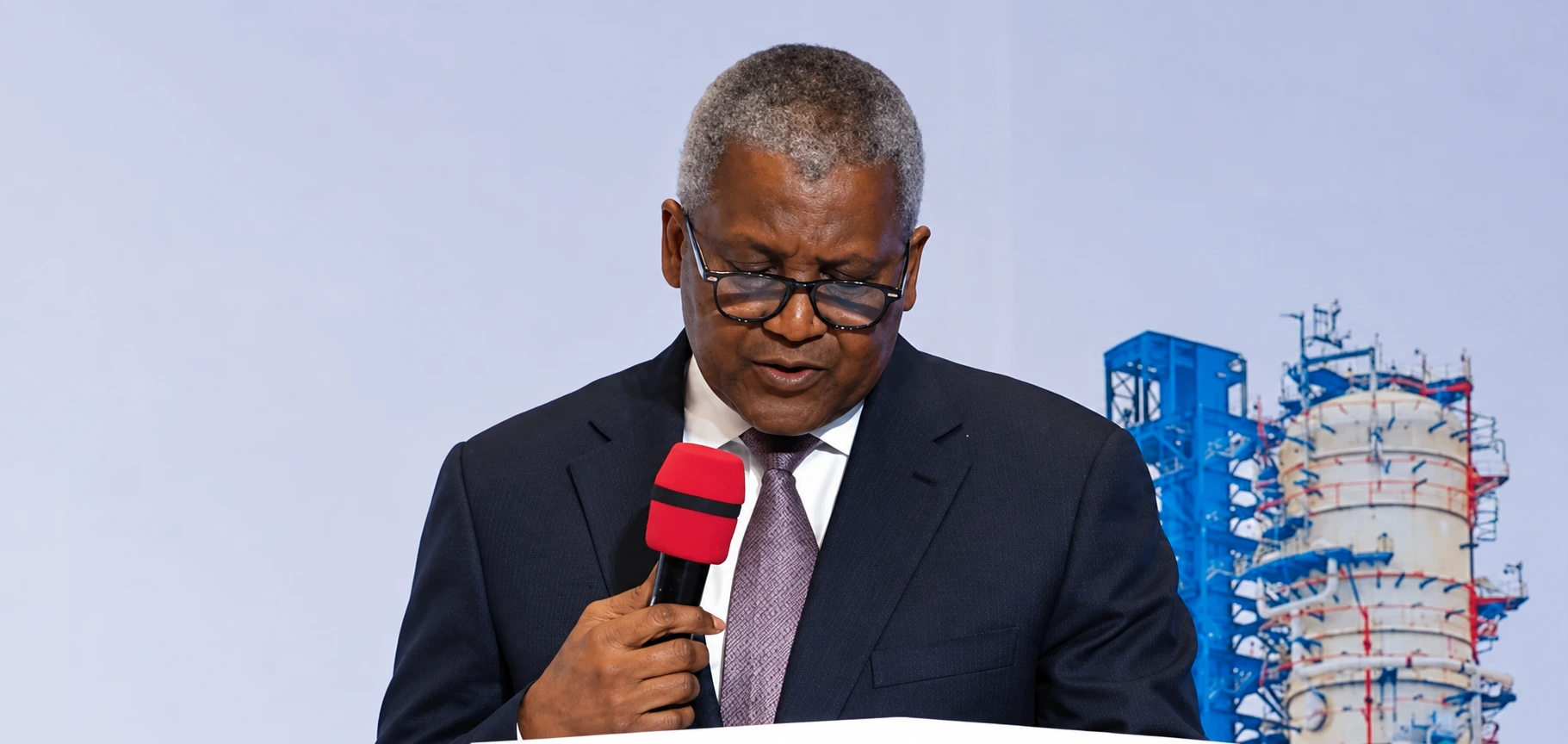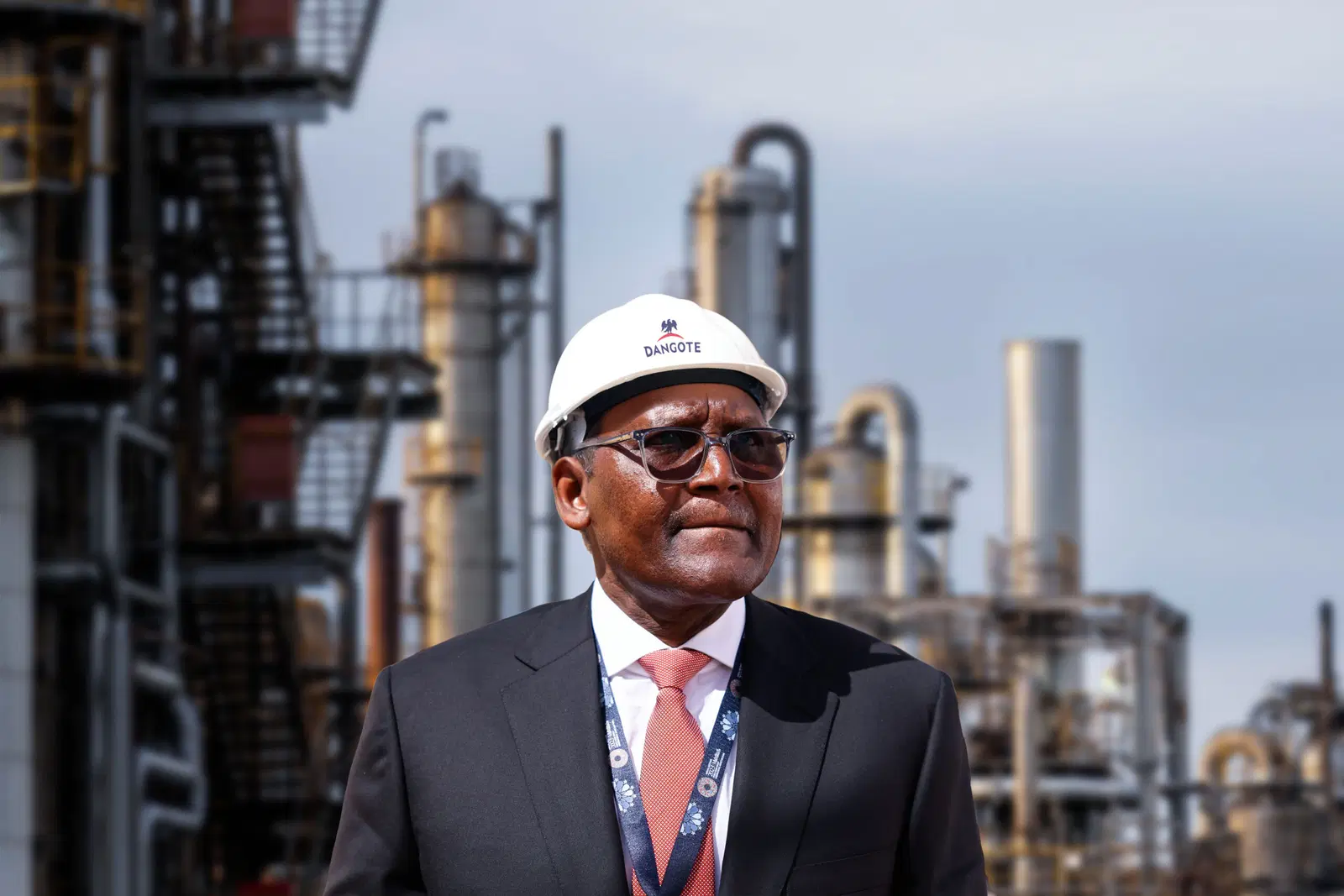
Aliko Dangote’s explanation for Nigeria’s high petrol prices points to a problem that domestic refining alone cannot solve: a litre of fuel can be relatively cheap in Nigeria and still be too valuable to remain in Nigeria.
Speaking in an exclusive interview, Dangote said petrol in neighbouring countries can cost 30% to 50% more than in Nigeria, creating an incentive for traders to move Nigerian fuel across the border for resale.
He gave Niger as an example, saying petrol there could be 20% to 25% more expensive than in Nigeria.
At a Nigerian price of about ₦1,350 a litre, he argued, that difference represents an unusually attractive return for anyone able to move the product into a higher-priced market.
The economics help explain why Nigeria’s fuel-price debate is no longer only about how much it costs to refine or import petrol. It is also about where the product ultimately gets consumed.
The price gap creates an arbitrage business
Nigeria has spent years battling fuel smuggling, particularly along its borders with Benin and Niger.
The underlying incentive is straightforward: where a regulated or market-based price in one country is substantially below the price in another, fuel becomes a tradable commodity rather than simply a domestic necessity.
Dangote described a scenario in which a tanker ostensibly headed towards Sokoto could instead be diverted towards Ilela, on the Nigerian-Niger border, where the fuel could be sold at a higher price.
His point is not that every litre leaving Nigeria is smuggled, nor that the price differential alone explains every increase at Nigerian filling stations.
Rather, it illustrates a structural weakness in the downstream market: Nigeria can increase domestic supply without eliminating the incentive for that supply to leave the country.
That distinction matters because the Dangote refinery has fundamentally altered Nigeria’s fuel-supply structure.
The refinery began commercial operations in 2024 and has become a major source of locally refined petrol. By September 2026, its petrol gantry price had risen to ₦1,350 a litre, up from ₦1,165 on August 21 — an increase of ₦185, or about 16%, in less than a month.
Pump prices have consequently moved towards ₦1,400 in parts of the country.
Domestic refining has not insulated Nigeria from global oil prices
That is the contradiction at the centre of Nigeria’s post-subsidy fuel market.
The country now has one of the world’s largest new refineries, yet Nigerians remain exposed to movements in international crude and refined-product markets.
The reason is that refining crude locally does not make the underlying oil free.
Dangote Refinery still has to acquire crude, transport it, refine it and distribute the resulting products. International crude prices therefore continue to influence the economics of domestic petrol even when the final product is manufactured in Lagos.
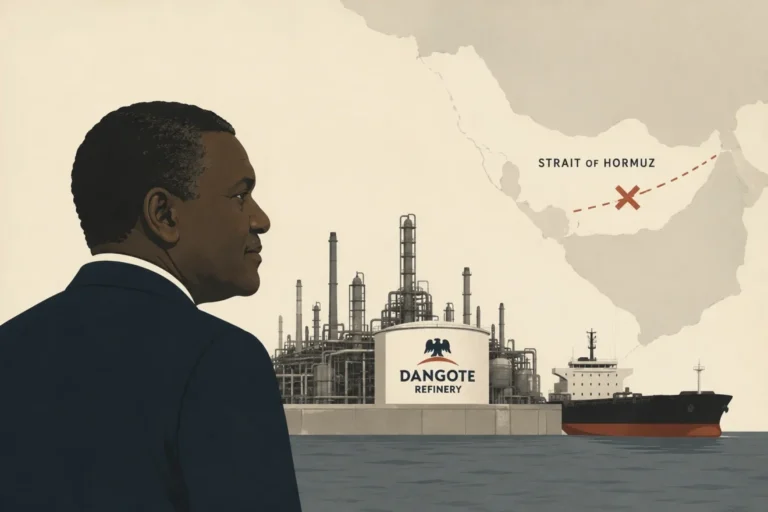
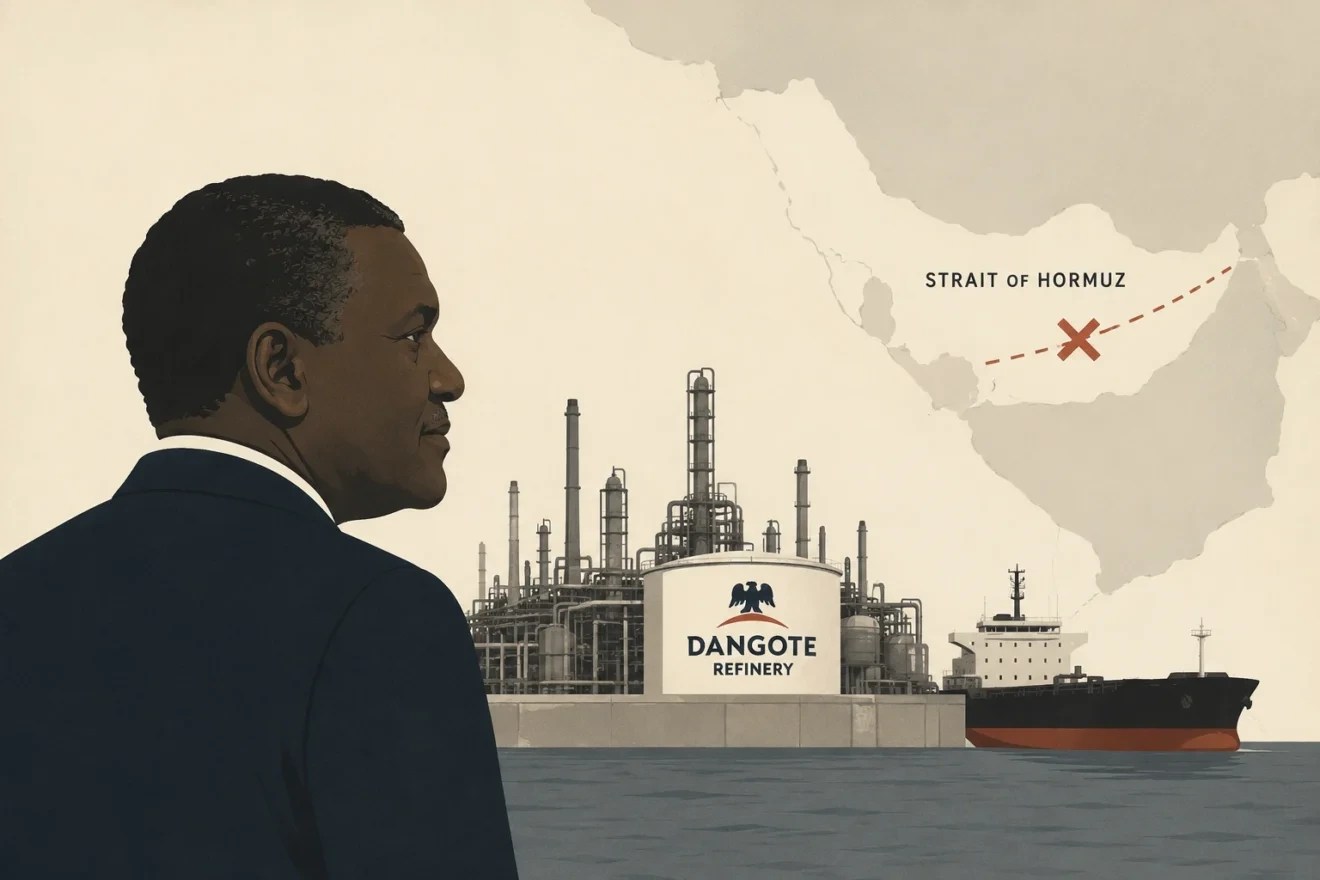
The refinery’s recent price increases have coincided with a sharp rise in global oil prices following disruptions linked to the conflict involving the United States and Iran. Brent crude has traded around $100 a barrel, increasing costs across the global petroleum market.
There is, however, an important distinction between the cost of locally refined petrol and imported petrol.
Earlier in September, data from the Major Energies Marketers Association of Nigeria showed imported petrol had an estimated import-parity cost of roughly ₦1,310 per litre, compared with ₦1,265 for Dangote’s locally refined product. That gave domestic petrol a cost advantage of about ₦45 a litre at the time.
So the refinery is providing Nigeria with a buffer against some import costs. It is not providing immunity from the global oil market.
Dangote says the bigger threat is no longer price
Dangote’s more consequential warning concerned something Nigerians may notice only when the problem becomes severe: availability.
“The crisis of Middle East is not even about price, it’s about availability,” he said.
That concern is consistent with the wider disruption facing the global refining market.
The Dangote refinery itself has said international supply disruptions could produce fuel shortages beyond the immediate Middle East conflict as damaged refining capacity, depleted inventories and high refinery utilisation put pressure on global product markets.
For Nigeria, the development is unusual.
For decades, the country exported crude while importing much of the petrol consumed by its population. The arrival of Dangote’s refinery has begun reversing that relationship, giving Nigeria a large domestic source of refined products at precisely the moment international fuel markets are becoming more vulnerable to geopolitical shocks.
That makes the refinery strategically important beyond its effect on the pump price.
The refinery is becoming a regional fuel supplier
Dangote’s argument about neighbouring countries also reveals the scale of the regional market the refinery is entering.
Nigeria sits beside countries where refined fuel has historically been more expensive and where domestic refining capacity is limited. A large refinery in Lagos can therefore serve both Nigeria and the wider West African market.
That is commercially attractive for Dangote.
It is more complicated for Nigerian policymakers.
If domestic petrol is deliberately kept below neighbouring-market prices, traders have an incentive to move it out. If Nigeria raises the domestic price enough to eliminate that incentive, Nigerian consumers bear more of the cost.
The government therefore faces a policy trade-off that did not disappear when the subsidy was removed: keep fuel relatively affordable and risk arbitrage, or allow prices to track regional economics more closely and make transport and household energy more expensive.
The difference now is that the market is increasingly being supplied by a private refinery rather than predominantly by imported petrol.
Dangote promises supply even as prices rise
Dangote said the refinery would continue supplying Nigeria despite the international disruption.
“Nigerians don’t need to worry. There will not be any shortage from our own part,” he said, adding that there would be no queues and that the refinery would continue satisfying the market.
That promise will be tested not only by the refinery’s capacity but by the entire supply chain around it — crude availability, refinery utilisation, transportation, distribution and the incentives created by prices in neighbouring countries.
Dangote Refinery is already operating at a scale that makes it an important participant in global fuel markets, while the company is pursuing an expansion that could eventually take its capacity to 1.4 million barrels per day.
The paradox is becoming clearer.
Nigeria has finally built the refining capacity that successive governments sought for decades. Yet the country cannot completely separate its petrol market from global oil prices, regional demand or cross-border arbitrage.
Dangote’s answer to why Nigerians still pay so much for petrol is therefore only part of the story.

The refinery can produce the fuel.
Nigeria still has to make sure the fuel stays in Nigeria, that crude remains available to refine it, and that the price is low enough for consumers without making the product irresistible to buyers across the border.