Nigerian success stories abroad tend to follow familiar routes. In Britain, Bukayo Saka, Anthony Joshua and Kemi Badenoch have become household names through sport and politics. In the United States and the United Kingdom, Nigerian-born entrepreneurs such as Tope Awotona, Adebayo Ogunlesi, Iyinoluwa Aboyeji and Silas Adekunle have built global reputations in technology, finance and innovation. Their success has helped establish a familiar narrative of Nigerian excellence overseas.
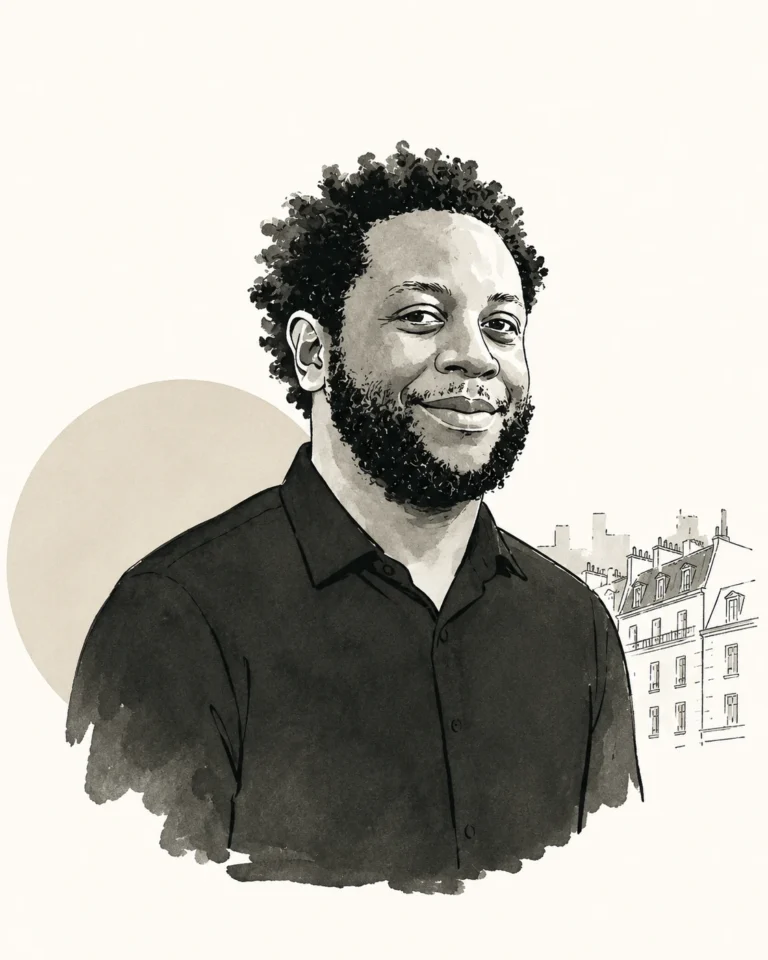
“From building an agency that worked with Netflix, Spotify and Hermès to promoting voter participation and mental health, Wale Gbadamosi-Oyekanmi has turned advertising success into a platform for social change”.
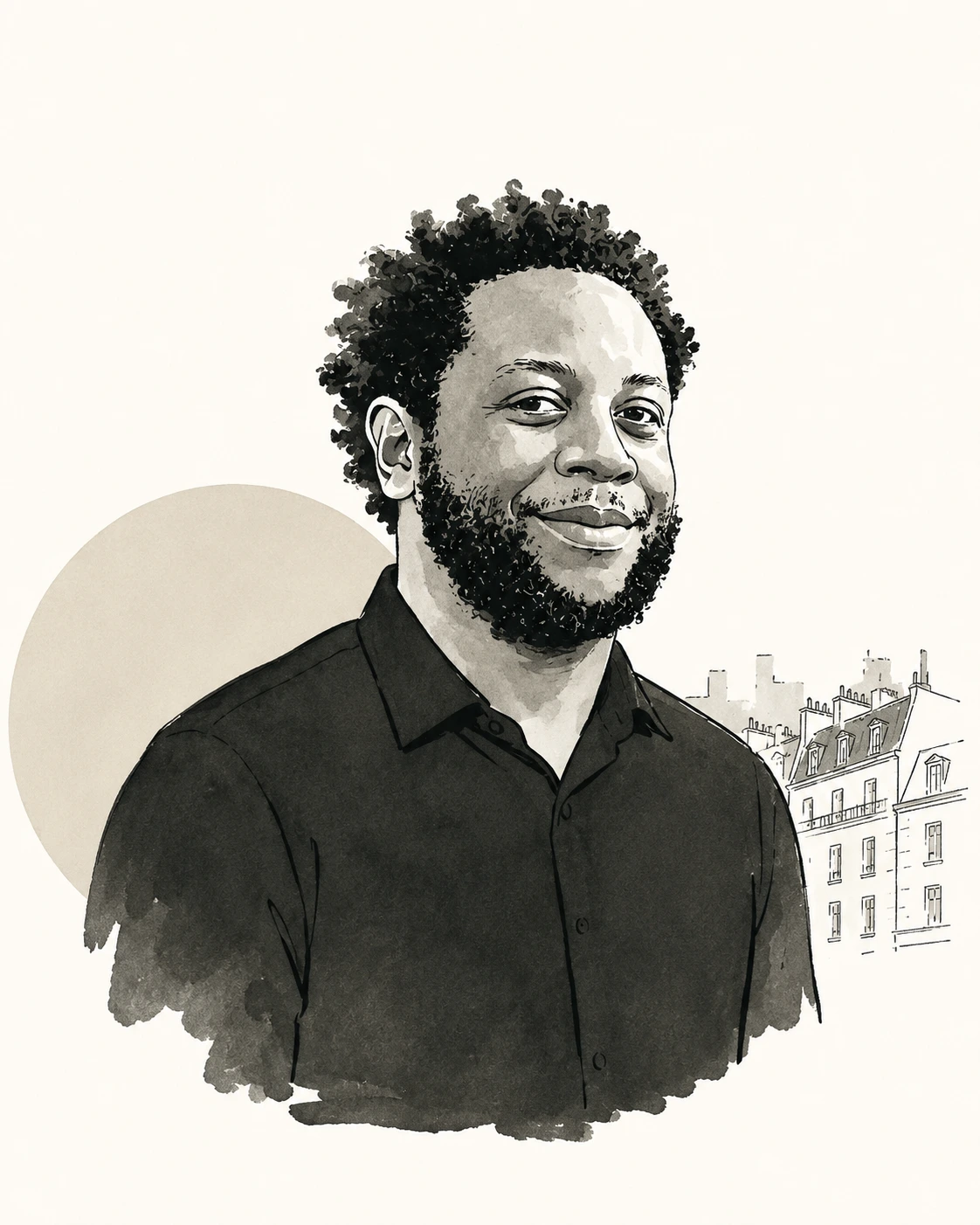
France, however, has rarely featured in that story. The country’s language, business culture and relatively small Nigerian community have meant it has produced few Nigerian names recognised back home. That is why the career of Wale Gbadamosi-Oyekanmi stands out. Rather than Silicon Valley, Wall Street or Westminster, he made his name in one of Europe’s most competitive and culturally distinctive industries—French advertising—building an agency that worked with brands such as Netflix, Spotify and Hermès before using the influence he had accumulated to tackle issues ranging from democratic participation to mental health.
Wale Gbadamosi-Oyekanmi’s story is different. His breakthrough came not in London or New York, where large Nigerian communities have long provided networks and a soft landing, but in France, a country that attracts far fewer English-speaking Nigerians and where language can be a formidable barrier. More unusually, he succeeded in advertising—an industry built on an intimate command of local humour, cultural codes and the way a society sees itself.
Also Read:
- Damola Adamolekun: The Young CEO of Red Lobster - On How He Saved the Company From Bankruptcy
- Ridwan Olalere: Nigerian Technology Enthusiast Transforming Immigrant Remittances with LemFi
- Nigerian Tech Founders: Then vs Now — The Journeys Behind Africa’s Billion-Dollar Startups
- The Lunch Hour, Yele Oyekola, CEO, Duplo Business-to-Business Payments Solutions
Gbadamosi-Oyekanmi did not merely find a place in that closed world. He built one of its notable agencies.
In 2011, he founded Dare.Win in Paris. The agency grew into an 80-strong creative business with clients including Netflix, Google, Nike, PlayStation and Warner Bros. Its big break came when it won Netflix’s French social-media account ahead of the streaming company’s launch in the country in 2014. Dare.Win became known for campaigns that behaved less like conventional advertising and more like entertainment designed to enter public conversation.
By 2020, the agency had attracted S4 Capital, the global advertising group created by Sir Martin Sorrell after his departure from WPP. Dare.Win merged with S4 Capital’s MediaMonks operation and was later renamed Media.Monks Paris. By 2022, the combined Paris business had nearly 200 employees, with Gbadamosi-Oyekanmi as managing director. That year, the French industry awards platform Les Agences de l’Année named him ‘Publicitaire de l’Année’—Advertiser of the Year.
It was a striking rise for the son of a Nigerian immigrant mother who had arrived in France from Lagos in the 1980s.
A Childhood Defined by Contradictions
He grew up in Neuilly-sur-Seine, one of the wealthiest districts around Paris. But his family lived in a small one-bedroom social-housing flat. His mother could have moved to a larger and cheaper home elsewhere; she chose instead to remain in Neuilly because she believed its schools, environment and networks would give her sons better opportunities.
The contradiction shaped him. His classmates came from families with large homes and inherited privilege, while he returned each day to a modest apartment. He was often the only Black child in the room. He also moved between Paris and Lagos, learning early that he could be Nigerian in France and French in Nigeria.
Rather than leave him permanently out of place, the experience taught him to read different rooms. That skill—understanding what people value, what makes them laugh and what makes them listen—later became central to his advertising career.
But commercial success eventually led him to a harder question: what should a person do with influence once he has acquired it?
The answer became clearer after the upheavals of 2020. The COVID-19 pandemic, the murder of George Floyd and the global arguments over race, inequality and corporate responsibility pushed many business leaders to reconsider the boundary between commerce and citizenship. For Gbadamosi-Oyekanmi, creativity could no longer be used only to persuade people to watch a programme, wear a shoe or subscribe to a service.
It could also persuade them to participate in society.
That thinking produced one of his most visible civic interventions during France’s snap legislative elections in 2024. With concern rising over youth abstention, he became the spokesman for Mouiller le Maillot, a rapidly assembled civic collective. Its central idea was simple: footballers, entertainers and neighbourhood teams wore jerseys carrying the message, ‘Je vote le 7’—‘I vote on the 7th.’
The campaign avoided the stiff language of government publicity. It used football, street culture and familiar faces to reach young voters who might ignore politicians. France subsequently recorded turnout of almost 65 per cent in the decisive second round, the highest for a legislative election in decades. No serious person can calculate how many votes came from one campaign, and Gbadamosi-Oyekanmi does not claim that it changed the result. His argument is more modest: uncertainty is not an excuse for doing nothing.
He has taken the same approach to mental health. In 2025, he co-produced Têtes Plongeantes, a documentary in which members of France’s 2018 World Cup-winning generation and other leading sports figures spoke candidly with young people about pressure, vulnerability and psychological distress. The film challenged the assumption—common in sport and in many African families—that strength requires silence.
The documentary later travelled to Lagos, where a screening at Alliance Française opened a wider conversation about the pressures faced by elite performers and young professionals in Nigeria. For Gbadamosi-Oyekanmi, the project also represented a return journey: ideas and methods developed in France were being brought into dialogue with the country from which his family came.
His career therefore resists a neat description. He is an advertising entrepreneur, but also a media investor and civic campaigner. He has been involved with Booska-P, the influential French youth and urban-culture platform, and continues to work at the point where business, popular culture and public purpose meet.
There is a lesson in his unusual route. Nigerians abroad are often celebrated for entering institutions that already confer prestige—the Premier League, Westminster, Silicon Valley or Wall Street. Gbadamosi-Oyekanmi created influence in a market where neither language nor demography gave him an obvious advantage. He mastered French culture sufficiently not only to sell to it, but also to challenge it.
His definition of success has changed along the way. Revenue, awards and international clients established his reputation. What now appears to matter more is whether creativity can persuade one reluctant voter to turn up, one athlete to speak honestly or one young person to seek help.
Those outcomes are difficult to place on a balance sheet. But they explain why Wale Gbadamosi-Oyekanmi’s story is larger than the sale of an agency. It is the story of a Nigerian who learned how to capture attention in France—and then decided that attention should be used for something more than advertising.