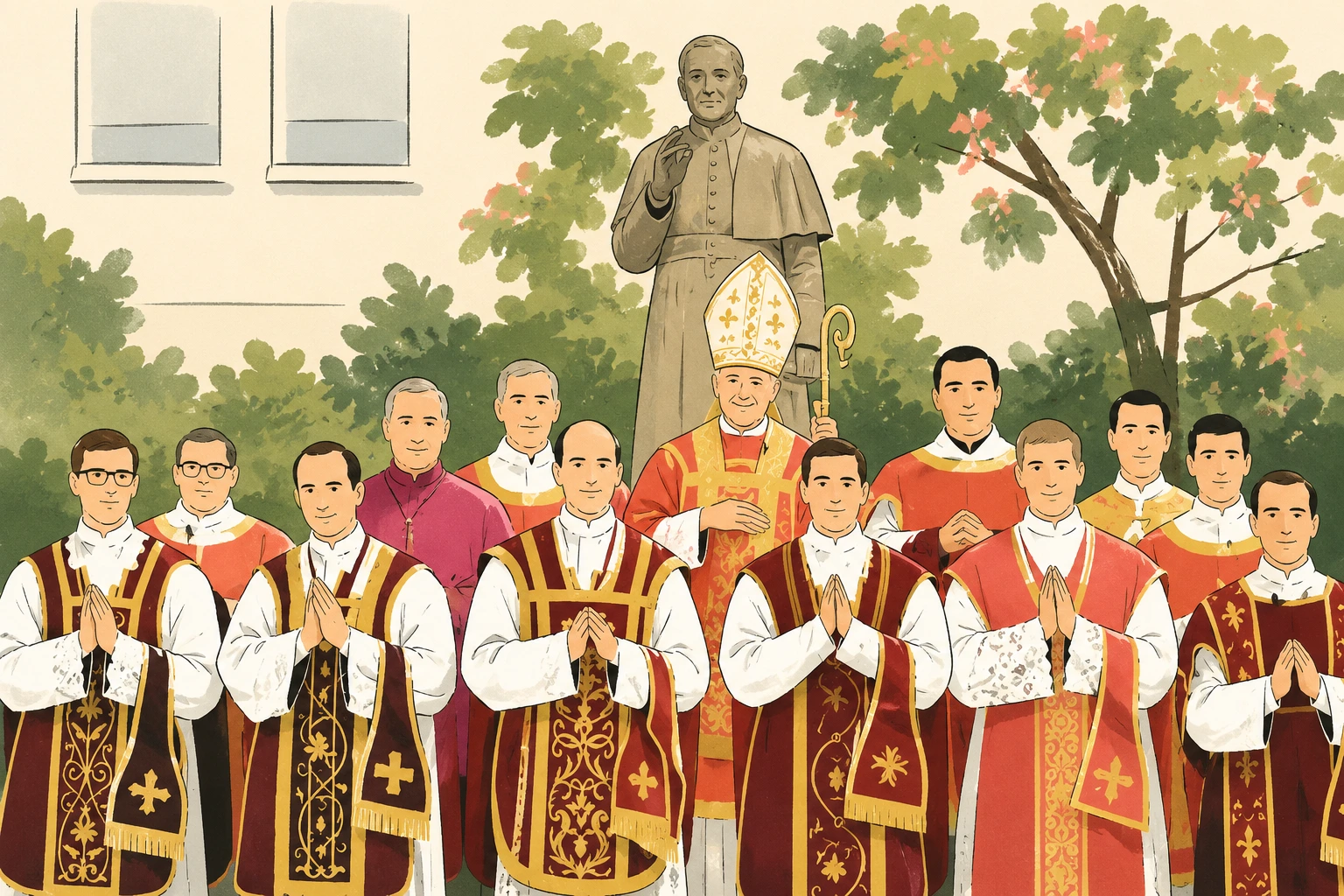
The Vatican has formally declared the Society of St. Pius X (SSPX) to be in schism with the Roman Catholic Church after the traditionalist group ordained four bishops without papal approval, marking the most serious rupture between the Holy See and the movement in decades.
In a decree issued on Thursday, the Vatican’s Dicastery for the Doctrine of the Faith said the unauthorized episcopal ordinations constituted a “schismatic act” under Church law, resulting in the automatic excommunication of the bishops involved and those who formally adhere to the society.
The latest development brings to a head a dispute that has simmered for more than 50 years. The SSPX was founded in 1970 by French Archbishop Marcel Lefebvre in response to reforms introduced by the Second Vatican Council, commonly known as Vatican II.
Those reforms modernised many aspects of Catholic worship and governance, including allowing Mass to be celebrated in local languages instead of exclusively in Latin, encouraging dialogue with other Christian denominations and other religions, and promoting greater engagement between the Church and the modern world.
While the Vatican regarded the reforms as essential for renewing the Church, the SSPX rejected several of the changes, arguing that they departed from longstanding Catholic tradition. Since then, the group has operated independently of the Holy See while maintaining that it remains faithful to authentic Catholic teaching.
Background of Tensions
Tensions first escalated dramatically in 1988 when Archbishop Lefebvre consecrated four bishops without the permission of Pope John Paul II, leading to his excommunication. Although Pope Benedict XVI later lifted the excommunications of those bishops in an effort to encourage reconciliation, the SSPX was never restored to full communion with the Catholic Church because key doctrinal disagreements remained unresolved.
The latest crisis began after the SSPX proceeded with another round of episcopal ordinations at its seminary in Écône, Switzerland, despite repeated warnings from Pope Leo XIV and Vatican officials that only the Pope has the authority to authorize the consecration of Catholic bishops.
According to the Vatican, the ordinations directly challenged papal authority and the unity of the Catholic Church, leaving Church authorities with no choice but to declare the society in formal schism.
The Vatican also stated that sacraments administered by the group, including confessions and marriages, are considered illicit because they are carried out outside the authority of the Catholic Church.
The SSPX defended its decision, arguing that exceptional circumstances within the Church required it to ensure continuity of its leadership through the appointment of new bishops. The Vatican, however, rejected that explanation, insisting that no circumstance justified bypassing papal authority.

Society of St. Pius X
The Society of St. Pius X has more than 700 priests and operates churches, schools and seminaries across Europe, the Americas, Africa and Asia, serving thousands of Catholics who prefer the traditional Latin Mass and pre-Vatican II liturgical practices.
The Vatican said individual members of the society remain free to seek reconciliation with the Catholic Church, but stressed that the unauthorized ordinations represent a formal break from communion with Rome and underscore the importance the Church places on papal authority and ecclesiastical unity.This version provides readers with the historical context behind the dispute, explains why the Vatican acted, and clarifies why the development is significant beyond the immediate announcement.