Africa is on track to experience the fastest growth in diabetes cases anywhere in the world, with health experts warning that changing lifestyles, rapid urbanization, and limited access to early diagnosis are accelerating the continent’s burden of the disease.
The warning comes as new data from the World Health Organization (WHO) and the International Diabetes Federation (IDF) show that diabetes has become one of the world’s fastest-growing noncommunicable diseases, disproportionately affecting low- and middle-income countries.
In an interview featured by Afrofeeling, Senegalese diabetes specialist Dr. Maïmouna Ndour Mbaye said hospitals across Africa are already witnessing the effects of the epidemic.
She recalled that when Senegal’s National Centre for Diabetes Control opened in 1965, it recorded about 200 new diabetes cases annually. Today, the centre sees roughly 2,500 new cases every year despite the absence of systematic nationwide screening, suggesting the true burden may be significantly higher.
Diabetes Cases Continue to Climb Worldwide
The latest WHO estimates show that approximately 830 million people were living with diabetes in 2022—more than four times the number recorded in 1990. The disease is increasingly concentrated in low- and middle-income countries, where access to diagnosis and treatment remains limited.
According to the International Diabetes Federation’s 2025 Diabetes Atlas, an estimated 589 million adults aged 20 to 79 are currently living with diabetes globally, and the figure is projected to reach 853 million by 2050 if current trends continue. More than 250 million people are believed to have diabetes without knowing it.
Africa Expected to Record the Fastest Growth
Health experts say Africa represents the world’s fastest-growing diabetes hotspot.
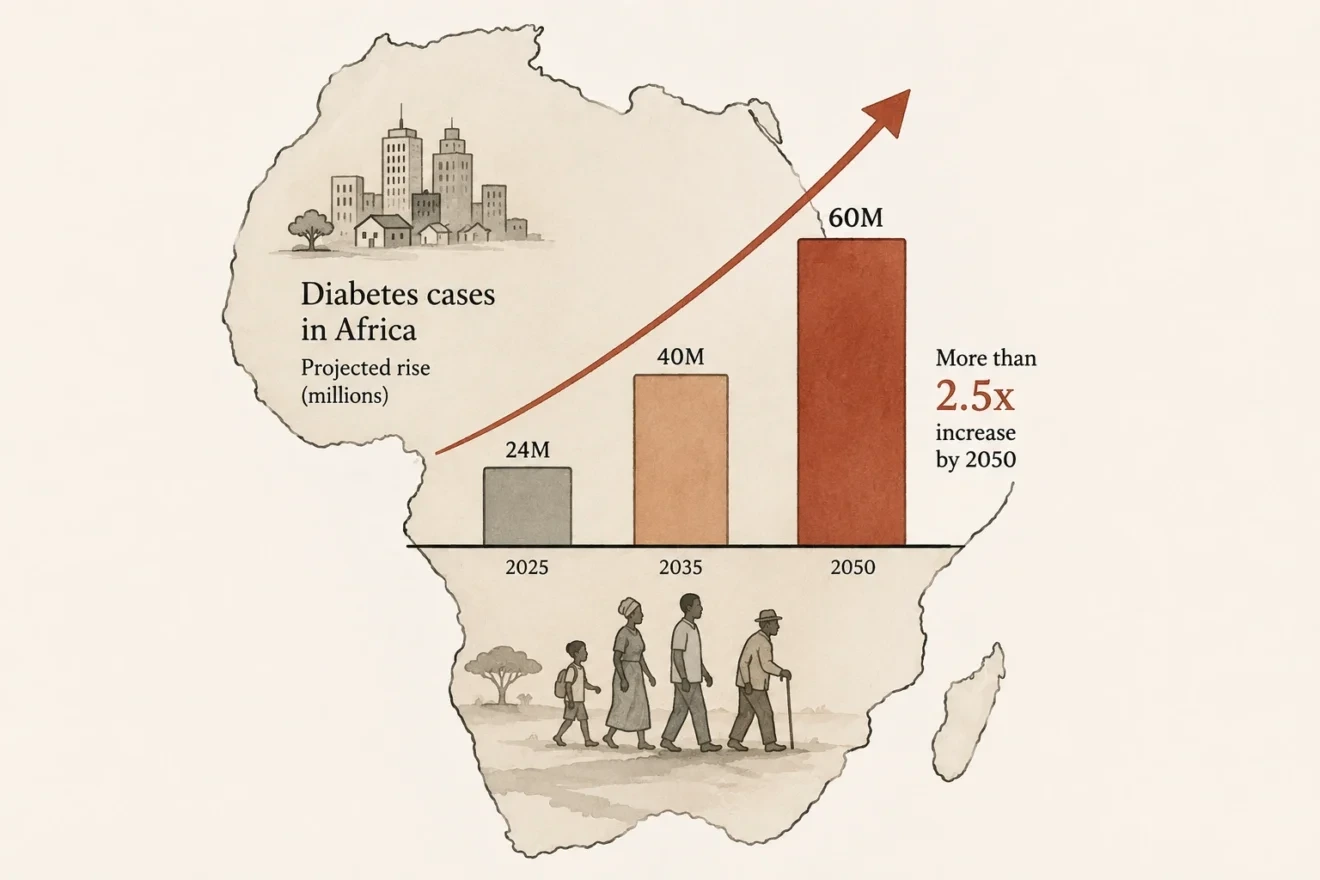
WHO’s Regional Office for Africa estimates that more than 24 million adults in the region currently live with diabetes, with projections indicating that the number could rise to around 60 million by 2050. Nearly half of those affected remain undiagnosed, increasing the risk of kidney disease, blindness, cardiovascular complications, amputations, and premature death.
WHO also notes that treatment coverage in Africa remains among the lowest globally, leaving millions without access to basic diabetes care or glucose-lowering medication.
Experts attribute the surge to profound lifestyle changes across African societies.
As cities expand, many people have adopted diets richer in refined carbohydrates, sugary drinks, saturated fats, fast foods, and ultra-processed products while becoming less physically active.
Dr. Mbaye explains that traditional diets have increasingly been replaced by calorie-dense foods, while sedentary work, motorized transport, and reduced daily movement have become more common across urban populations.
The WHO says obesity, physical inactivity, unhealthy diets, tobacco use, and untreated high blood pressure are among the leading drivers of type 2 diabetes, which accounts for more than 95% of all diabetes cases worldwide.
Young People Are Increasingly at Risk
Although type 2 diabetes was once considered a disease affecting older adults, health authorities say it is now being diagnosed more frequently in adolescents and younger adults.
Increasing childhood obesity, reduced physical activity, prolonged screen time, and diets high in sugar and processed foods have contributed to the trend. WHO warns that early-onset diabetes often exposes individuals to complications at younger ages if the disease is not diagnosed and managed promptly.
What Young and Older Adults Can Do
Health experts stress that many cases of type 2 diabetes can be prevented or delayed through lifestyle changes.
For young people, recommendations include:
- Staying physically active for at least 150 minutes each week.
- Limiting sugary drinks and highly processed foods.
- Maintaining a healthy body weight.
- Sleeping adequately and reducing prolonged sitting.
- Learning their family history of diabetes and seeking screening if at higher risk.
For older adults, experts advise:
- Regular blood sugar screening, especially after age 40 or for people with obesity, hypertension, or a family history of diabetes.
- Eating balanced meals rich in vegetables, fruits, whole grains, legumes, and lean proteins.
- Taking prescribed medications consistently.
- Monitoring blood pressure and cholesterol.
- Having regular eye, kidney, and foot examinations to detect complications early.
WHO also recommends avoiding tobacco use and reducing excessive alcohol consumption while encouraging governments to expand access to affordable screening and primary healthcare services.

A Race Against Time
Public health experts warn that Africa still has an opportunity to slow the rise of diabetes through prevention, earlier diagnosis, stronger primary healthcare systems, and healthier public policies.
Without significant intervention, however, the continent is expected to shoulder one of the world’s largest increases in diabetes over the coming decades—placing millions more people at risk of preventable illness, disability, and premature death.