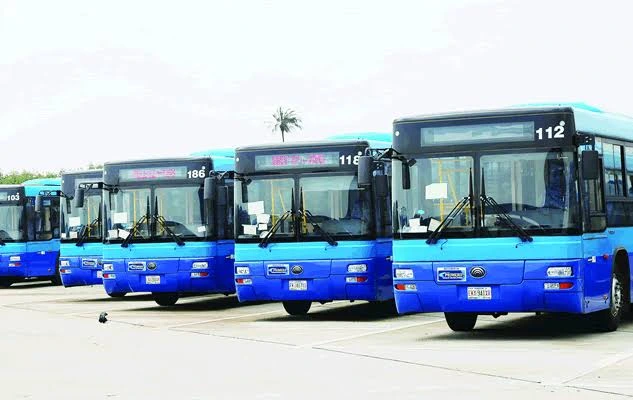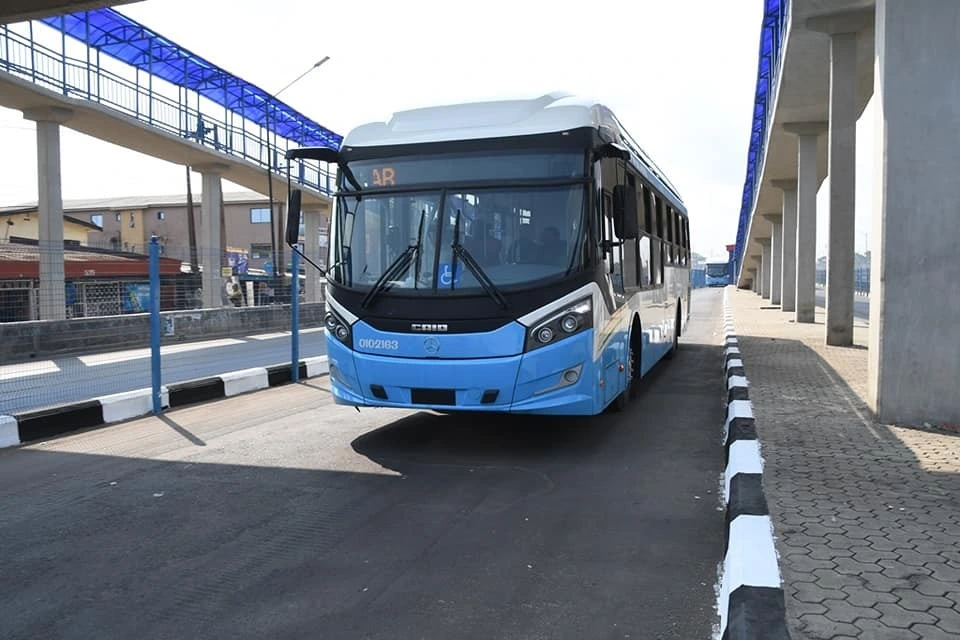
When the Lagos Metropolitan Area Transport Authority (LAMATA) begins penalising commuters who pay cash for rides on regulated public transport from August 1, officials say they will be protecting one of the most important assets of any modern transit network: fare revenue.
For transport authorities, the logic is straightforward. Every cash payment made outside the electronic fare system represents money that may never reach the operators responsible for maintaining buses, paying staff and expanding services. Over time, such leakages weaken the financial model on which public transport depends.
Yet the controversy surrounding the policy has quickly evolved into something much broader than electronic ticketing. It has become a debate about whether Lagos is asking commuters to trust a transport system that many still regard as incomplete.
A Financial Problem, Not Simply a Legal One
LAMATA’s decision is rooted in a long-running challenge faced by public transport agencies worldwide: ensuring that fare revenue reaches the system rather than individual employees.
Officials say drivers and conductors accepting cash have undermined accountability despite years of investment in the Cowry Card, the electronic payment platform introduced as part of Lagos’ wider Bus Rapid Transit (BRT) reforms. The authority argues that enforcing cashless payments closes opportunities for fraud, improves financial transparency and creates a clearer audit trail for every journey made on regulated services.
During a stakeholder discussion held this week, LAMATA’s Head of Legal, Idris Akinola, said existing Lagos transport regulations already require commuters to use approved electronic payment methods. He added that both passengers offering cash and transport workers accepting it could face liability under applicable state laws.
Transport operators have broadly welcomed the tougher enforcement.
Operators say previous disciplinary measures directed only at drivers failed because cash transactions require participation from both parties. If commuters continue offering cash, they argue, dishonest staff still have opportunities to divert fares from official revenue channels.
The Question Many Commuters Are Asking
Critics do not necessarily dispute LAMATA’s objective.
Many agree that revenue assurance is essential if Lagos hopes to build a financially sustainable public transport network capable of supporting a city whose population continues to expand rapidly.
Their concern lies elsewhere. Passengers rarely make transport decisions based solely on rules. They respond to availability, waiting times, affordability and convenience. For many Lagos residents, paying cash is not an attempt to evade fares but a way of preserving flexibility.
Unlike contactless payment systems now common in cities including London, Singapore and New York, Lagos’ Cowry Card remains largely confined to regulated buses and rail services. It cannot be used across the informal transport sector that still carries most daily passengers.
That distinction matters because regulated buses do not serve every journey.
On many corridors, commuters often wait extended periods before deciding whether to continue waiting or board an informal minibus instead. Money already loaded onto a Cowry Card cannot always help them complete that alternative journey.
For households already spending a substantial share of monthly income on transportation, critics argue that locking cash into a single-purpose payment system carries an opportunity cost many cannot easily absorb.
A System Still Dominated by Informal Transport
The debate also reflects the unique structure of Lagos’ transport market. Although the BRT network transformed public transport after its launch in 2008 and has since expanded alongside new rail services, informal operators—including minibuses and shared vans—continue to dominate daily passenger movements across much of the metropolitan area.
That means commuters often move between regulated and unregulated transport within a single trip.
In cities where integrated ticketing has succeeded, passengers generally have confidence that electronic payment can be used across multiple transport modes or that regulated services are sufficiently frequent to remove the need for alternatives.
Lagos has made progress toward that goal, but transport planners acknowledge the network remains under expansion while demand continues to outpace available capacity.
Technology Is Improving, But Adoption Takes Time
Touch and Pay Technologies, which manages the Cowry Card platform, says many complaints raised by passengers are already being addressed.
The company has introduced self-service top-up kiosks, digital account management and mobile applications that allow users to monitor balances and recent transactions. It is also developing a postpaid system designed to eliminate one of the platform’s biggest frustrations: the delay between funding an account electronically and using those funds immediately.
Officials expect broader deployment before the end of the year.
Such improvements reflect a wider shift towards integrated digital mobility systems, although transport economists note that technology alone rarely changes commuter behaviour if service reliability remains inconsistent.
Should Cash Payment Be a Criminal Matter?
The sharpest criticism concerns enforcement rather than digitisation itself. Public transport systems across the world routinely prosecute fare evasion—passengers who intentionally avoid paying altogether.
Legal experts note, however, that enforcement is typically aimed at non-payment rather than willingness to pay through an unauthorised method. Some transport specialists argue that treating passengers who offer cash in the same legal framework as employees who improperly accept it risks conflating two very different behaviours.
LAMATA maintains that both sides participate in an unauthorised transaction and therefore both contribute to revenue leakage.
Opponents counter that passengers paying the full fare are not attempting to defraud the transport system; they are responding to operational realities that authorities have yet to eliminate.
Winning Trust May Matter More Than Enforcement
The broader policy challenge extends beyond fare collection. Cashless transport systems ultimately depend less on penalties than on public confidence.
Passengers adopt electronic payment most readily when buses arrive predictably, services are sufficiently frequent and payment platforms offer flexibility comparable to cash. Where those conditions exist, compliance often becomes routine rather than enforced.
Lagos has invested heavily over the past two decades in bus reform, rail infrastructure and digital ticketing as part of its ambition to build a modern metropolitan transport network.

The latest enforcement policy demonstrates that authorities now consider revenue protection just as important as physical infrastructure.
Whether commuters embrace the transition may depend not only on how strictly the rules are enforced, but on how quickly the transport system earns the confidence that makes those rules feel unnecessary.