I have to start off with a bit of honesty. I’ve never thought the sharing economy was a good thing. Not from the moment I found out what it was.
Early in my experience with Uber, I met a driver who had grown up near me in Toronto. Someone who, had a degree, had the same childhood promises of a future, a future with a stable job and a life better than their parents. Now, this same person thought it was a great opportunity to drive at night to pay for a Honda Civic they should have afforded on regular wages. That wasn’t flexibility. That was wage stagnation with an app.
In May 2014, while completing my masters, I published my first piece in The Toronto Star about Nigeria’s GDP rebasing—the moment government recalculated the economy to become Africa’s largest. What struck me then wasn’t the celebration itself, but what the rebranding actually revealed. The new figures showed that previous metrics for progress—tax collection, infrastructure expenditure—were worse than anyone had thought. The rebasing wasn’t discovering a hidden middle class; it was a political shift in how elites wanted their country perceived and how the BRICS crowd wanted to see them. As I noted in the piece, the narrative had fundamentally changed: “Whereas everyone used to want to hear about conflict and poverty, now it’s about investment opportunities, Oscar winners and mobile money.”
I’d spent most of the previous decade in Africa by that point. First studying in Ghana in 2005, then working across the continent. I’d seen the Western media coverage shift from the early-2000s obsession with war, starvation, and HIV/AIDS to this new “Africa Rising” story. But the lived reality was never actually either of those things. The rebasing crystallized something I’d been watching: elites were rewriting the continent’s narrative not because conditions on the ground had improved, but because they’d decided a different story, one about investment and growth, served their interests better.
Two months later, Uber launched in Lagos. People I knew invested $10,000-$15,000 in qualifying cars. They were convinced Uber had done the research.
Spoiler alert: It hadn’t.
The Pitch That Should Have Been a Red Flag
As Uber began rolling out its network, it offered a simple trade: you’d buy a car, hire a driver, Uber handles matching and payment. Everyone wins.
I declined. As did many others. The fares were too low. The vehicle costs were too high. The “Nigeria factor” didn’t seem to sit anywhere in the term sheet. The gap was obvious.
I’ve met several people since who did invest in that first round. At the time, cars had to be less than 5 years old. I recall that they also cost between $10,000 – $15,000. Those who invested had all been led to believe that Uber would close the gap that others worried about through the efficiency of international systems and management. They were wrong.
The Math That Was Broken On Day One
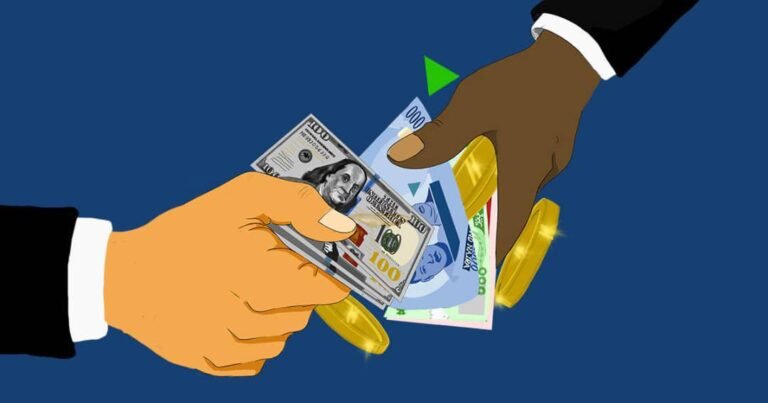
In 2014, what I recall, and what I’ve been able to research today, Uber’s original UberX fares in Lagos ran ₦1,100 (~$5.70) for Magodo to Gbagada, ₦1,300 for Yaba to Ilupeju, ₦2,000 (~$10.36) for Surulere to Ikeja. Drivers kept 75%, Uber took 25%. A ₦1,100 ride netted ₦825 (~$4.28). With 6-8 trips per day, drivers earned roughly $25-41 daily—around $650-800 monthly.
For a ~$12,000 car, that revenue collapsed against costs. Fuel in Lagos stop-and-go traffic costs ~$100 monthly. Proper maintenance on Lagos roads, given the absence of any standardized fleet infrastructure, would runs ~$200. Vehicle depreciation on a $10-15K car driven 10-12 hours daily with a high standard of being eligible to be an uber becomes the killer: 24 months to total loss means minimum $500 monthly. Total costs: $800 monthly against $650-800 in revenue. And I think I am being generous on these costs.
The car that was required to be used, would lose money from trip one. Every ride was subsidized by vehicle depreciation—the slow liquidation of an asset the driver or investor had financed.
This wasn’t unique to Lagos. This was Uber. By January 2017, the U.S. Federal Trade Commission forced Uber to pay $20 million for misleading drivers about earnings across multiple cities. Uber claimed drivers could earn $90,000+ annually in New York and $74,000+ in San Francisco. In reality, fewer than 10 percent of drivers reached those figures. The math was dishonest everywhere. It just became undeniable quicker in in Lagos because the local context made the gap so visible. I.e. the drivers were poor and there wasn’t any provision for that “Nigeria factor”.
When it became clear to Uber that it’s model was collapsing in June 2016, the company faced a choice: raise fares or admit the framework was broken. Instead, they lowered vehicle standards. Eligibility shifted from “2009 or newer” to “2006 or newer”—a five-year degradation. They dropped the 100,000km mileage limit entirely. Brought in the beaters and put a nail in the coffin of the quality people had come to expect. This was Uber. Nobody else.
But degrading the vehicle fleet didn’t solve the underlying problem. It exposed another. Uber’s regulatory playbook—enter first, ask forgiveness later—had worked in jurisdictions with weak enforcement or fragmented regulators. They’d mistaken the chaos of Lagos for being one of them.
In September 2016, Lagos State responded to Uber’s changed business model and formalized what had been simmering: crippling new regulations requiring franchise licenses, vehicle registration, and compliance with the 2012 traffic law. This included what is reported to have been a $320 licence fee. The company that had entered by claiming it wasn’t a taxi company but a “technology platform” suddenly faced enforcement demanding it comply with the same standards as taxis. This is a global story. It replayed all over the world as the sharing economy encroached on the actual one.
Translation: We can’t make this work at the fares we promised, so we need cheaper inputs, like, you know, something closer to the quality of an existing Lagos taxi. The existing stakeholders noticed. The government noticed. The response was swift and harsh. Too harsh I might even agree. But this wasn’t adaptation by Uber. It was a failed business plan trying to catch up to a market it hadn’t properly studied, and in the meantime, I recall it, and most of its supporters, blaming the government.
The Race to the Bottom
Uber launched with UberBlack (real market: executives, expats). People speak fondly of this era, almost nostalgically.
Then UberX: personal cars, mass market promise. Except the mass market at those fares was an assumption, not a researched reality.
A five-year-old Corolla, or CRV, in London: economy car. A five-year-old Corolla in Lagos in 2014: luxury purchase. Someone ‘middle class’ spending $12k was spending 6 years of annual income. In London, 2-3 months.
The addressable market—people affording ₦1.1K rides regularly—was a much smaller percentage of Lagos than projected.
As Uber lowered vehicle standards (2009 → 2006 → older cars), they were racing to the bottom because fares couldn’t support the original asset class. This past year, I’m not even sure they had any standards at all. I recall recently having to get out of my own car because I was worried it was having transmissions problem, only to ride home 20 kms in an Uber who’s transmission was in worse shape than the vehicle I had abandoned.
When Bolt and other competitors entered from 2016 with 15-20% commission vs Uber’s 25%, it wasn’t market understanding. It was more realistic economics for the drivers using it. More appropriate technology for a the city it was operating in, even if that meant it had less safety features.
The Fatal Problem: Infrastructure
The number one thing that I remember from that original investor deck I was pitched to buy a car was that it assumed you could just maintain a car. It didn’t acknowledge that there is no standardized fleet maintenance infrastructure. Intensive use (10-12 hours/day, stop-and-go traffic, heat) turns good cars into write-offs quickly. Maintenance costs exploded. Depreciation accelerated. Eventually, almost everyone driving an uber I met either owned their car or had borrowed money from a friend or boss. I myself got rid of a driver I didn’t want any more by helping him buy a $4,000 Toyota Camry in 2020. Never saw a dime of it again. He said Covid. When I saw the car after he bought it, I knew I was never going to get my money back if he was going to keep that thing running.
Drivers absorbed the cost. Their benevolent investors absorbed the cost. The platform did not.
The 2022 Moove S-Presso disaster was Uber’s model compressed into fast-motion collapse. For three months, you couldn’t turn a corner in Lagos without seeing the small grey Suzukis—Moove had flooded the market with “cheap and new” cars, promising drivers a solution: finance a vehicle, work it, and eventually own it. Maintenance included. Realistic payback terms. A path forward.
Then devaluation hit. Fuel became unaffordable. The roads—which Moove apparently hadn’t accounted for, or hadn’t cared about—chewed through suspension and transmissions. The promised maintenance plans evaporated. Drivers found themselves working 14-16 hour days just to make the daily payment, watching the car deteriorate faster than their wages could support. By late 2022, the saturation of grey Suzukis that had seemed inevitable weeks earlier was gone. Most drivers had simply returned the cars, absorbing the loss. Moove’s recovery teams had spent months chasing drivers mid-shift, but the real story wasn’t the repossessions. It was the speed of the reversal: from ubiquity to abandonment, from solution to trap, in under a year.
Same model Uber had been running since 2014. Just faster. Just more brutal.
The Pattern Beyond Uber
Gokada entered in 2017, assuming regulatory silence and quiet assurances meant permission—until Lagos State banned motorcycle taxi in January 2020. For anyone that lived here during the previous motor cycle taxi ban in 2008 or 2009, helmets for passengers was never going to change the unsustainability of Gokada if it became successful. There are simply not enough roads in Lagos for the amount of demand there is for the service.
Shoprite expanded as a hypermarket from 2005-2015 during the “Africa Rising” peak, requiring dollar rents and stable consumer income; when the currency crisis hit, all stores eventually closed by 2026. This of course was a long haul, but it struggled for most of it’s time in Nigeria. There’s always more to the story, but this one was a definitive under-estimate of how the market functioned and inability to see what it was competing with.
Wings, a Grade A office tower in Victoria Island completed in 2017, was designed for multinational tenants at dollar rents but was delivered into an economy that couldn’t sustain it and where local developers, using the same contractors, built competing buildings with a lot more flexible financial structures.
Same error across all three: forecasting a market they read about in the economist rather than taking the time to understand the market that was actually there. The list could go on. But if we don’t name them, we won’t avoid making the same mistakes in the future.
September 3, 2026
Twelve years after launch, Uber announced its exit. No transition period. Apparently, no warning to staff.
Regulation didn’t break Uber’s model. The Nigerian market didn’t break Uber’s model. There never was a model. Not one for Nigeria. If there was, I’ve never seen a time it wasn’t broken. For me, and many others, the math was broken on day one. When data showed it didn’t work in 2016, Uber had two choices: adapt honestly or extract harder. It chose extraction. It chose to ignore accepting that it’s June decision to lower standards was an urgent pivot, and instead say that the reaction by the Government in September was what started it’s decline.
The FTC settlement in 2017 suggests Uber made claims, even in NYC, that were fabrications. It entered Lagos anyway, clearly not caring if the math worked or not. That’s a choice, not a mistake. It’s silicon valley bravado.
What Was Needed vs. What Uber Offered
Lagos needed mobility, it needed a technology upgrade to private car hire, it needed an Uber. But it needed sustainable fares, drivers as protected workers, and partnership with existing infrastructure—not replacement.
Uber offered: subsidized fares, aspirational standards, risk transfer to drivers and investors who thought Uber had done their research, and an exit plan requiring no accountability. That’s extraction with an expiration date.
Uber could have worked. I’m just not sure it ever wanted Nigeria as anything other than a check mark on a box of countries it served during a period where the international press began to take notice of African economies instead of their wars.
What Uber Said vs. What Actually Happened
Uber’s statement: “After a thorough review, we have taken the difficult decision to wind down operations in Nigeria and Uganda, effective September 3, 2026. We’re focusing investments on markets where we can add the most value for drivers by providing earning opportunities at scale.”
This is corporate language designed to obscure what actually happened.
After 12 years, Uber couldn’t add value to a market of 220 million people. They couldn’t figure out the Nigerian economy. And they certainly couldn’t acknowledge why—that the model was structurally broken and that no amount of smart people, VC money, or operational efficiency could fix it.
Instead, they’re pivoting to robotaxis and cutting 3,300 jobs globally (10% of their workforce). They’re claiming commitment to “Sub-Saharan Africa” while exiting it’s most populous nation. They’re describing their retreat as a restructuring toward “greater growth potential.”
That’s not analysis. That’s PR.
After 12 years, Uber’s people in headquarters never understood: you can’t build a sustainable business by hiding costs. You can’t extract value without consequences. Maybe Uber simply wasn’t suited for this work. Maybe they didn’t listen to their local staff. I’ve met a few of them, and they’ve all been highly intelligent people who understood the problem.
But maybe it’s just time to accept that some companies are structurally incapable of operating in economies different from the ones they were built for, and we need to stop looking to them entering our markets as a sign we’ve arrived. Or that they are best suited to solve the problems people on the ground face every day.
The Point
Uber didn’t fail because Nigeria was hard. Nigeria being hard is a given. Uber failed because the model was designed for somewhere else, and the only intelligent move was to leave. I’m frankly surprised it took them this long.
The people who supplied the cars, hours, and depreciation carried the risk. The drivers who are now looking at an uncertainty of tomorrow instead of the certain mediocrity they knew today? They’re still here. Uber supplied the algorithm and walked away with no consequences beyond what will likely be a rounding error in their accounts and a short paragraph in their annual report because they never really invested in Nigeria.
Uber had unlimited money, a template that could have been adapted, and smart people to adapt it. They didn’t have humility about what they didn’t know. That’s what killed them, and from my perspective they were dead on arrival.

Jonathan Milliard is an Entrepreneur & Strategic Advisor who currently works as a Business Development Director at LBH Limited
Note: Some figures in this article came from memory or archived sources difficult to locate after more than a decade. Where precise data is recalled, I’ve noted it. I welcome corrections from readers who have more precise information.