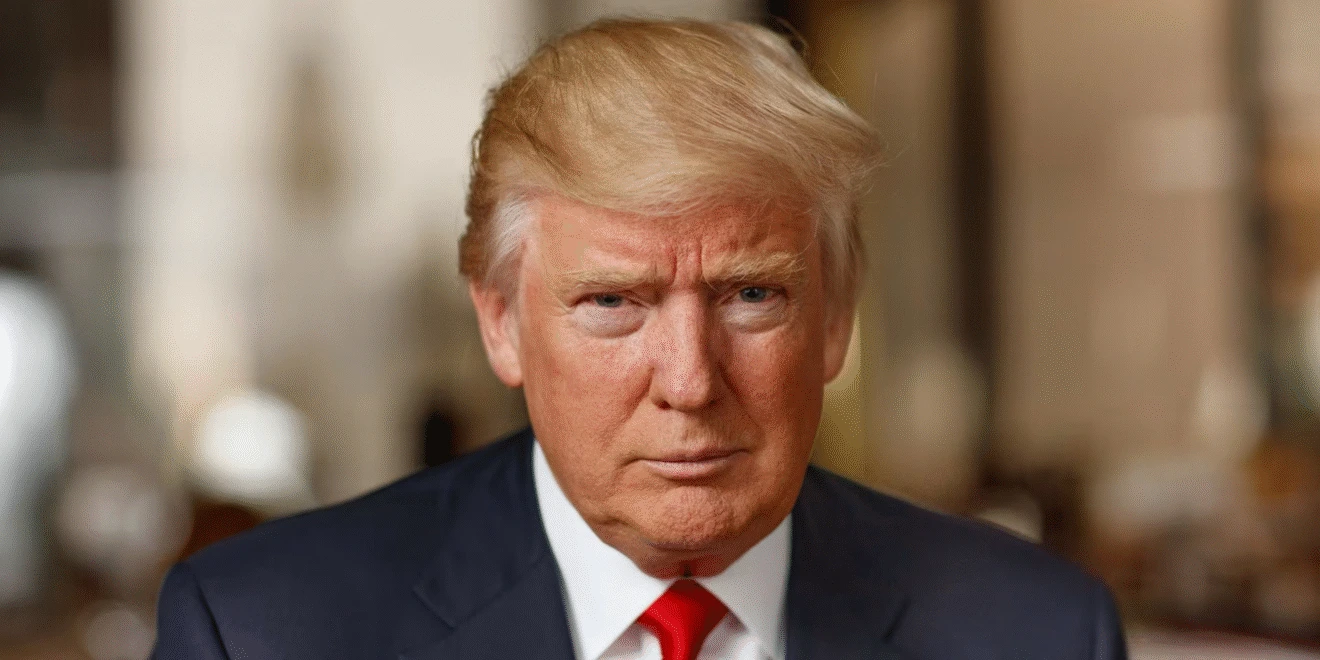
US President Donald Trump has announced that the United States will begin referring to artificial intelligence as “super intelligence” in official government documents.
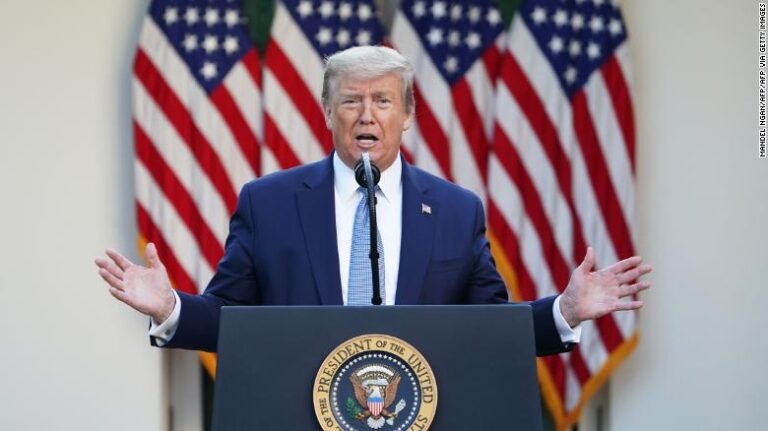
Trump made the announcement on September 22 while addressing the 81st United Nations General Assembly in New York, arguing that the word “artificial” makes the technology sound fake. The White House subsequently quoted him as saying that AI would be “hereinafter officially called ‘Super Intelligence.’”
Trump says ‘artificial’ makes intelligence sound fake
Trump said the terminology would be changed because he considers “super intelligence” a more accurate description of the technology.
“The use of the word artificial makes intelligence fake. It makes it sound fake, and it is not fake,” Trump said during his address.
He added that US government documents would henceforth use the new terminology and expressed hope that other countries would adopt it.
“From this point forward, all of United States documents, and hopefully the world, will be changed to use the much more accurate term super, as opposed to artificial,” Trump said.
Trump described the proposed terminology as “SI” and said: “Welcome to the new world of super intelligence.”
Trump rejects international AI controls
The announcement came as Trump also rejected efforts to establish tighter international controls over artificial intelligence.
He said the United States would encourage the development of the technology rather than “rein it in”, while maintaining that US law-enforcement agencies could intervene where necessary.
“We’re going to watch it closely through the Department of Justice,” Trump said, according to Reuters.
Trump argued that major technological advances have historically created challenges but also produced significant benefits. He said the US should not restrict AI development because of warnings about its potential risks.
He also framed the development of advanced AI as part of the strategic competition between the United States and China.
“Whoever wins SI, whoever wins super intelligence, wins,” Trump said, adding that he believed the US was ahead of China and other countries.
‘Superintelligence’ already has a technical meaning
Trump’s proposed terminology differs from the established use of superintelligence in AI research.
In the technology field, superintelligence generally refers to a hypothetical form of artificial intelligence whose capabilities exceed those of the most capable humans across a broad range of intellectual tasks.
That means Trump’s proposed use of “super intelligence” as a replacement for the broader term “artificial intelligence” could create confusion, since the two expressions do not currently describe exactly the same concept.
There was also no immediate indication that the announcement had been accompanied by a formal executive order or detailed government-wide implementation directive.
Breaking Defense reported that no official announcement explaining how the terminology would be implemented had been issued at the time of its report.
AI regulation becomes a major UN debate
Trump’s remarks came amid growing international debate over how governments should manage increasingly powerful AI systems.
More than 20 countries had backed calls for stronger international safety measures around advanced AI ahead of the UN gathering, while the United States and China did not endorse the proposed approach.
UN Secretary-General António Guterres has called for the United States and China to establish channels for dialogue over AI, arguing that countries with the greatest AI capabilities also carry significant responsibilities for managing risks associated with the technology.

Trump’s position places the US administration at the centre of an increasingly consequential debate over whether AI development should be accelerated with limited regulation or subjected to stronger international safeguards.
The terminology change, meanwhile, gives a new name to that debate: “super intelligence.”