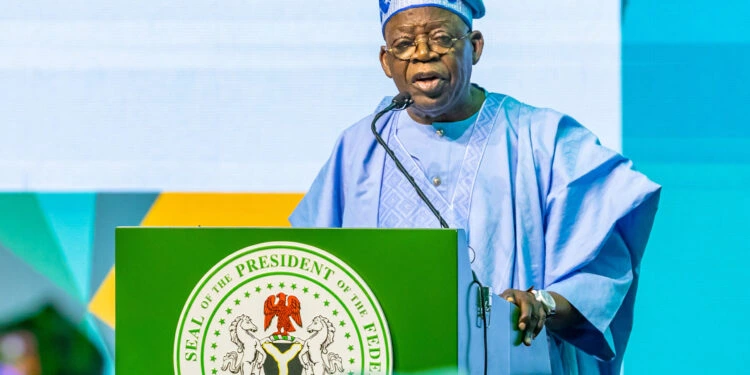
President Bola Tinubu has requested Senate approval to borrow N10.79 trillion ($7.7 billion) from external sources to finance part of Nigeria’s 2026 budget deficit, adding to the country’s growing debt burden.
The request was conveyed in a letter addressed to Senate President Godswill Akpabio and read during plenary, according to the News Agency of Nigeria (NAN).
Tinubu said the 2026 Appropriation Act provides for N29.2 trillion in new borrowings to help finance a projected budget deficit of approximately N31.4 trillion.
The proposed borrowing consists of N18.4 trillion in domestic loans and N10.79 trillion in external financing.
Eurobond Issuance Among Preferred Funding Options
The President said the government would raise the external component through one or a combination of funding sources, including concessional and commercial loans from multilateral and bilateral institutions, the International Monetary Fund (IMF), bridge financing facilities and direct borrowing from international financial institutions.
The government is also considering issuing Eurobonds to international investors.
Tinubu indicated that Eurobond issuance would receive greater consideration because of its relatively faster execution and capacity to raise substantial funds at competitive costs.
He said the government would evaluate the available financing options based on their costs, benefits and access timelines to secure favourable borrowing conditions.
Borrowing Meant to Finance Infrastructure, Security and Social Sectors
According to the President, the proposed external loans would finance priority projects across defence and security, transportation, agriculture, power, education and healthcare.
He explained that the final borrowing terms, including interest rates and repayment tenures, would depend on prevailing market conditions when the funds are priced.
The Federal Ministry of Finance and the Debt Management Office (DMO) would work together to secure the most favourable terms for Nigeria.
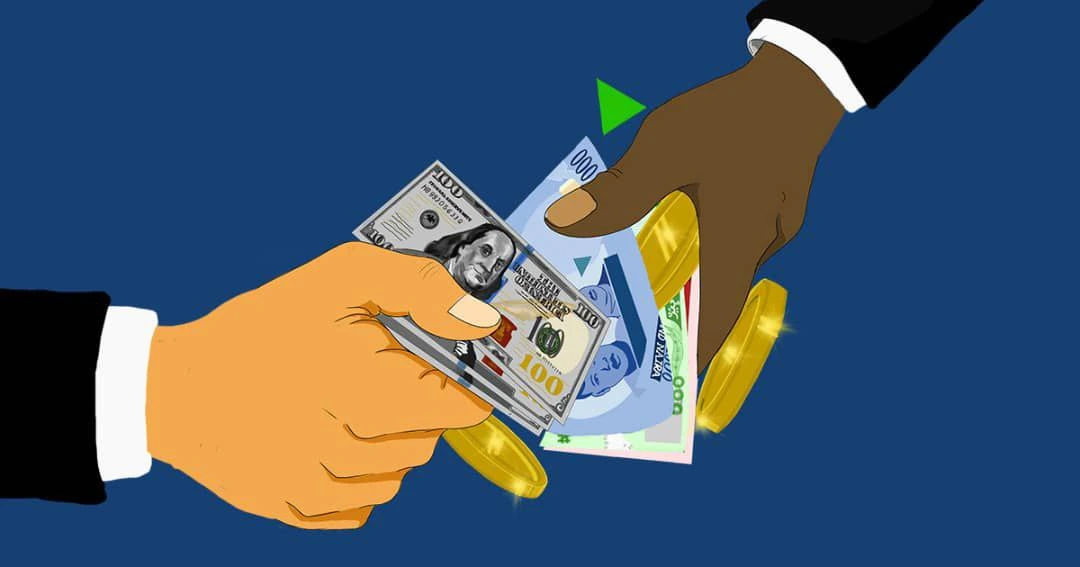
Tinubu also requested approval for the borrowing to be raised at the 2026 budget exchange rate of N1,409 to the dollar.
The proceeds would be received by the Central Bank of Nigeria (CBN) on behalf of the Federal Government, with the President noting that the funds would also support the country’s external reserves.
New Request Replaces Earlier $20.3 billion Borrowing Request
Senate President Godswill Akpabio said the latest correspondence superseded an earlier request for $20.3 billion.
He described the new letter as more explicit about the government’s borrowing requirements and its plans to explore different financing sources to obtain favourable terms.
Akpabio subsequently referred the request to the Senate Committee on Local and Foreign Debt for further consideration and directed the committee to report back as soon as practicable.
The Senate’s approval is required before the Federal Government can proceed with the proposed borrowing.
Nigeria’s Public Debt Rises to N166.79 trillion
The latest borrowing request comes amid a steady increase in Nigeria’s public debt stock.
According to the Debt Management Office, Nigeria’s total public debt rose to N166.79 trillion as of June 30, 2026, from N159.35 trillion at the end of March.
Domestic debt accounted for N91.59 trillion, representing 54.91% of the country’s total debt portfolio.
Nigeria’s debt stock has also increased significantly since Tinubu assumed office in May 2023.

DMO figures showed that total public debt stood at N87.38 trillion as of June 30, 2023.
External debt rose from $42.49 billion in December 2023 to $51.86 billion by December 2025, while domestic debt increased from N59.1 trillion to N89.4 trillion over the same period.