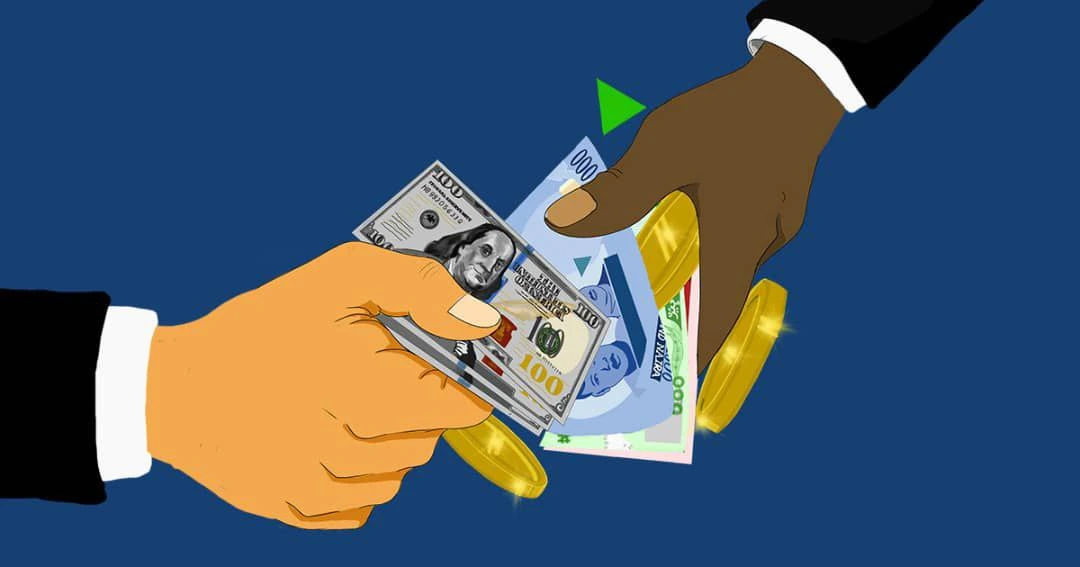
President Bola Tinubu has asked the Senate to approve a supplementary external borrowing plan worth $20.52 billion and €1.05 billion for 2026–2027, as the Federal Government seeks additional financing for infrastructure and development projects across Nigeria.
The request was transmitted to the National Assembly and read by Senate President Godswill Akpabio during Tuesday’s plenary.
The proposed borrowing amounts to $20,517,755,901 and €1,045,083,643, respectively, with the funds expected to support projects in power, transportation, healthcare, agriculture, education, water supply, security and other priority sectors.
In his letter to the lawmakers, Tinubu urged the National Assembly to consider and approve the plan promptly to facilitate the implementation of the proposed projects.
“I submit the attached Federal Government 2026–2027 Supplementary External Borrowing Plan for consideration and early approval of the National Assembly to ensure prompt implementation of our projects,” the President wrote.
Tinubu said the projects had been selected following technical and economic evaluations, with emphasis on their potential contributions to Nigeria’s socioeconomic development.
He added that the initiatives were designed to generate employment, promote skills acquisition and entrepreneurship, reduce poverty and strengthen food security.
According to the President, most of the projects would be implemented across Nigeria’s 36 states and the Federal Capital Territory, giving the proposed investments a nationwide reach.
Tinubu Defends Additional External Borrowing
The President said Nigeria’s infrastructure deficit and the substantial funding required to address it had made additional external financing necessary.
“In light of the need for significant infrastructure investment in the country and the vast financial resources needed to address this gap, it has become essential to pursue prudent external borrowings to close the financing shortfall,” Tinubu stated.
He said the funds would be directed primarily towards critical infrastructure, particularly in the power, transportation and healthcare sectors.
The President also urged the Senate leadership and the wider National Assembly to approve the proposal quickly, arguing that timely approval would facilitate disbursements and accelerate project execution.
The request is expected to undergo scrutiny by the relevant Senate committees, including an examination of the proposed financing and its relationship with existing borrowing approvals.
Major Loans and Borrowing Plans Under Tinubu
The latest request adds to a series of external financing arrangements and borrowing plans pursued by the Tinubu administration since it assumed office in May 2023. The financing has come from multilateral lenders, international bond markets and proposed government borrowing programmes.
1. $11.4bn in World Bank loan approvals
The World Bank approved loans totalling approximately $11.4 billion for Nigeria between June 2023 and June 2026, according to an analysis of the bank’s data published by The PUNCH in July 2026. The amount represents about 78.2% of the $14.59 billion approved during former President Muhammadu Buhari’s eight years in office.
Major facilities approved during Tinubu’s tenure include:
- $2.7 billion in 2023: Financing for power-sector recovery, women’s economic empowerment, adolescent girls’ education and renewable energy projects.
- $2.25 billion in June 2024: A package supporting economic stabilisation and reforms, including the Reforms for Economic Stabilisation to Enable Transformation (RESET) programme and resource mobilisation reforms.
- $1.57 billion in September 2024: Financing approved for programmes covering education, health and social protection, alongside infrastructure-related development.
- $1.08 billion in March 2025: Financing approved for education and resilience programmes.
2. $2.21 billion external borrowing approved in 2024
In November 2024, the Senate approved Tinubu’s request to raise approximately $2.21 billion in external financing to help fund the N9.7 trillion budget deficit for that year.
The approved amount was equivalent to N1.77 trillion at the exchange rate specified in the 2024 Appropriation Act. The financing could be raised through Eurobonds, sovereign Sukuk or bridge and syndicated loans, depending on availability and borrowing costs.
3. $2.2 billion Eurobond issued in December 2024
Nigeria raised $2.2 billion through a sovereign Eurobond issuance in December 2024, marking its first international bond sale since February 2022.
The issuance comprised a $700 million bond with a 6.5-year maturity and a $1.5 billion bond with a 10-year maturity. The respective yields were 9.6 per cent and 10.3 per cent.
The offering attracted bids worth $9.1 billion, significantly exceeding the initial $1.7 billion offer. However, the yields also reflected the substantial cost of accessing international capital markets.
4. More than $21 billion in external borrowing approved in 2025
In July 2025, the Senate approved Tinubu’s external borrowing plan for the 2025–2026 fiscal period. The package included approximately $21.19 billion in direct foreign loans, €4 billion, ¥15 billion, a $65 million grant and provisions for up to $2 billion in domestic foreign-currency-denominated borrowing. The Senate also approved a government bond of about N757.98 billion to address outstanding pension liabilities.
The proposed financing was intended to support infrastructure, healthcare, education, security, housing and other development priorities. A substantial allocation was earmarked for the rehabilitation of the eastern narrow-gauge railway corridor.
The approval covered a borrowing programme and associated financing instruments; it should not be interpreted as evidence that every component had already been raised or disbursed.