

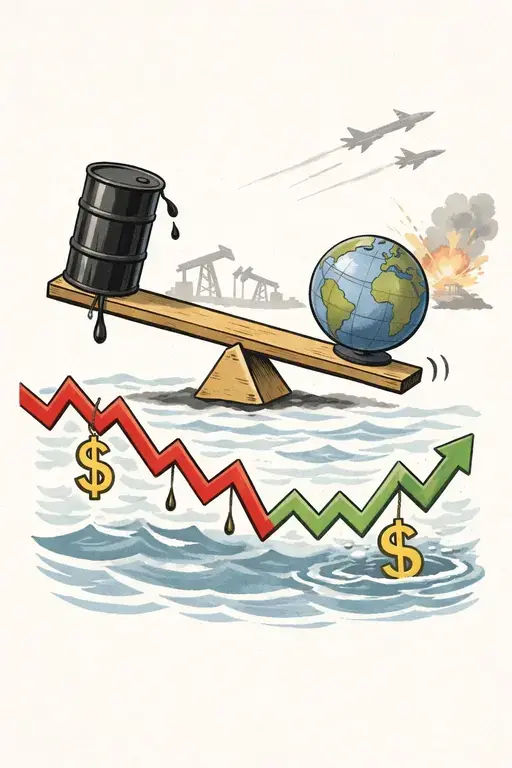
Global oil prices climbed above $117 a barrel on Friday, October 23, 2026, as fears of an escalation in the US-Iran conflict heightened concerns over crude supply disruptions, rising inflation and prolonged pressure on financial markets.
Brent crude futures, the international benchmark, rose as much as 3.8% to $117.45 a barrel before trimming gains to settle at $116.72, according to a report by the Financial Times cited by Bloomingbit. The benchmark has gained more than 10% this month.
US West Texas Intermediate (WTI) crude also traded above $100 a barrel, extending recent gains as investors assessed the risk of further attacks on energy infrastructure and shipping routes across the Middle East.
Middle East Tensions Drive Oil Rally
Market concerns have intensified amid reports of increased Houthi attacks on Saudi Arabia and claims by Iranian state broadcaster IRIB that seven tankers travelling through the Strait of Hormuz had either been attacked or struck mines.
The United States has also withdrawn some diplomatic personnel and family members from the region, adding to concerns about the security situation.
Investors are increasingly focused on the possibility of a wider confrontation involving the United States, Israel and Iran, particularly as the US midterm elections approach in November.
Oil Could Reach $150 Per Barrel
Concerns about supply disruptions are increasingly shifting from shipping routes to the security of oil production facilities, refineries and export terminals.

Even if crude shipments continue through the Strait of Hormuz, attacks on critical infrastructure could significantly reduce the volume of oil reaching international markets.
The prospect of sustained supply constraints is also reflected in the futures market, where Brent contracts for delivery in April 2027 traded above $100 a barrel. This suggests traders are preparing for elevated prices to persist beyond the immediate crisis.


















2 Responses
This is the first explanation that didn’t lose me halfway.
The fact that oil rose by barely 3% following a direct strike on Iran highlights how strangely muted initial market reactions can be compared to headline panic. Analyzing these distorted probability curves feels as intricate as checking Hero Siege Database info for complex drop mechanics, showing that immediate consensus rarely prices real-world disruption accurately.