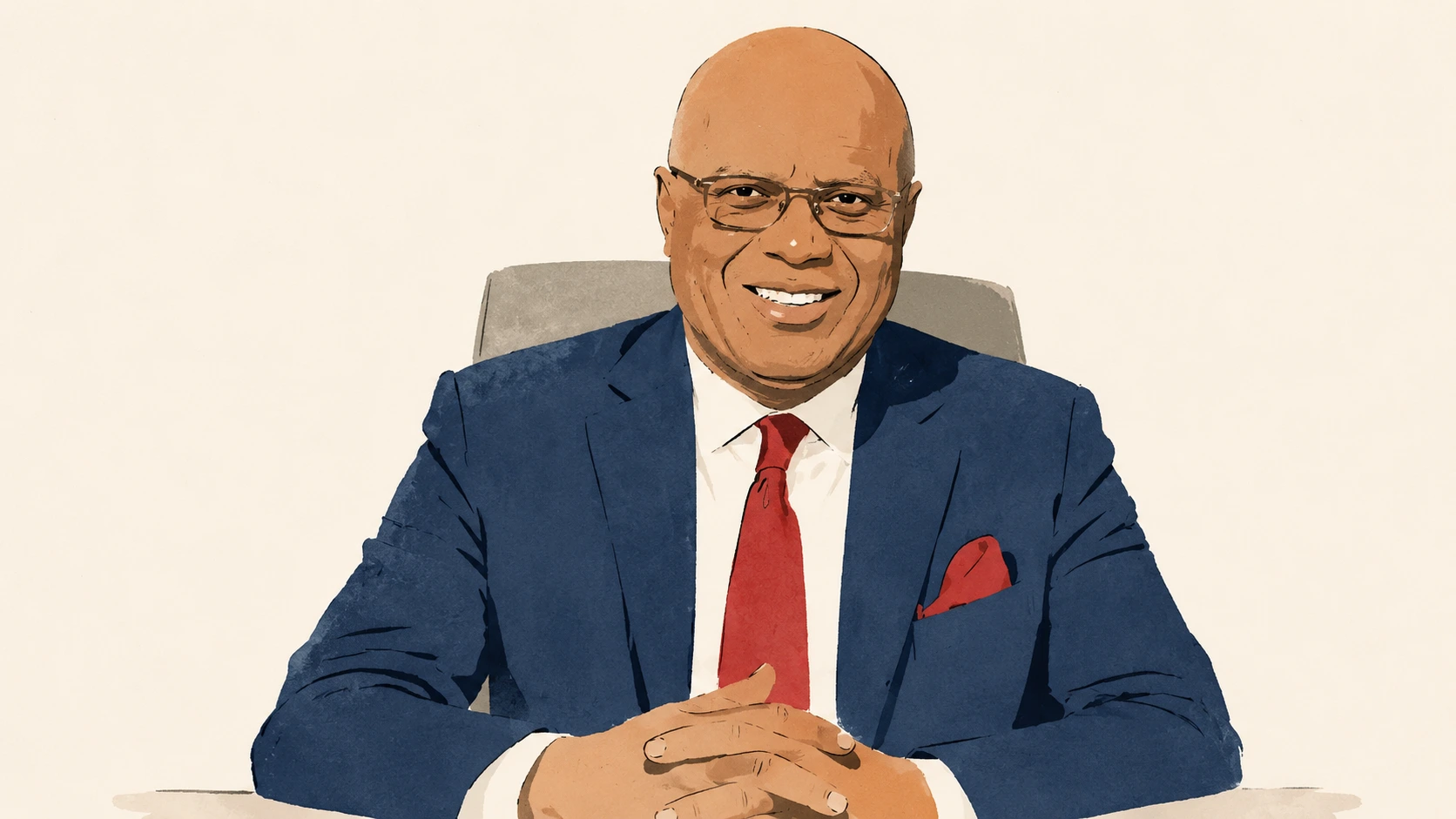
Nigeria cannot realistically grow its economy to $1 trillion within five years, according to Bismarck Rewane, Chairman of FCMB Group.
Rewane said Nigeria’s economy was about $278 billion and would need to increase almost fourfold to reach the $1 trillion mark.
“How do you achieve that in five years? Not possible. So, it’s good to dream, but it’s also good to be realistic,” he said.
His argument is not that Nigeria’s $1 trillion ambition is impossible. Rather, he is questioning whether the economy can make such a dramatic jump within five years without a much larger investment push.
For Rewane, investment is the key variable that could accelerate the expansion of the Nigerian economy.
Why Rewane Says Investment Matters
Rewane said Nigeria’s real GDP growth was 4.43%, while annualised real GDP growth was about 4.04%.
He broke down the economy into its major components, putting consumption at about $166 billion and investment at approximately $72 billion.
His argument is that Nigeria needs to increase the investment component of the economy and use it to drive a stronger economic multiplier.
“We want to change this picture to get to $1 trillion in a short period, and we must do this,” he said.
He described the approach as an investment-led strategy, arguing that increasing investment would drive the multiplier needed to move the economy towards the $1 trillion mark.
Nigeria Needs Foreign Investment and Infrastructure
Rewane’s broader economic assessment also points to investment as one of the major requirements for stronger growth.
In a recent Channels Television interview, he identified Nigeria’s investment goals as diversifying the economy away from oil, attracting foreign direct investment and expanding infrastructure.
He also identified investor confidence as an important factor in attracting portfolio capital into Nigeria.
This means that reaching a significantly larger economy would require more than simply waiting for GDP growth to accelerate. Nigeria would need to create an environment capable of attracting and retaining both domestic and foreign capital.
That includes improving infrastructure, strengthening confidence in the naira and maintaining policies that encourage investors to put more money into productive assets.
MTN Provides a Real-World Example
Rewane pointed to the Nigerian stock market to illustrate what greater investment can do.
According to him, total investment represented by the Nigerian stock market has grown from about ₦8 trillion to ₦9 trillion roughly eight to 10 years ago to about ₦158 trillion.
He attributed the increase largely to investors entering the market through listed companies.
The example he highlighted was MTN.
“The single largest investment, most capitalized stock, MTN, came in and listed at about 3 trillion Naira, and now it has gone all the way to 15 trillion Naira,” Rewane said.
The MTN example forms part of his wider argument that attracting capital and getting investors to participate in Nigeria’s markets can substantially increase the value of businesses and deepen the economy.
He noted that MTN is not the only example, adding that companies such as Dangote Cement and Dangote Sugar could also illustrate the impact of investment.
Oil, Naira and Inflation Still Matter
Rewane’s assessment of Nigeria’s economic prospects also highlights the limits imposed by factors outside the investment equation.
He identified four major drivers of economic performance: the value of the naira, PMS prices, crude oil prices and fiscal policy.
Crude oil remains particularly important because changes in its price affect government revenues and foreign-exchange availability.
But Rewane also warned that higher oil prices do not automatically translate into equivalent gains for the naira or the wider economy.
In his recent assessment, he noted that oil prices had increased by about 40%, while the naira had appreciated by only about 2%.
He also argued that Nigeria’s currency remains undervalued, although his estimate differs from the IMF’s. While the IMF puts the figure at about 25%, Rewane estimated the naira to be approximately 14.8% undervalued.
Investor confidence, he said, is important because it can drive portfolio capital inflows.
Fiscal Policy Must Support Growth
Rewane also argues that investment cannot operate in isolation from government policy.
He said fiscal policy should focus on maximising GDP growth, blocking leakages, ensuring transparency and increasing fiscal revenue.
Nigeria’s debt burden is another constraint he identified.
This makes the attraction of private capital particularly important because the government cannot be expected to finance all of the infrastructure and productive investment required to dramatically expand the economy.
A stronger private investment cycle could therefore reduce the pressure on government finances while increasing productive capacity.
So, Can Nigeria Reach $1 Trillion?
Rewane’s message is ultimately about timing and the scale of investment required.
Going from approximately $278 billion to $1 trillion means adding more than $700 billion to the size of the economy — effectively requiring Nigeria to multiply its current economic output several times over.
Rewane says that cannot realistically happen within five years at the current pace.
But his argument leaves the door open to the longer-term ambition.
For Nigeria to move towards a $1 trillion economy, he believes investment must become a much stronger engine of growth.
That means attracting foreign direct investment, increasing domestic investment, expanding infrastructure, strengthening investor confidence and creating conditions for businesses and capital markets to grow.
The growth of the Nigerian stock market — and Rewane’s example of MTN rising from about ₦3 trillion at listing to ₦15 trillion — is the type of investment-driven expansion he believes Nigeria needs more of.
The question, therefore, may not be whether Nigeria can eventually build a $1 trillion economy.
It is whether the country can attract and deploy enough investment to make that ambition realistic — and how long that process will actually take.