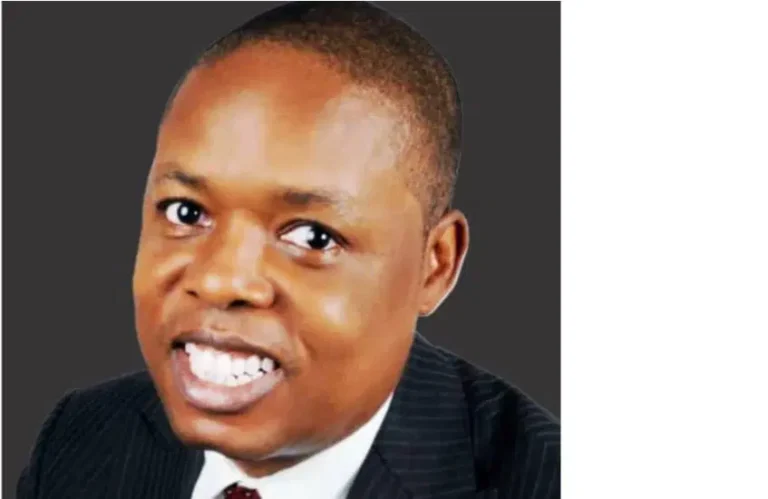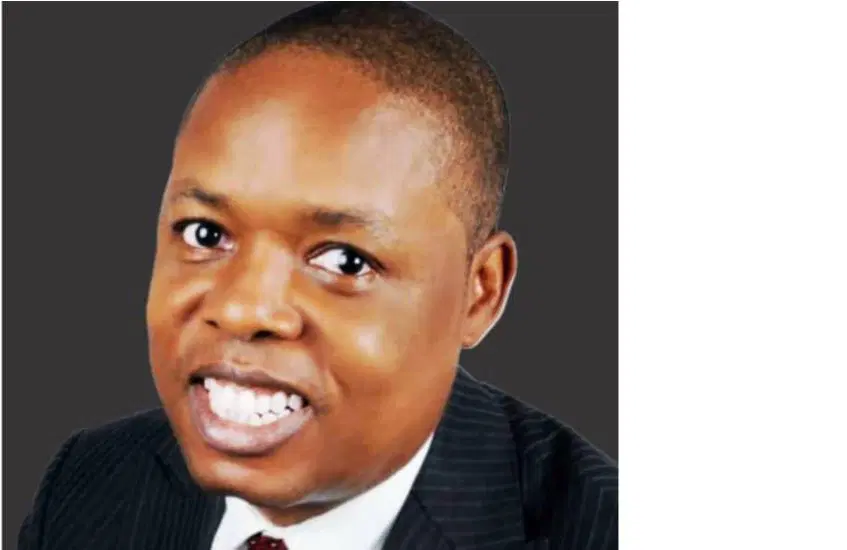
The death of Emmanuel Ugboaja, the General Secretary of the Nigeria Labour Congress (NLC), removes one of the organisation’s most experienced negotiators at a time when organised labour is confronting disputes over wages, living costs and the treatment of trade unions by the Nigerian state.
Ugboaja died at 60 after a prolonged illness, according to a report by Vanguard. His death was communicated to the NLC’s National Executive Council while the body’s leadership was meeting in Enugu, the newspaper reported.
The circumstances surrounding his death had not been publicly detailed at the time of the report.
Ugboaja had occupied the NLC’s top administrative position since 2019, when he succeeded Peter Ozo-Eson. His appointment was approved by the Congress’s National Executive Council in Kano on Aug. 21, 2019.
His departure comes as Nigeria’s labour movement remains heavily involved in disputes over the implementation of the country’s ₦70,000 minimum wage and broader questions about workers’ purchasing power.
In April 2026, Ugboaja signed an NLC directive ordering workers in states that had not fully implemented the 2024 National Minimum Wage Act to hold May Day activities on the streets rather than participate in government-hosted ceremonies. The directive targeted issues including consequential salary adjustments and implementation of the wage law for local government workers, teachers and health workers.
That intervention was characteristic of a career that had placed Ugboaja at the intersection of labour negotiations, industrial action and public policy.
From law to trade unionism
Born on May 15, 1966, Ugboaja studied law at the University of Calabar and graduated in 1987. He spent about four years in private legal practice before moving into the labour movement in 1993. Contemporary accounts of his appointment described him as the first Nigerian lawyer to work full-time for a trade union.
He joined the National Union of Chemical, Footwear, Rubber, Leather and Non-Metallic Products Employees, an affiliate of the NLC, and eventually became its general secretary, serving from 2000 to 2005.
The move was more than a change of profession. Ugboaja’s legal training became an asset in a labour system in which disputes frequently involve collective bargaining, employment rights, industrial relations and negotiations with government.
He also spent three years outside the conventional union structure. From 2006 to 2009, he served as coordinator for advocacy and mobilisation at the Alliance for Credible Elections, a civil-society organisation focused on electoral issues. He subsequently joined the NLC secretariat in 2009.
A labour career shaped by politics and reform
Ugboaja’s work extended beyond workplace disputes.
He participated in two major constitutional reform exercises: the 2005 Political/Constitutional Reform Conference convened under President Olusegun Obasanjo and the 2014 Constitution Review Conference under President Goodluck Jonathan.
He therefore entered the NLC’s top leadership with experience not only in trade union administration but also in electoral advocacy and national political reform.
Before becoming general secretary, he served as Principal Assistant General Secretary and headed the NLC’s industrial relations and organising functions. In the 2019 selection process, he emerged ahead of three other candidates and was subsequently ratified by the union’s governing bodies.
The position put him at the centre of the NLC’s dealings with governments and employers.
His first major test came over the minimum wage
Ugboaja’s appointment coincided with one of Nigeria’s recurring labour disputes: how to translate a national minimum wage agreement into actual pay across the public sector.
Within months of taking office, he was involved in negotiations over the implementation of the ₦30,000 minimum wage approved in 2019. Labour threatened industrial action after negotiations over consequential adjustments for public servants stalled, leading to renewed talks between the government and organised labour.
The issue would return repeatedly during his tenure.
In 2024, President Bola Tinubu signed legislation increasing Nigeria’s statutory minimum wage from ₦30,000 to ₦70,000. But the legal increase did not automatically resolve the wider problem of implementation across Nigeria’s states.
Ugboaja was still campaigning on that issue in 2026, when the NLC accused some state governments of failing to implement the new wage and related adjustments.
His final months therefore reflected a problem that had defined much of his time in office: the distance between national labour agreements and what workers actually receive at the state and local levels.
He worked inside a changing labour movement
Ugboaja’s tenure also coincided with a period in which the NLC increasingly confronted questions beyond wages.
The organisation has campaigned on the cost-of-living crisis, electricity prices, insecurity, local-government autonomy, workers’ rights and the independence of trade unions.
An NLC policy paper published in 2025, for example, listed Ugboaja as the organisation’s general secretary while setting out its position on Nigeria’s economic transition and the effects of climate and energy policies on workers.
The NLC’s Central Working Committee has also taken positions on constitutional reform, arguing that labour matters should remain on the federal legislative list and warning against changes that could weaken national labour standards.
These positions illustrate how the role Ugboaja occupied had evolved beyond traditional wage bargaining. The NLC’s general secretary was involved in shaping the organisation’s response to national economic and political questions as well as industrial disputes.
A sudden gap at the centre of organised labour
Ugboaja’s death leaves the NLC without a general secretary who had accumulated more than three decades of experience inside the labour movement.
He joined an affiliate union in 1993, became its general secretary, moved into civil-society advocacy, joined the NLC secretariat and eventually became the organisation’s fifth general secretary. Contemporary reporting at the time of his appointment described him as an experienced negotiator and organiser.
His death also comes during a politically sensitive period for organised labour. NLC President Joe Ajaero remains the public face of the Congress, while the general secretary’s office provides much of the administrative continuity behind the organisation’s dealings with its affiliates, employers and government.
The immediate question for the labour movement will therefore be succession, but the larger challenge is continuity.

The NLC is entering another period in which wages, inflation, employment conditions and relations between organised labour and government are likely to remain contentious.
Ugboaja spent most of his professional life inside those disputes. His career ended with him still engaged in the