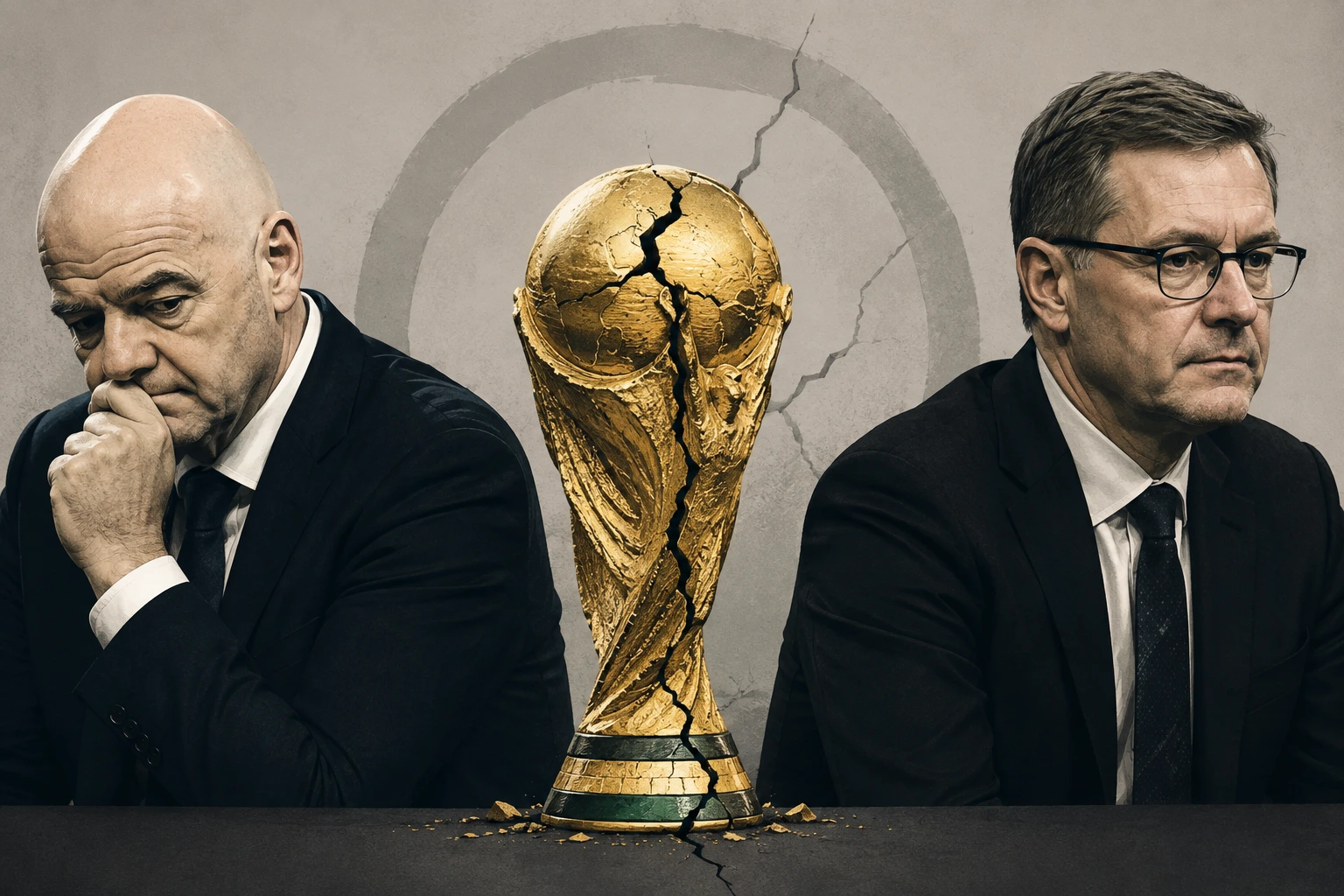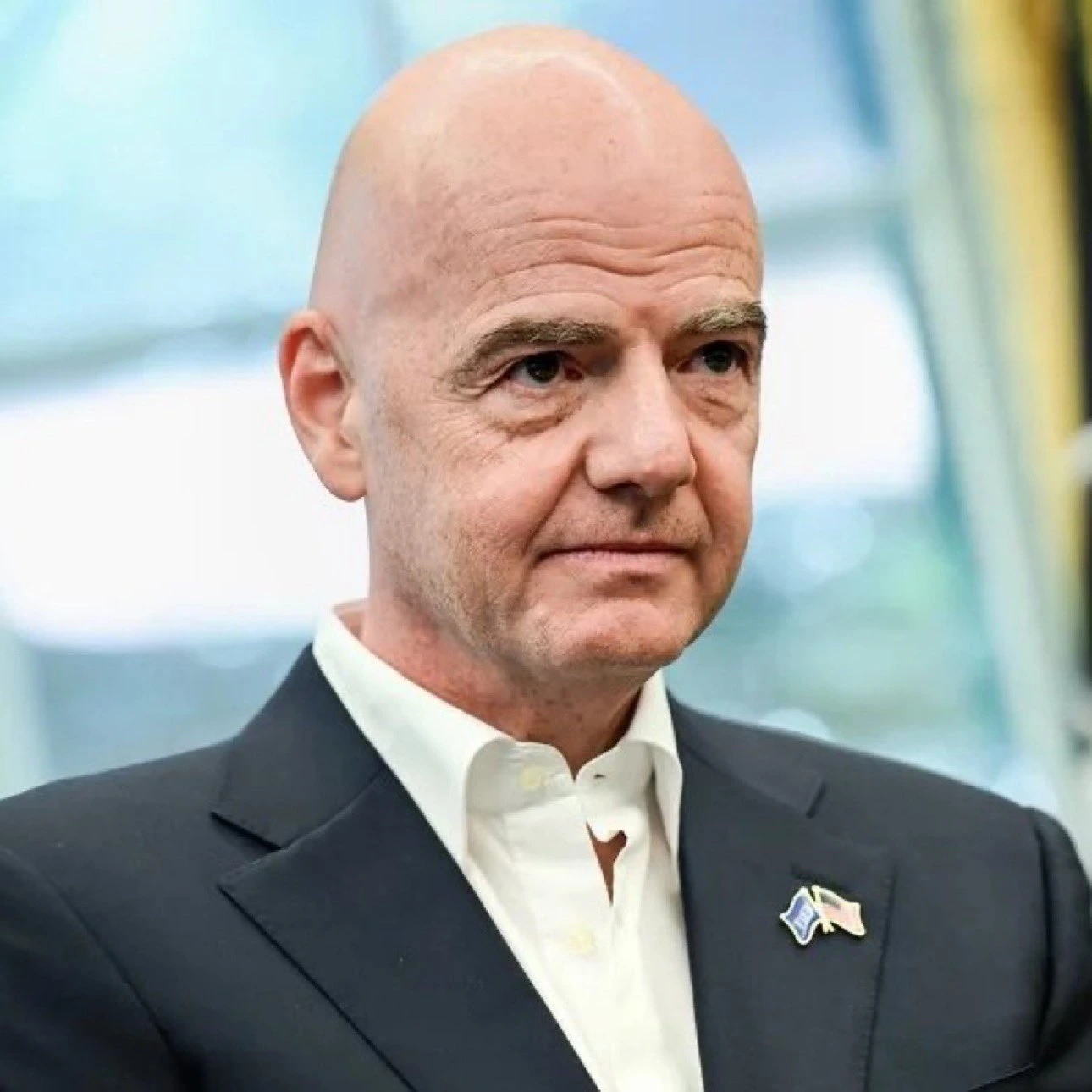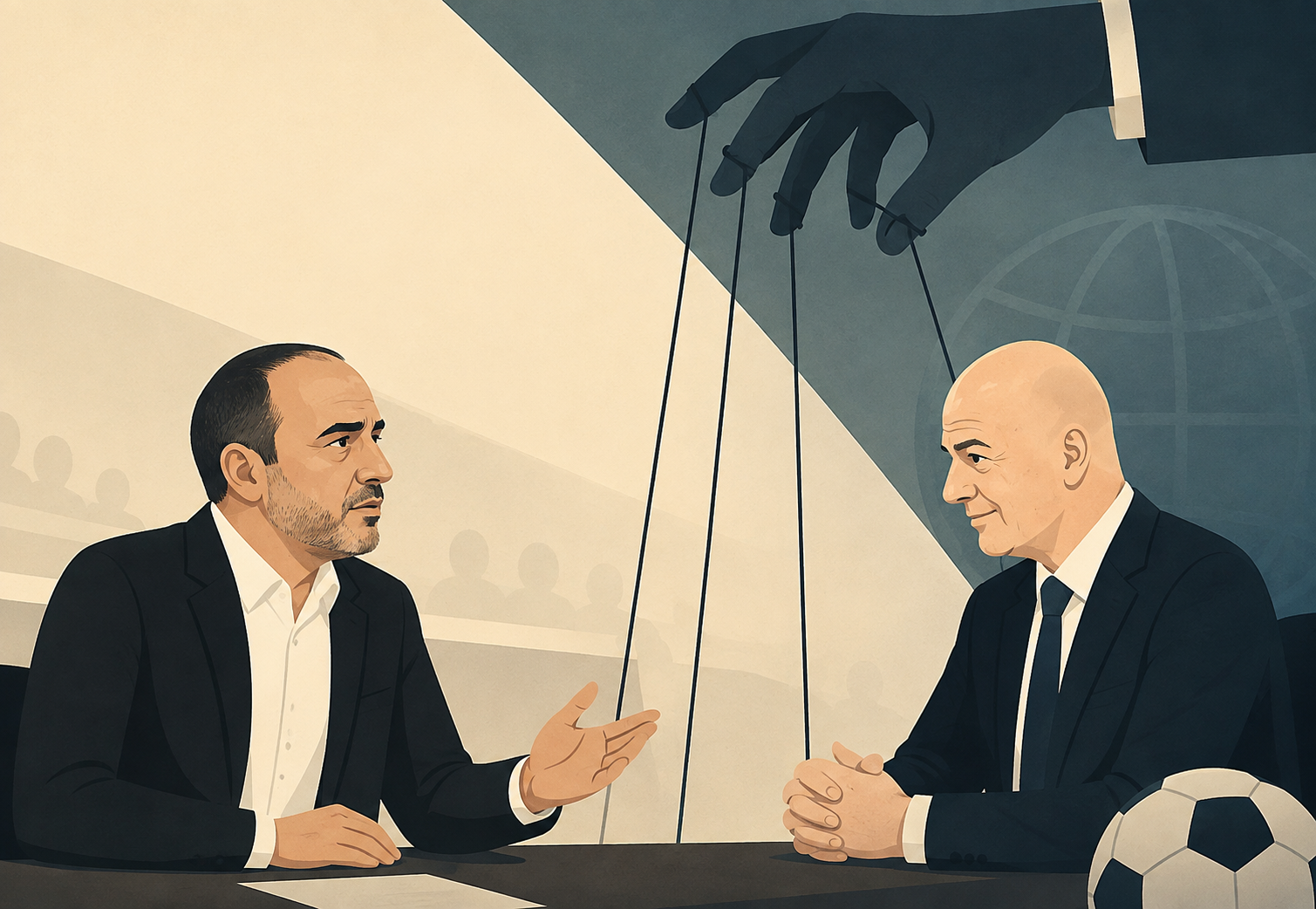
Jordan’s Football Association has accused FIFA of attempting to leverage administrative assistance in exchange for political support for President Gianni Infantino, opening an unusually public dispute that extends beyond tournament logistics into the governance of world football.
In a statement issued by Jordan FA President Prince Ali bin Hussein, the federation said it had encountered multiple unresolved problems during and after the 2026 FIFA World Cup, ranging from visa access for supporters travelling to the United States to taxation of tournament revenues and delayed prize money from the FIFA Arab Cup.
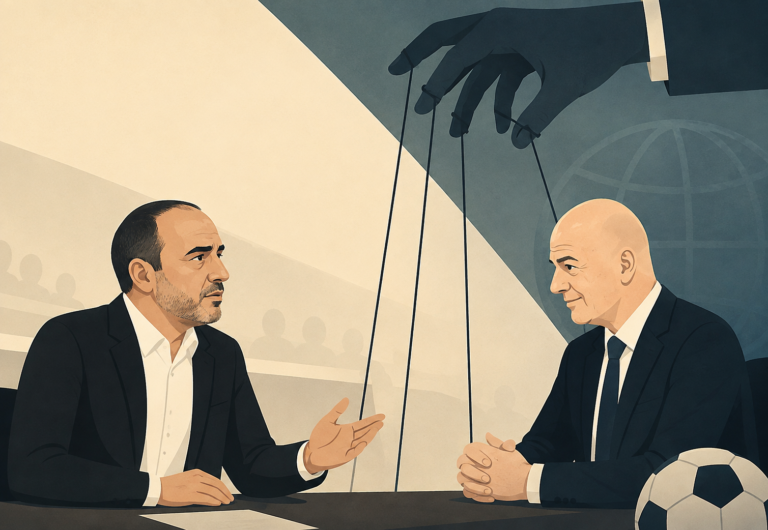
Prince Ali alleged FIFA officials indicated that endorsing Infantino’s expected bid for another presidential term would improve the federation’s ability to resolve those issues—an allegation he described as “blackmail.”
If substantiated, the claim would strike at one of FIFA’s most sensitive commitments: maintaining political neutrality among its 211 member associations. FIFA’s statutes require football bodies to operate free from undue political or personal influence, while the organisation’s ethics framework prohibits the abuse of official positions to secure personal or electoral advantage.
A dispute extending beyond the World Cup
Jordan’s complaints span three separate issues rather than a single grievance.
The first concerns supporters who purchased World Cup tickets but were reportedly unable to obtain visas to enter the United States. Visa issuance remains the exclusive responsibility of national governments rather than FIFA, yet the governing body has repeatedly promoted the expanded 2026 tournament as accessible to supporters from every participating nation.
Several countries had warned before the competition that tighter U.S. immigration screening could complicate travel for some fans despite holding valid match tickets.
Jordan also objected to the taxation of tournament-related income. Prince Ali argued that revenue earned through participation was subject to U.S. tax treatment, reducing funds available to players and officials.
Tax arrangements surrounding major sporting events are typically negotiated between host governments and organising bodies years in advance, and exemptions often differ between jurisdictions. The United States, Canada and Mexico each operate under separate tax systems despite jointly hosting the tournament.
A third dispute predates the World Cup itself. Jordan finished runner-up in the FIFA Arab Cup in Qatar last December, one of the country’s strongest performances in a senior regional competition. Prince Ali said the federation has yet to receive prize money from that tournament despite FIFA regularly highlighting the strength of its financial reserves. FIFA has not publicly explained the status of those payments.
Prince Ali revives a long-running rivalry
The accusations carry additional political weight because they come from one of the few senior football administrators who has previously challenged Infantino’s rise to power.
Prince Ali, a member of Jordan’s royal family and half-brother of King Abdullah II, was a presidential candidate during FIFA’s reform era following the corruption scandals that engulfed the organisation a decade ago. He first challenged Sepp Blatter in 2015 before Blatter’s resignation and later contested the 2016 election ultimately won by Infantino.
Since then, Prince Ali has remained an influential voice on governance issues despite leading the football federation of a country with limited commercial influence compared with Europe’s or South America’s major football powers.
His latest intervention suggests dissatisfaction with FIFA’s leadership is no longer confined to debates over competition formats or commercial expansion but increasingly concerns the relationship between Zurich headquarters and smaller national associations that depend heavily on FIFA development funding.
Growing resistance before another FIFA election
Jordan’s announcement comes as several European football associations have publicly indicated they will not support Infantino in the next FIFA presidential contest.
Prince Ali said Jordan joins federations including England, Wales, Finland, Sweden and Serbia in withholding endorsement for the incumbent president. While those associations represent only a small fraction of FIFA’s total membership, they reflect growing divisions over governance, transparency and decision-making inside the organisation.
Electorally, however, FIFA’s balance of power lies elsewhere. Africa, Asia, the Caribbean and much of Latin America collectively command the majority of votes in presidential elections, meaning support from smaller and developing football nations has become central to every successful FIFA campaign.
That political arithmetic has made FIFA’s development programmes—covering infrastructure grants, technical assistance and football investment—one of the organisation’s most strategically important tools. Critics have periodically questioned whether those programmes create perceptions of political dependence, while FIFA has consistently maintained that funding decisions are governed by objective development criteria.
Governance questions return
The dispute arrives at a time when FIFA has expanded its financial reach through larger men’s and women’s tournaments and new commercial agreements. The organisation reported reserves exceeding several billion dollars in recent financial cycles and has repeatedly described itself as the strongest-funded governing body in world sport.
Those growing revenues have increased expectations among member associations that payments linked to competitions and development projects will be made promptly and transparently.
For smaller federations such as Jordan, delayed payments can have disproportionate consequences because national associations often rely heavily on FIFA distributions to finance youth development, coaching programmes and domestic competitions rather than lucrative broadcasting or sponsorship markets available to football’s wealthiest nations.
Awaiting FIFA’s response
FIFA had not publicly responded to Prince Ali’s allegations at the time of publication.

Without evidence beyond Jordan’s account, the claim that support for Infantino was explicitly linked to administrative assistance remains an allegation rather than an established fact.
Whether FIFA addresses the accusation directly may prove as consequential as the allegation itself, particularly as attention shifts toward the next presidential election and renewed scrutiny of how football’s governing body balances political leadership with its obligation to treat all member associations equally.