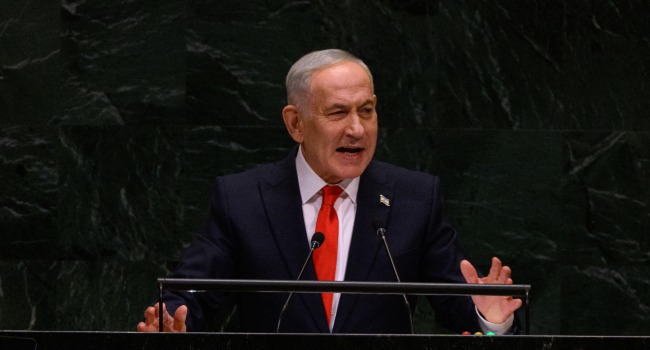
Israel’s parliamentary election remains deadlocked, with Prime Minister Benjamin Netanyahu’s right-wing and religious bloc leading the partial count but falling short of the majority needed to form a government.
With approximately 84.5% to 84.7% of ballots counted as of early afternoon on Wednesday, October 28, 2026, Netanyahu’s bloc holds 54 seats in the 120-member Knesset, compared with 49 seats for the rival bloc led by former military chief Gadi Eisenkot. Arab-led parties, comprising the Joint List and Ra’am, hold a combined 17 seats.
A minimum of 61 seats is required to secure a parliamentary majority, leaving both camps facing difficult negotiations to assemble a governing coalition.
The results remain provisional, with hundreds of thousands of ballots still to be processed and the possibility of further changes to the distribution of seats.
Likud Leads as Rival Parties Seek Path to Majority
Netanyahu’s Likud party leads the individual party count with 27 seats, while Eisenkot’s Yashar party has secured 22 seats in the partial results.
Naftali Bennett’s B’Yachad party holds 12 seats, followed by the Joint List with 11 and The Democrats, led by Yair Golan, with eight seats.
Otzma Yehudit, Shas, United Torah Judaism and Yisrael Beytenu each hold seven seats, while Ra’am and Religious Zionism have approximately six seats apiece, according to the supplied partial breakdown.
Smaller parties, including the Reservists party, remain below Israel’s 3.25% electoral threshold, which determines eligibility for parliamentary representation.
Arab Parties Could Influence Government Formation
The combined 17 seats held by the Joint List and Ra’am could become important in determining the next government, particularly if opposition parties seek support beyond their existing alliances.
Joint List chairman Yousef Jabareen has reiterated his party’s willingness to help remove Netanyahu’s government, calling for a genuine partnership between Jewish and Arab political groups.
Some opposition figures, including Golan, have urged the anti-Netanyahu camp to consider cooperation with Arab-led parties as a possible route to securing a majority of approximately 65 to 66 seats.
However, Eisenkot’s bloc has largely ruled out formal coalition arrangements with Arab parties, complicating efforts to build a unified opposition government.
Netanyahu, meanwhile, continues to advocate a strong right-wing national government. Both camps are positioning themselves to lead the next administration despite the inconclusive parliamentary arithmetic.
The outcome will depend not only on the final seat distribution but also on whether parties can overcome political and ideological differences to negotiate a workable coalition.
Double-Envelope Ballots Could Change Seat Distribution
Approximately 600,000 double-envelope ballots remain to be fully processed, according to the supplied update. These include votes cast by Israeli military personnel, reservists, diplomats and other eligible voters whose ballots require separate verification and counting.
The counting process is expected to continue into Friday in some cases, meaning the final distribution of seats could differ from the current figures.

Israel’s electoral system allocates parliamentary seats through proportional representation, making the final vote totals and the performance of smaller parties important to the composition of the Knesset.
Turnout reached 77.7%, reportedly the highest since 1999, indicating strong participation in an election with significant implications for the country’s political direction.