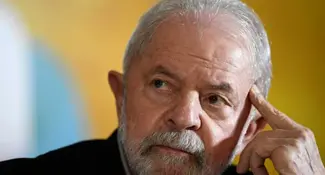
Brazilian President Luiz Inácio Lula da Silva has won a historic fourth non-consecutive presidential term, defeating right-wing senator Flávio Bolsonaro in a closely contested runoff election that preserves left-wing leadership in Latin America’s largest economy.
Lula secured 51.79% of valid votes, while Bolsonaro received 48.21%, according to Brazil’s Superior Electoral Court. The result gives the 80-year-old president another mandate after a dramatic campaign comeback, following his rival’s lead in the first round of voting.
The victory, declared on Sunday, October 25, makes Lula the first Brazilian president to win four direct presidential elections. He previously won elections in 2002, 2006 and 2022, serving two consecutive terms before returning to office in January 2023.
Bolsonaro, the son of former president Jair Bolsonaro, has refused to concede defeat and said he would challenge the outcome in court, citing a decision to extend voting hours at some polling stations.
The extension followed concerns about transportation disruptions affecting voters. Both campaigns had sought additional voting time in some areas, although Bolsonaro later described the decision as unacceptable and threatened to seek annulment of the result.
Lula’s Dramatic Comeback
The result marks a major turnaround in a contest that appeared increasingly favourable to Bolsonaro after the first round on October 4.
Bolsonaro finished ahead in that round, receiving 47.03% of valid votes against Lula’s 45.16%, according to Brazil’s Senate News service. Neither candidate secured the majority needed to avoid a runoff.
Lula subsequently mobilised supporters through street rallies, social media campaigns and renewed promises to expand social programmes. His campaign emphasised poverty reduction, workers’ welfare, economic development and Brazil’s independence in international affairs.
Lula’s fourth term is expected to face significant economic and political challenges, including fiscal pressures, high interest rates, household debt and the need to sustain economic growth.
His administration will also have to contend with a Congress in which conservative lawmakers and allies of the Bolsonaro movement hold substantial influence, potentially complicating efforts to advance spending plans and other legislative priorities.
Lula is expected to begin his fourth presidential term on January 5, 2027, extending a political career that began in the labour movement and made him one of Latin America’s most prominent left-wing leaders.